Description
A LA CARTE
🚚 The Fastest Delivery Time : 2-day delivery.
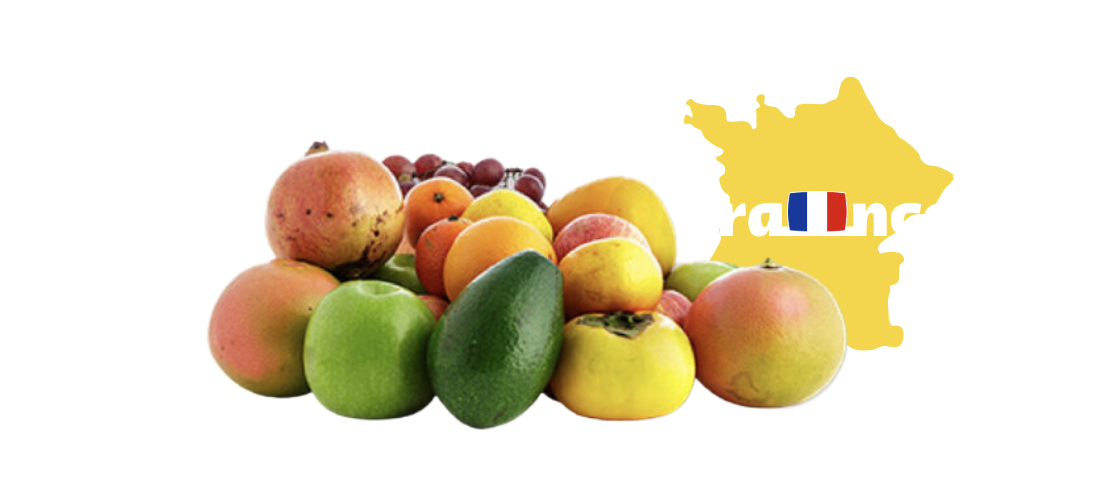
🐝 Supplier / Place Of Origin:A LA CARTE / France
🔖 Certification: --
🌱 About the Producer:
We select our suppliers for the love they put in their products,
seeking the best quality while respecting traditional production methods.
Most of them are family owned, of human size. We value the direct collaboration with them.
By buying directly at the source, we are proud to contribute to the local economy,
while ensuring that, ultimately, our clients get the most tasty and fresh products at the best prices.
All our farmers follow specific certifications minimizing the use of chemicals. From sustainable agriculture ‘’Agriculture Raisonnee’’ (AR) to Organic certified ‘’Agriculture Biologique’’ (AB), these guarantees that the fruits delivered to you a safe and healthy. On top of the tests done by our farmers, we also perform our own chemical test upon each arrival of the fruits.
🌱 Supplier Products:
🛍 Product Information (Main) (English):
Origin
Bred in 1966 by INRA (France) from Muscat de Hambourg × Perlette. Officially listed as Exalta B on the French vine catalogue (List A); the certified clone is 969. It is grown as a dessert grape rather than a major wine variety.
Appearance and flavour
Bunches are medium to large and cylindro-conical. Berries are small to medium, spherical to ovoid/ellipsoid, with thin skin that ripens from pale green to golden amber. The pulp is juicy and slightly crisp, with high sugar, a light muscat note and a pleasant floral character (sometimes described as honey-like). Trace, non-lignified seed tissues may be present (around 1 mm) but are barely noticeable when eaten, so the fruit is sold as seedless or nearly seedless.
Clusters colour best with good sun exposure. The variety resists berry shatter, stores and ships well, and is not very prone to rot.
Season and growing notes
Early-season ripening—about one week after Chasselas—typically late August through September–October in European climates. The vine has moderate to strong vigour and a semi-erect habit; it needs trellising and long pruning. It is self-fertile, prefers full sun and well-drained neutral to calcareous soil, and is reasonably winter-hardy.
Uses and nutrition
Best eaten fresh off the bunch. Also suitable for juice, jam, drying, and desserts. Nutritionally similar to other white seedless grapes: roughly 70–80 kcal per 100 g, high water content, natural sugars, vitamin C, potassium, fibre and polyphenols. Rinse, refrigerate, and eat soon for peak aroma.
Buying tip
Choose intact bunches with plump, glossy berries that show a golden tint. Avoid brown spots, softness or loose berries. Handle gently—the thin skin bruises easily.
🥗 Product Recipe (English):
Google Recipe 🔍 :

English CookPad 🍳 :
BBC Good Food 🥙 :