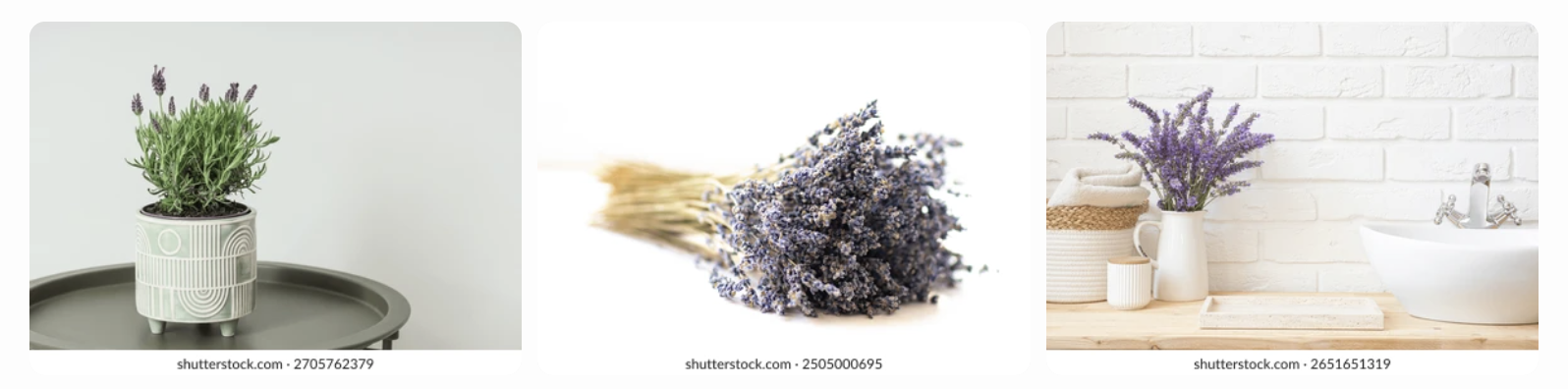
Description
🚚 Fastest delivery time: 2-4 day delivery.
Supplier introduction
Mindful Garden
🌱 Supplier introduction:
The story of our original intention started from the poisonous vegetable incident many years ago!
The farm hopes to promote organic farming and green living, and we believe that "if there is a tomorrow, it must be green!" Through the Green Living Expert, our team will teach the methods of organic planting and reproduction, and encourage them to practice green life, combine online and offline courses, and bring planting culture into every family, thereby influencing the next generation to build a greener earth.
The purpose of the planting ~ It can be seen and healed, and at the same time, it can consume food waste, reduce pollution to the earth, and eat the freshest fruits and vegetables.
Herbal Series:
Dried lavender flower arrangements are made by naturally air-drying or oven-drying fresh lavender (Lavandula angustifolia), retaining its purple-blue flower spikes and silvery-green leaves, and then arranging them in ceramic, glass, or rattan pots. This decorative item originates from European traditions (such as Provence, France) and is renowned for its long-lasting fragrance and elegant appearance. Uses include home décor, wardrobe sachets, wedding decorations, and aromatherapy aids. It releases calming and sleep-inducing lavender essential oil components (mainly linalool and linalyl acetate), which help reduce stress, repel insects, and purify the air. Preparation is simple: select mold-free dried flowers, tie them into bunches or arrange them loosely, and place them in a cool, dry place. The fragrance can last for several months to a year. Advantages include low maintenance and no care required, making it suitable for busy city dwellers; disadvantages include that the fragrance will weaken over time, which can be replenished by adding lavender essential oil.

Dried Lavender Pot Arrangement is a decorative item made by air-drying or oven-drying fresh lavender stems (Lavandula angustifolia) and arranging them in pots, vases, or containers like ceramic, glass, or woven baskets. Originating from European traditions (e.g., Provence in France), it's prized for its long-lasting fragrance and elegant purple-blue flower spikes with silvery-green foliage. Uses include home decor, closet sachets, wedding centerpieces, or aromatherapy aids, releasing calming lavender essential oil compounds (primarily linalool and linalyl acetate) for stress relief, sleep aid, insect repulsion, and air purification. Easy to make: Select mold-free dried stems, bundle or loosely arrange them, and place in a cool, dry spot for months to a year of scent. Advantages: low-maintenance, no watering needed; ideal for urban lifestyles. Drawbacks: fragrance fades over time, refreshable with essential oil drops.
Note:
As for the potted plants of ornamental flowers and edible flowers, most of them need the cooperation of temperature, sunlight and fertilizer. Most places in the city are not suitable for planting, unless there are rooftops and village houses with open sun. Not every family is suitable for planting. If you want to increase the survival rate, you can consider violets and orchids as ornamental flowers that are slightly suitable for urban planting.
Propagation method
Featherleaf lavender is mostly propagated by cuttings, cutting about 5 cm branches from the top, but it can only reproduce in large quantities in a relatively cool climate, about September to December. You can also try to propagate by seeds. Sowing can be done on flat land around August, keeping the environment below 25℃, and germination will occur about 7 days after sowing.
Cultivation method
Lavender is suitable for cool climates in Taiwan. It cannot be cultivated perennially because it cannot tolerate hot and humid summers. When planting outdoors, be careful not to let rain directly fall on the plant, and there should be no water retention at the roots, so the soil for cultivation needs to be well drained. It is recommended to mix some pearl stone, vermiculite, or foamed refining stone to increase permeability. It is best to use a ceramic pot for the pot. Adding a drainage layer of foamed refining stone at the bottom can also increase the success rate. If you cultivate it in the open field, pay attention to the drainage of the soil and make high ridges to facilitate drainage.
Morphological characteristics
Lavender is a perennial subshrub plant with a very high flowering rate, often forming a sea of flowers. It is an indispensable landscape plant in some leisure farms or vanilla restaurants in Taiwan. Lavender flower spikes can be used as dried flowers. Putting them in the closet can make clothes fragrant and prevent insects from eating them. Lavender flowers can extract essential oils and secrete a large amount of nectar to attract bees. It can also be a source of nectar for honey production. However, although lavender has a fragrance, it is not suitable for consumption due to its high camphor content. It is mainly used for ornamental purposes. The leaves of lavender are like pinnates, and the inflorescence is bright and up to 7-8 cm long. The leaves of edible "sweet lavender" are wider and rounder, and the inflorescence is shorter and less obvious. The leaves are mainly collected for scented tea.