Description
A LA CARTE
🚚 The Fastest Delivery Time : 2-day delivery.
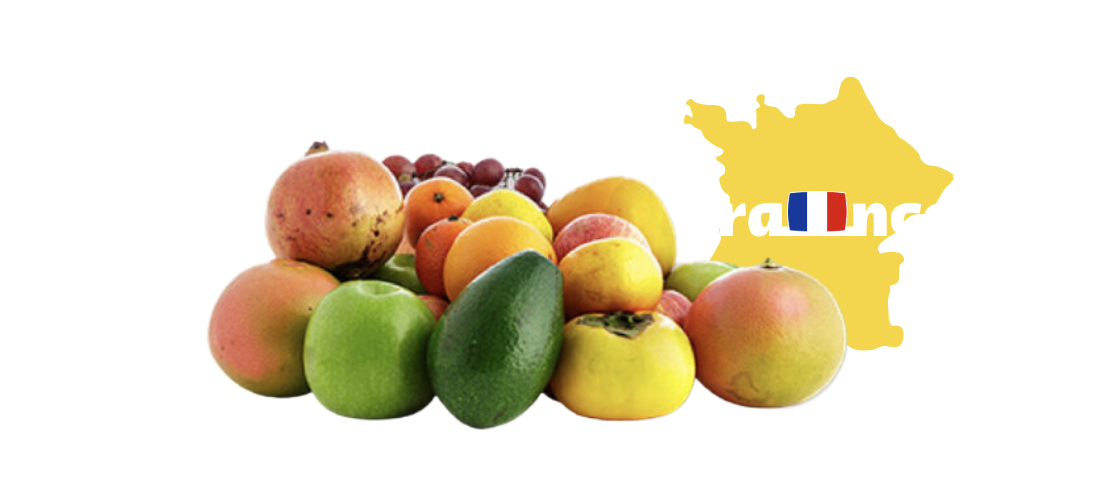
🐝 Supplier / Place Of Origin:A LA CARTE / France
🔖 Certification: Organic European
🌱 About the Producer:
We select our suppliers for the love they put in their products,
seeking the best quality while respecting traditional production methods.
Most of them are family owned, of human size. We value the direct collaboration with them.
By buying directly at the source, we are proud to contribute to the local economy,
while ensuring that, ultimately, our clients get the most tasty and fresh products at the best prices.
All our farmers follow specific certifications minimizing the use of chemicals. From sustainable agriculture ‘’Agriculture Raisonnee’’ (AR) to Organic certified ‘’Agriculture Biologique’’ (AB), these guarantees that the fruits delivered to you a safe and healthy. On top of the tests done by our farmers, we also perform our own chemical test upon each arrival of the fruits.
🌱 Supplier Products:
🛍 Product Information (Main) (English):
Excellent for fresh eating and cooking; best enjoyed soon after harvest due to short storage life.
Origin and Names
Raised at Japan’s Morioka Experimental Station around 1937 (sometimes cited as 1939) and commercially introduced around 1970. The name “Akane” means “red” or “madder red” in Japanese. Other names include Tokyo Rose, Tohoku No. 3, Prime Red and Primrouge. It combines Jonathan’s classic sweet-sharp character with the shape and light strawberry notes of the English Worcester Pearmain.
Appearance and Flavor
Fruits are small to medium (typically 180–250 g), round to slightly flattened or conical/heart-shaped. Skin is bright, intense red with a waxy bloom; some russeting may appear. Flesh is creamy-white with a slight yellow tinge, crisp yet not overly dense, juicy, and slow to brown when cut. Taste is a clean, balanced sweet-tart profile—refreshing rather than overly acidic—with possible strawberry or floral hints. It holds shape well when cooked.
Season and Storage
Harvested late August to mid-September depending on climate (one of the earlier commercial apples). Storage life is short—usually 1–4 weeks under refrigeration. Fruit tends to hang on the tree rather than drop, allowing a staggered harvest. Flavor is best when fully ripe and eaten promptly.
Growing and Culinary Notes
The tree is moderately vigorous, precocious, and relatively disease-resistant (good resistance to scab, powdery mildew, fire blight and cedar-apple rust), making it popular with organic and home growers. It is self-sterile and requires a compatible pollinizer. Suitable for USDA zones roughly 4–9 and performs in both cooler and warmer climates.
🥗 Product Recipe (English):
Best uses: fresh eating, lunchboxes, pies, tarts, applesauce and some cider blends. Thinning young fruit improves size and quality. In Japan it remains a modest-volume early variety (mainly Hokkaido and Aomori); elsewhere it is valued as a high-quality early-season garden and specialty apple.
Google Recipe 🔍 :

English CookPad 🍳 :
BBC Good Food 🥙 :