The fetus is a sweet burden for expectant mothers. In order to make pregnant women more comfortable during the 10 months of pregnancy, nutritional supplements during pregnancy are essential! Girls often lack iron and are more likely to lack calcium during pregnancy. Not only minerals, vitamins and other nutrients should be actively supplemented during pregnancy. However, the nutrients that can and cannot be eaten before, during and after pregnancy are very different. Don't panic. First write down the 6 essential nutrients and dietary taboos, slowly adjust your physical condition, be nicer to yourself, and be a smart and elegant pregnant mother.

Nutrition during the 1,000-day pregnancy period, what nutrients do pregnant women need to supplement?
During pregnancy, it should be the dream of all pregnant women to make the fetus nutritious and healthy without making the mother fat. However, the growth of the embryo is closely related to the mother. There are three reasons for supplementing sufficient nutrition, which is to make the pregnancy easier, the delivery smoother, and the baby healthier.
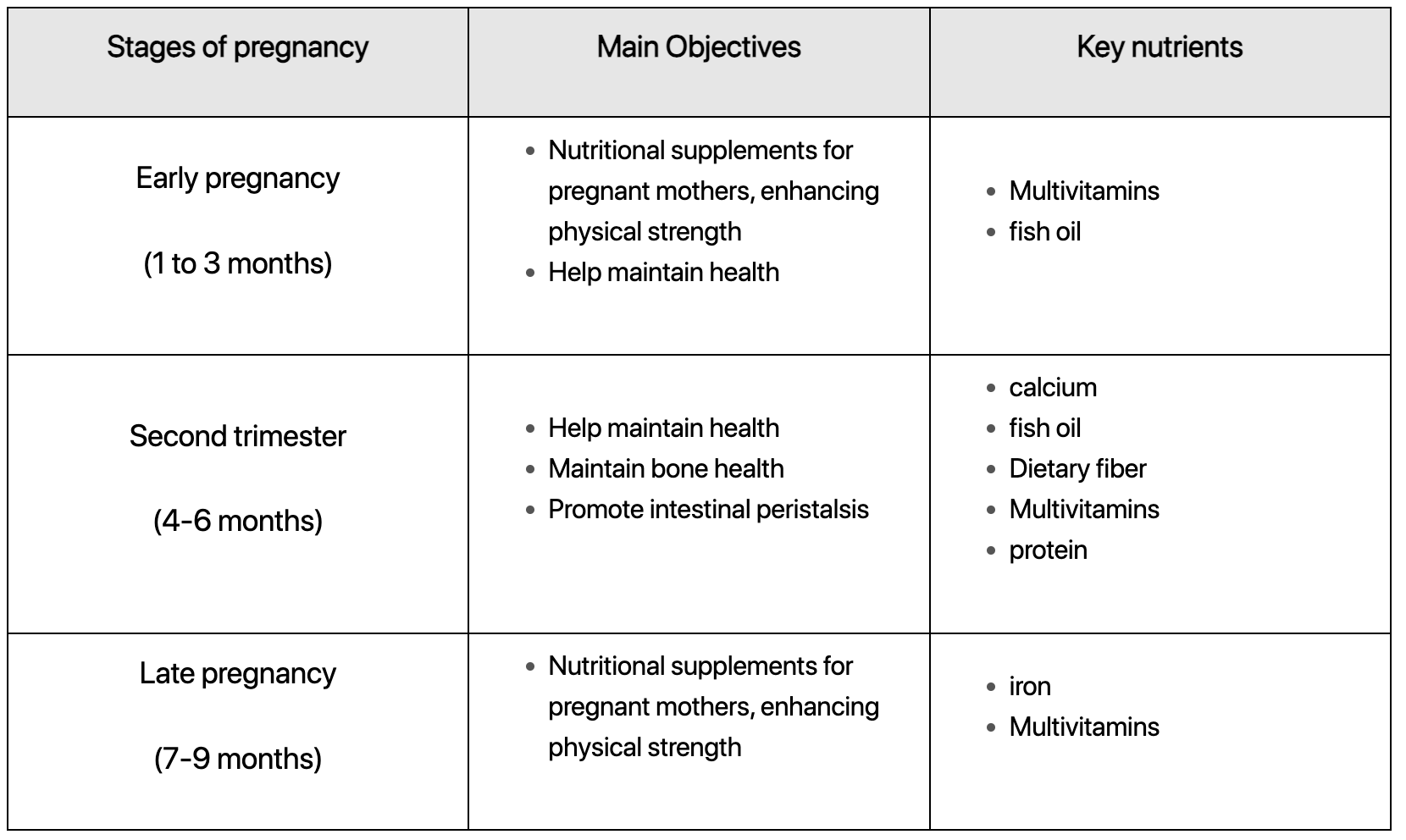
Therefore, the nutritional elements required before, during and after pregnancy are very different.
Essential nutrients for pregnant women 1: Iron
Due to physiological characteristics, women are more likely to be deficient in iron than men. Once pregnant, they need to supplement iron. Iron is an important nutrient for the body and is also a necessary nutritional supplement before delivery to meet the needs within 4 months after birth.
Benefits of iron supplementation
- Important component of hemoglobin and myoglobin
- Contributes to the formation of normal red blood cells
- Contributes to the transportation and utilization of oxygen
The Ministry of Health and Welfare recommends 15 mg of iron intake per day for women of childbearing age and pregnant women, and women in late pregnancy should increase their daily intake to 45 mg. Therefore, pregnant women are encouraged to consume more iron-rich foods, including red meat, dark green vegetables, beans (dried tofu, tofu), etc.
If you need to supplement your body with health supplements, there are many sources of iron on the market. It is recommended to choose ferrous glycinate, which has the highest absorption rate and a bioavailability of over 90%. It also does not have the side effects of general iron supplements and is unlikely to cause difficulty in defecation.
Essential nutrients for pregnant women 2: Calcium
During pregnancy and with the presence of the baby, it is more important to maintain the normal development and health of bones, and calcium intervention is needed at this time.
Benefits of calcium supplementation
- Helps maintain normal development and health of bones and teeth
- Helps normal blood coagulation function
- Helps normal muscle and heart contraction and nerve sensitivity
- Activates prothrombin to convert into thrombin, helps blood coagulation
- Regulates cell permeability.
The Ministry of Health and Welfare recommends 1,000 mg of calcium per day for women of childbearing age and pregnant women. It is recommended to consume 2-3 cups of milk per day, or take an appropriate amount of calcium supplements. This can be taken throughout pregnancy to meet prenatal nutritional needs. Foods rich in calcium include low-fat milk, dairy products, tofu, dark green vegetables, etc.
When it comes to choosing health supplements, oral calcium tablets are the most common and best option for calcium supplementation. However, it is recommended that the dose should not exceed 500 mg each time, and that the sufficient amount should be achieved through supplementation in batches. In addition, you can also choose a compound formula to double the calcium absorption effect.
There are many types of calcium, and seaweed calcium, which is recommended for vegetarians, is one of the calcium options with the highest absorption rate.
Essential nutrients for pregnant women 3: Comprehensive vitamins
There is no need to say much about the benefits of vitamins to the body, so when pregnant, it is recommended to supplement vitamins ABCDE to fully enhance physical strength, adjust physical fitness, and regulate physiological functions. In particular, vitamin D has the function of promoting calcium absorption, and vitamin C also promotes iron absorption. When supplementing calcium and iron, remember to supplement vitamins as well, so that it is sufficient as a comprehensive nutritional supplement for mother and fetus.
Benefits of taking multivitamins
- Help the development and growth of teeth and bones
- Help maintain the normal physiology of nerves and muscles
- Help maintain the normal function of skin, heart and nervous system
- Promote the growth of connective tissue in the body
- Have antioxidant effects
- Help reduce the production of free radicals
- Promote the formation of collagen
- Help maintain normal energy metabolism
- Help maintain normal appetite
The Ministry of Health and Welfare recommends that the requirement for most vitamins increases during pregnancy and breastfeeding, and it is recommended to reach the reference intake of nutrients and not exceed the upper limit of intake. A balanced diet of the six major categories can supplement the various vitamins needed for daily life, but pregnant mothers are inevitably picky about their appetites. In addition, one person eats for two, so the amount of vitamins must be sufficient. It is recommended to directly supplement with comprehensive vitamins from health products.
Essential nutrients for pregnant women 4: Fish oil (early and mid-pregnancy)
Fish oil Omega-3 is a recommended nutritional supplement during pregnancy and is an important nutritional supplement before delivery. The World Health Organization (WHO) recommends that pregnant women take at least 200 mg of DHA a day. However, pregnant mothers should be reminded that they must stop taking fish oil in the late pregnancy and close to the due date to avoid affecting physiological functions.
Essential nutrients for pregnant women 5: Protein
The middle and late stages of pregnancy are a period of rapid fetal growth and development, so adequate protein intake is necessary to maintain the baby's health and enhance the mother's physical strength.
Benefits of protein supplementation
- Adjust physical constitution
- Nourish and strengthen the body
- Enhance physical strength
- Enrich the spirit
- Nutritional supplement
During the middle and late stages of pregnancy, due to the rapid development of the fetus, the mother's body, uterus, breasts, amniotic fluid and blood all expand significantly. The Ministry of Health and Welfare recommends that pregnant women need to increase their protein intake by about 10 grams per day, of which more than half should come from high biological value proteins (such as milk, eggs, beans, fish, meat). Pregnant mothers are encouraged to adjust their diet menu during pregnancy, consume more high-quality proteins such as mackerel and salmon, and supplement natural and healthy protein and fish oil.
Essential nutrients for pregnant women 6: Dietary fiber
During pregnancy, you may become picky about your diet, eat less fruits and vegetables, and need smooth bowel movements. Dietary fiber can promote intestinal peristalsis and make bowel movements smooth.
Benefits of dietary fiber supplementation
- Can promote intestinal peristalsis
- Increase satiety
- Make stool softer and easier to pass
The Ministry of Health and Welfare recommends that pregnant women should consume 25-35 grams per day to balance nutrition and promote defecation. In addition, it is equally important to replenish enough water on a daily basis. Dietary fiber is rich in whole grains, vegetables, fruits, dry beans, nuts, and seeds. In terms of diet, you may replace white rice with whole grain rice, and eat nuts, seeds, and fruit yogurt as snacks during meals to replenish your nutrition.
Dietary taboos for pregnant women?
Dietary taboos for pregnant mothers are what elders love to remind us of the most. However, we will help you figure out what you really cannot eat and what is harmful to your body, rather than just hearsay.
Example:
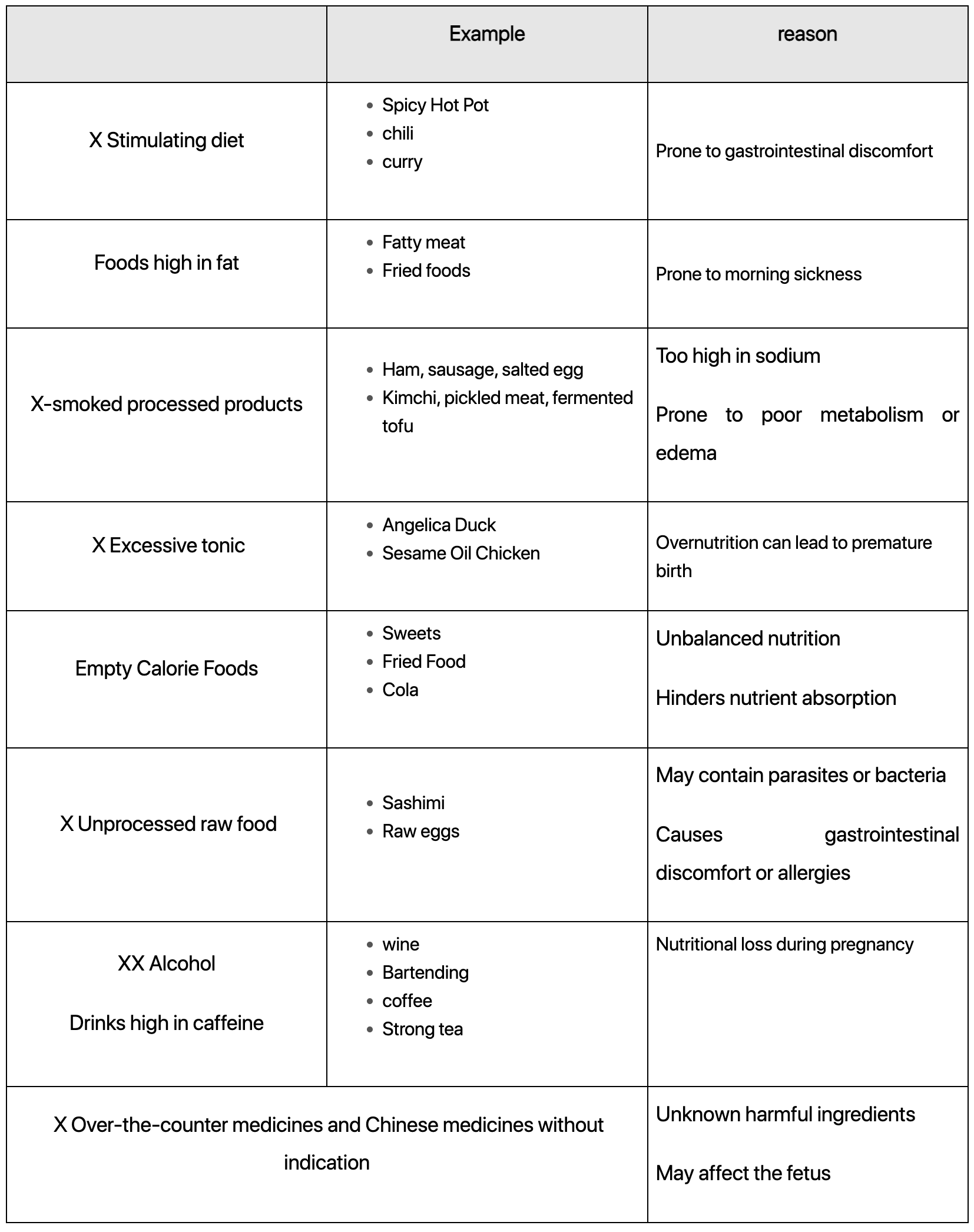
In short, the dietary principle for pregnant mothers is light and balanced. Being strict with yourself during pregnancy can help the baby develop more healthily. Hard-working mothers just need to be patient!


