Description
🚚 The fastest delivery : 2-day.
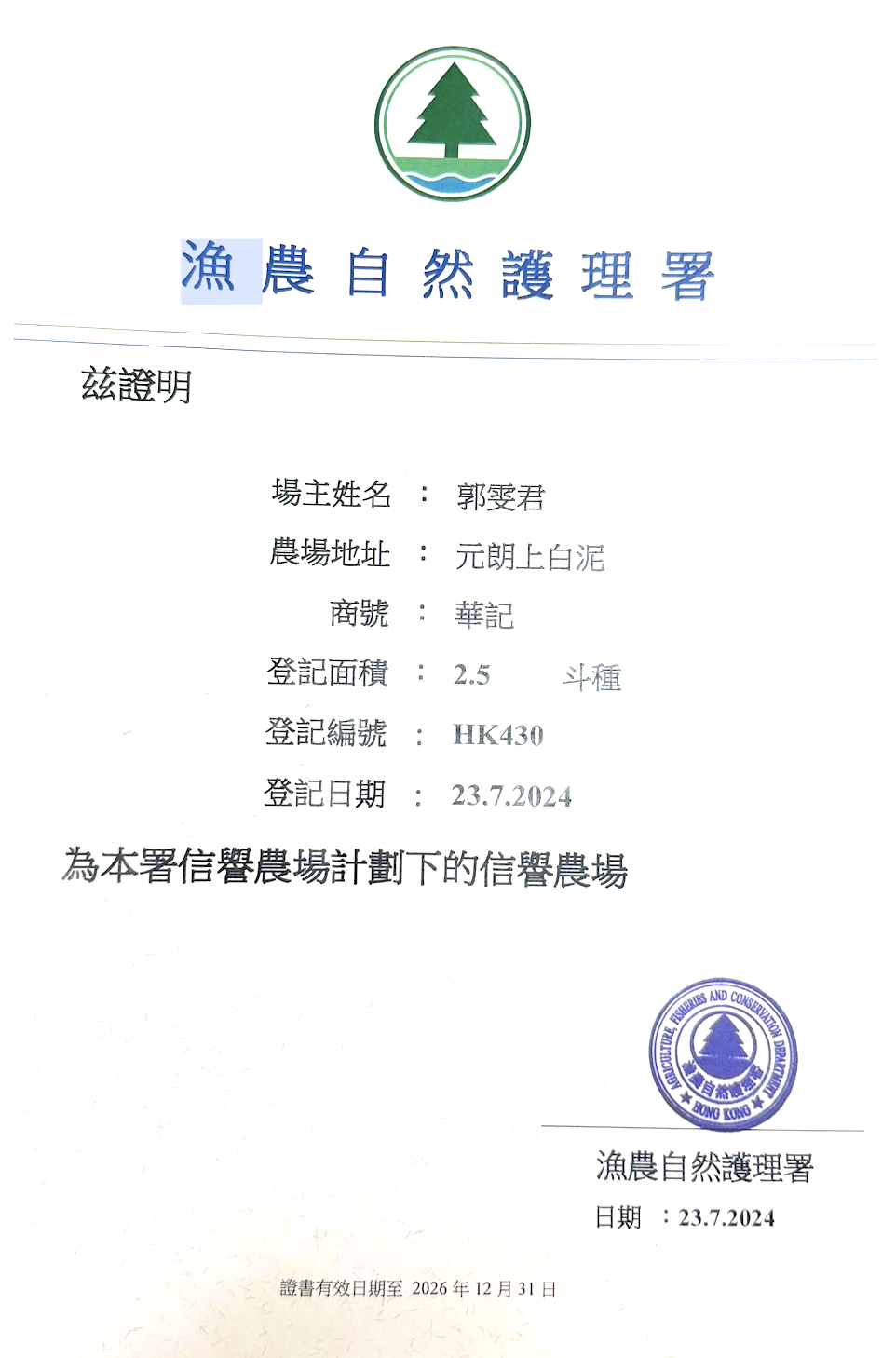
🐝 Supplier / Origin : Pak Nai Wah Kee, Yuen Long
🔖 Certification : Accredited Farm - Accredited Farm Scheme, AFCD*
* AFCD will assess the farm management, horticultural practice, use of pesticides and results of pesticide residue tests before granting accreditation.
🌱 Supplier introduction : Healthy Express is a unique local farm online shopping platform. It cooperates with more than 30 local farms and importers to provide more than 1,500 Products.
Pak Nai is located in the western part of Yuen Long District, Hong Kong, facing Deep Bay and Shekou, Shenzhen. The coastline of Pak Nai consists of mudflats, some of which are oyster farms, producing the famous "Lau Fau Shan oysters." The two main villages are Sheung Pak Nai Village and Ha Pak Nai Village.
Farm Name: Pak Nai Wah Kee Farm
Organic or Conventional Farming? Pesticide-Free Farming
Farm Owner or Farm Introduction: Pak Nai Wah Kee
My grandfather has been farming in Pak Nai since the 1960s. Through the years and changing times, the third generation continues to manage the farm on a small scale.
Registered Credit Farmer: Ms. Kwok MK
登記信譽農場人:郭雯君女士
🛍 Product Information :
Sweet Potato Leaves (commonly known as 番薯葉 or 地瓜葉 in Hong Kong, Guangdong, and Taiwan), from the plant scientifically named Ipomoea batatas, are the young leaves and tender stems of the sweet potato vine in the Convolvulaceae family. Native to South America, sweet potatoes are now cultivated worldwide in tropical and subtropical regions, including southern China, Hong Kong, Taiwan, Southeast Asia, Africa, and beyond. Historically used as animal feed ("pig vegetable"), they are now recognized as a highly nutritious leafy green, often praised as one of the "vegetable queens" or antioxidant-rich vegetables by research centers like the Asian Vegetable Research and Development Center.
The leaves are heart-shaped or palmately lobed, bright green (sometimes with purplish stems), offering a tender, mild, slightly sweet grassy flavor when cooked. They are low in calories (about 22–30 kcal per 100g) but exceptionally nutrient-dense: high in dietary fiber (around 3.3g), plant protein, vitamins A (rich in beta-carotene), C, E, K, B-complex, lutein, zeaxanthin, and minerals such as calcium, iron, potassium, and magnesium. They also contain bioactive compounds like myricetin and quercetin with strong antioxidant properties.
In traditional Chinese folk medicine and some TCM references, sweet potato leaves are considered sweet in taste and neutral to slightly cooling in nature. They are valued for tonifying qi, strengthening the spleen and stomach, clearing heat and toxins, promoting bowel movement, stopping bleeding, promoting lactation, helping regulate blood sugar and lipids, and supporting eye health. They are popularly used to aid constipation, anemia, vision issues, hypertension, edema, and immunity, and are seen as an affordable superfood for weight management, eye protection, and anti-aging. In Hong Kong and Taiwan, they are commonly stir-fried or blanched and dressed; in Southeast Asia, added to soups or curries.
Precaution: Due to their cooling nature and high potassium content, consume in moderation if you have chronic kidney disease, need strict potassium control, or have a weak/cold digestive system (may cause bloating or diarrhea). Those on blood-thinning medications should note the vitamin K content. Blanching before cooking can reduce oxalates and some potassium. Always use fresh, clean sources.
🥘 Recipe:
Practical Recipe Tips for Sweet Potato Leaves. Sweet potato leaves have a tender, smooth texture and a refreshing aroma. They are rich in dietary fiber, vitamin A, iron, and antioxidants, making them ideal for stir-frying or blanching to retain their nutrients and provide a refreshing and appetizing flavor.
Preparation Tips (Essential Before Every Recipe)
- Use only fresh, tender leaves and stems, removing any tough, fibrous parts (you can test this by bending them; if they are too hard to break, they are tough; peel off the outer layer of tough fibers).
- Soak the leaves in a bowl of water with a little salt for 5–10 minutes, rinsing several times to remove dirt and some oxalic acid.
- When cooking, stir-fry quickly over high heat or blanch briefly to avoid overcooking, which can cause them to turn black or release too much water (some recipes suggest skipping blanching and directly stir-frying over high heat with a little hot water).
- To retain fat-soluble nutrients such as beta-carotene, it is recommended to eat them with a small amount of oil.
1. Classic Home-Style Recipe (Hong Kong/Cantonese Style)
Stir-fried Sweet Potato Leaves with Garlic (Simplest and Most Popular)
Ingredients (Serves 2-3): A handful of sweet potato leaves (approx. 300-400g), 6-8 cloves of garlic (minced or smashed), 2-3 tablespoons oil, a pinch of salt, a pinch of sugar or oyster sauce (optional), about half a cup of hot water.
Instructions:
Wash and prepare the sweet potato leaves, cutting them into appropriate lengths (or leaving them whole).
Heat oil in a pan (the pan should be hot enough), and sauté the minced garlic until golden brown (do not burn).
Add the sweet potato leaves and stir-fry quickly over high heat for 1 minute. Add a little hot water (to help even heating and prevent burning), cover and simmer for 30 seconds to 1 minute.
Add salt, a pinch of sugar or oyster sauce to taste, and stir-fry quickly until the leaves are soft and bright green (about 2-3 minutes in total).
Tip: High heat and a small amount of hot water help maintain the bright green and crisp texture without releasing too much water.
Stir-fried Sweet Potato Leaves with Shrimp Paste/XO Sauce (A Delicious and Appetizing Dish)
Ingredients: A handful of sweet potato leaves, minced garlic, 1-2 teaspoons shrimp paste (or XO sauce), dried or fresh chili peppers (optional), oil.
Instructions:
Heat a pan and sauté the minced garlic and chili peppers until fragrant.
Add the shrimp paste or XO sauce and sauté until fragrant.
Add the sweet potato leaves and stir-fry quickly over high heat. Add a little water and simmer briefly. Season to taste.
Spicy, savory, and flavorful—a truly appetizing dish.
Stir-fried Sweet Potato Leaves with Century Egg
Ingredients: A handful of sweet potato leaves, 1-2 century eggs (cut into pieces), minced garlic, chili peppers, oil, salt or oyster sauce.
Instructions:
Heat a pan and sauté the minced garlic and chili peppers until fragrant. Add the century egg pieces and stir-fry until slightly crispy.
Add the sweet potato leaves and stir-fry quickly until cooked. Season to taste and serve.
The aroma of eggs blends perfectly with the flavor of the vegetables, creating a rich and layered taste experience.
2. Refreshing and Healthy Ways to Enjoy Sweet Potato Leaves
Blanched Sweet Potato Leaves with Garlic (or Warm Salad)
Ingredients: A handful of sweet potato leaves, minced garlic, oil, oyster sauce or soy sauce, a little sugar, sesame oil.
Instructions:
Add a little salt and a few drops of oil to boiling water, then blanch the sweet potato leaves for 20-60 seconds (until the leaves turn a deep green). Remove and rinse with cold water or drain.
In a separate pan, sauté minced garlic until fragrant, then pour it over the blanched sweet potato leaves, or mix in a sauce (oyster sauce + sugar + sesame oil).
This recipe retains the most nutrients, is refreshing and not greasy, suitable for summer or for those trying to lose weight.
Sweet Potato Leaves and Lean Pork Soup / Rib Soup
Ingredients: A handful of sweet potato leaves, lean pork or ribs, ginger slices, red dates (optional), water.
Instructions:
Blanch the pork and simmer with ginger slices for 30 minutes.
Add the prepared sweet potato leaves and cook for 5-10 minutes. Season to taste.
This soup is sweet and refreshing, suitable for the whole family. 3. Other Variations on How to Eat Sweet Potato Leaves
Stir-fried Sweet Potato Leaves with Black Bean and Dace: Sauté black beans and canned dace until fragrant, then add sweet potato leaves. Savory and delicious with rice.
With Ginger or Rice Wine: Add a little ginger and rice wine while stir-frying to remove bitterness and enhance aroma.
Vegetarian/Western Variations: Blanch and then toss with olive oil, lemon juice, and garlic for a salad; or add to pasta/fried rice.
Chaoshan Style: Sometimes baking soda is added before blanching (but not recommended for home cooking to preserve natural flavor).
Precautions
Sweet potato leaves are cooling in nature and high in potassium and vitamin K. Those with chronic kidney disease, those who need to control potassium levels, or those taking anticoagulants should consume them in moderation.
Those with weak spleen and stomach, or prone to diarrhea, should not eat excessive amounts raw or on an empty stomach.
Fresh, tender leaves are best; commonly found in markets during the summer season at affordable prices.
Start with a small amount and observe your body's reaction.
These recipes are designed for easy-to-make Hong Kong home cooking, focusing on quick stir-frying over high heat. They can be easily incorporated into daily meals and can be eaten in rotation with previously introduced herbs such as winter jasmine, amaranth, sweet lettuce, and field shrubs for a more balanced diet.
番薯葉(Sweet Potato Leaves / 地瓜葉)的實用食譜建議。番薯葉口感嫩滑、清香,富含膳食纖維、維生素A、鐵質及抗氧化物,適合快炒或汆燙,能保留營養並帶來清爽下飯的感覺。
處理小貼士(每道食譜前必做)
只選用新鮮嫩葉及嫩莖,摘去老梗(老梗纖維粗,可用手彎折測試,掐不動的就是老梗,撕去外層粗纖維)。
放入清水盆中加少許鹽浸泡5–10分鐘,多沖洗幾次,去除泥沙及部分草酸。
烹調時大火快炒或短時間汆燙,避免久煮變黑或出水太多(有些做法建議不汆水,直接大火猛炒加少許熱水)。
想保留β-胡蘿蔔素等脂溶性營養,建議搭配少許油脂食用。
1. 最經典家常菜譜(香港/廣東風味)
蒜蓉炒番薯葉(最簡單、最受歡迎)
材料(2–3人份):番薯葉一把(約300–400g)、蒜頭6–8瓣(切蓉或拍扁)、油2–3湯匙、鹽少許、少許糖或蠔油(可選)、熱水約半杯。
做法:
番薯葉處理洗淨,切成適當長度(或整株)。
熱鍋下油(鍋要夠熱),爆香蒜蓉至金黃(勿燒焦)。
放入番薯葉大火快炒1分鐘,加入少許熱水(幫助均勻受熱、不易變黑),蓋鍋稍悶30秒–1分鐘。
加鹽、少許糖或蠔油調味,快速翻炒至葉片軟身翠綠即可(全程約2–3分鐘)。
秘訣:大火猛炒 + 少量熱水,能保持翠綠脆嫩、不出水太多。
蝦醬 / XO醬炒番薯葉(惹味版,下飯神器)
材料:番薯葉一把、蒜蓉、蝦醬1–2茶匙(或XO醬)、乾辣椒或新鮮辣椒(可選)、油。
做法:
熱鍋爆香蒜蓉及辣椒。
加入蝦醬或XO醬炒香。
放入番薯葉大火快炒,加少許水悶片刻,調味即可。
香辣鹹鮮,特別開胃。
皮蛋炒番薯葉
材料:番薯葉一把、皮蛋1–2個(切塊)、蒜蓉、辣椒、油、鹽或蠔油。
做法:
熱鍋爆香蒜蓉辣椒,加入皮蛋塊炒至微酥。
放入番薯葉快炒至熟,調味上碟。
蛋香混菜香,風味層次豐富。
2. 清爽健康吃法
汆燙蒜蓉番薯葉(或溫拌)
材料:番薯葉一把、蒜蓉、油、蠔油或醬油、少許糖、香油。
做法:
滾水中加少許鹽 + 幾滴油,放入番薯葉汆燙20–60秒(看到葉色轉深綠即可撈起,過冷河或直接瀝乾)。
另起鍋爆香蒜蓉,淋在燙好的番薯葉上,或拌入醬汁(蠔油 + 糖 + 香油)。
保留最多營養,清爽不油膩,適合夏天或減重。
番薯葉瘦肉湯 / 排骨湯
材料:番薯葉一把、瘦肉或排骨、薑片、紅棗(可選)、清水。
做法:
肉飛水後與薑片煲30分鐘。
加入處理好的番薯葉煮5–10分鐘,調味即可。
清甜去濕,適合全家飲用。
3. 其他變化吃法
豆豉鯪魚炒番薯葉:用豆豉 + 罐裝鯪魚爆香後加入番薯葉,咸香下飯。
加薑絲或米酒版:炒時加少許薑絲 + 米酒,能去澀增香。
素食 / 西式變化:汆燙後拌橄欖油 + 檸檬汁 + 蒜,做沙律;或加入意粉 / 炒飯。
潮汕風味:有時會加小蘇打汆水再炒(但家常不建議,以保留天然風味)。
注意事項
番薯葉性偏涼,高鉀、高維生素K,慢性腎病患者、需控鉀者、服用抗凝血藥者應適量。
脾胃虛寒、易腹瀉者不宜過量生食或空腹吃。
新鮮嫩葉最佳;市場常見夏季當造,價格親民。
從小量開始試食,觀察身體反應。
這些食譜以香港家庭易做、大火快炒為主,能輕鬆融入日常飲食,與之前介紹的冬冬草、勒莧菜、甜油麥、田灌草等輪流食用,營養更均衡。
🔅Notes:
(以上介紹綜合傳統民間用法、營養資料、現代研究及中醫食療知識,實際效果因人而異,建議以均衡飲食為主,並在有需要時咨詢醫生或中醫師。番薯葉與之前介紹的冬冬草、勒莧菜、崩大碗、田灌草等清熱蔬菜可輪流食用,互補營養。)
(The above information is a compilation of common Chinese medicine dietary therapies, folk remedies, nutritional information, and traditional dietary knowledge. Actual effects may vary from person to person. It is recommended to focus on a balanced diet and consult a doctor or Chinese medicine practitioner when necessary.)