Description
*This activity is mainly in Cantonese*
The Easter holiday brings news about consumption and graduation trends in the north. Do you want to hear a good resurrection story? !
The farmer 👨🏻🌾 in Lung Ya Pai, Lam Tsuen, Tai Po, has successfully revived the "Hong Kong silk rice" that has been lost for half a century! The restoration process took six years across oceans and was by no means simple.
"Imported Thai rice is enough, but Japanese pearl rice is equally delicious?" Why do farmers decide to study Hong Kong rice? What is the history of rice in Hong Kong and how is it cultivated to taste?
Hong Kong is known as the land of fish and rice. Let’s “put it simply” together with farmer Yuan Yitian to share the various possibilities of Hong Kong rice today!
🍚Restoration Process: Hong Kong’s traditional rice varieties are going to the Philippines and the United States?
🍚Keeping seeds in Hong Kong: If we want local rice varieties and rice history to no longer be lost, what are the good bridges? Let’s promote ideas and come to jam jam~
🍚Recruitment of new rice names: In the past, rice names were full of pictures, such as rat teeth and sticky ivory. Nowadays, when new varieties are cultivated, they have to be changed back to a beautiful name!
Details
Date 🗓: April 12, 2024 (Friday)
Time🕙﹕07:30 – 10:00pm
Location 🏠: Liber Research Community (7th Floor,
Breakthrough Center, 191 Wusong Street, Jordan)
Fee💰: HK$100 per person (to be used to support the venue and speakers)
Speaker profile:
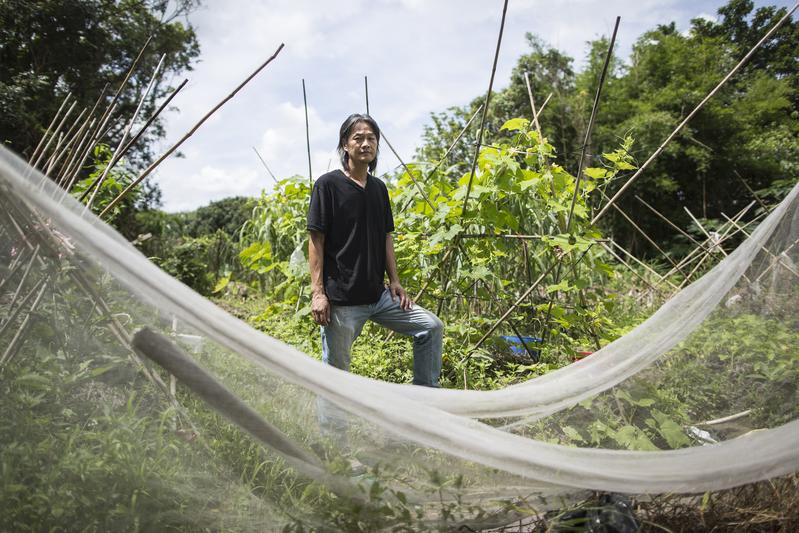
Mr. Yuen Yi Tin (袁易天) was born in the 1960s and grew up in a farming family, ranking fourth. In 1997, the year when Hong Kong returned to the motherland, his parents, like many Hong Kong people at that time, chose to immigrate abroad. He was the only one in his family who decided to end his white-collar life in Central and stay in Hong Kong to "return" to agriculture.
20 years ago, there were very few people engaged in organic farming in Hong Kong. In addition to being unfamiliar with emerging farming methods, farmers also had to find ways to develop sales channels on their own. To this day, organic markets have been scattered throughout Hong Kong, and "organic" has become a certain product label. However, Yuan Yi Tin believes that organic farming is only the basic condition for agriculture. What he wants to do is to establish a unique operating model in Hong Kong and make agriculture truly a part of industrial development. 7 years ago, he established "
MaPoPo Community Farm". This agricultural production community is located in Fanling, northeast of the New Territories District of Hong Kong. It takes "urban and rural symbiosis" as its core spirit. In addition to farming, it also holds workshops to convey organic concepts. Members earn income All come from participating in various operations of the farm.
However, as generations change, the knowledge and skills of old farmers gradually disappear, and the new generation lacks experience, the reality is that Hong Kong agriculture is facing the crisis of the gradual disappearance of "diversity". In recent years, Yuen has continued to run the agricultural magazine "Planting Hong Kong" with his friends. In addition to focusing on agricultural law practices and knowledge, it also serves as a medium for conveying ideas. Faced with the helpless reality that Hong Kong's agricultural land is gradually shrinking due to the needs of political and economic development, Mr. Yuen Yi Tin, who grew up on farmland, expressed his dismay about the future of Hong Kong's agriculture in his words.
After working for these years, he now uses football, which he also loves, as a metaphor for agriculture, the source of his livelihood. "Even if he likes football and plays football every day, there will always be times when he is physically exhausted. In the future, he just wants to just plant crops, not for the club or for Politics, but the pure joy of playing football." Yuen Yi Tin said that he is not the kind of person who wants to "speak to Hong Kong people", but he can still feel the sincerity from the land from the interview text.
Because farmland has been abandoned, many stray cattle can be found in the outskirts and rural areas of the New Territories. The picture shows a group of about 20 buffaloes in the swamp behind Pui O Beach, Lantau Island.
Note:
Seats are limited, register now!
This event is first-paid, first-served. Those who register without making payment risk forfeiting their spots. For those who have paid but wish to withdraw, refund is not available unless there are special circumstances.