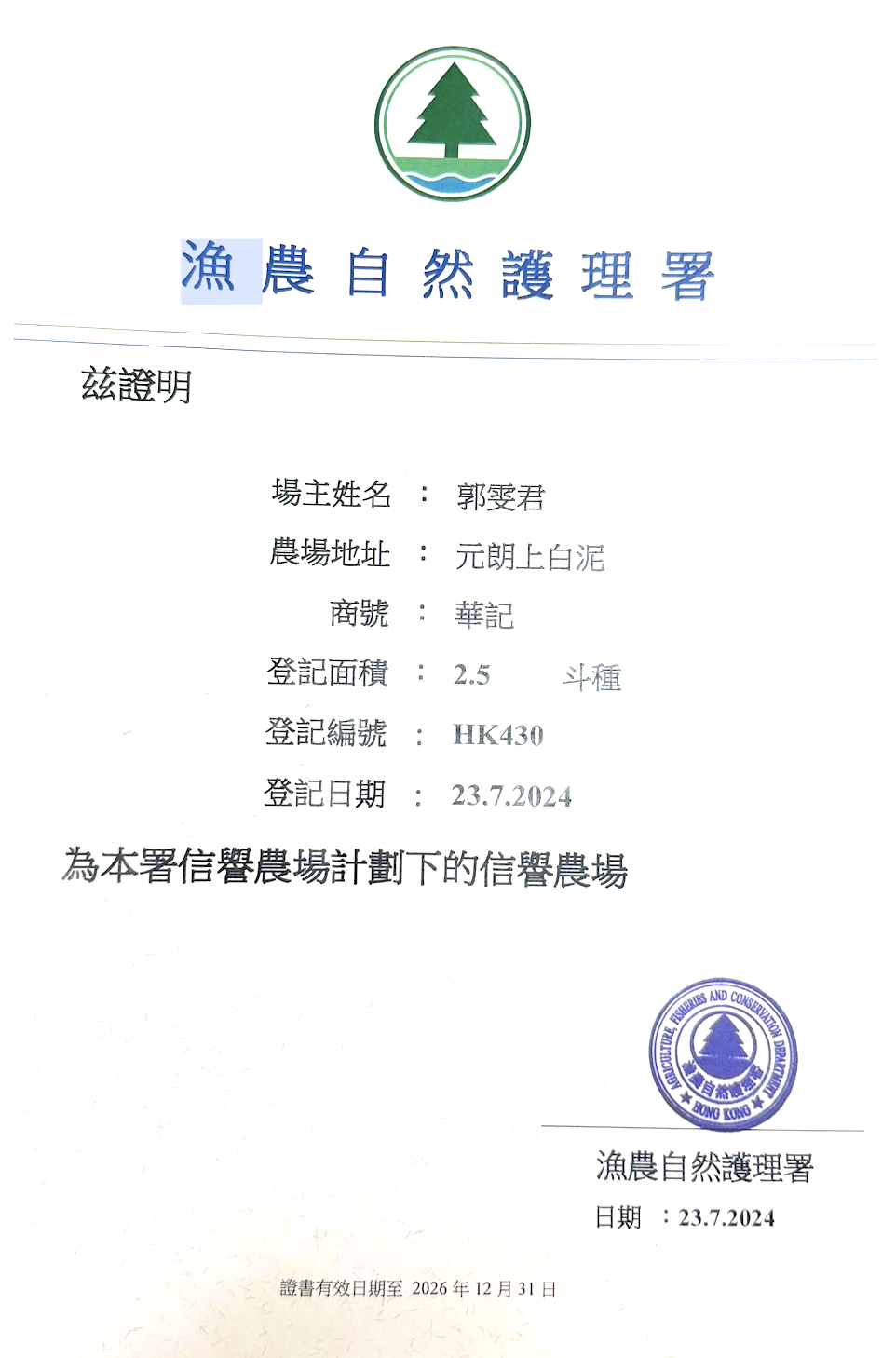
* AFCD will assess the farm management, horticultural practice, use of pesticides and results of pesticide residue tests before granting accreditation.
🌱 Supplier introduction : Healthy Express is a unique local farm online shopping platform. It cooperates with more than 30 local farms and importers to provide more than 1,500 Products.
Pak Nai is located in the western part of Yuen Long District, Hong Kong, facing Deep Bay and Shekou, Shenzhen. The coastline of Pak Nai consists of mudflats, some of which are oyster farms, producing the famous "Lau Fau Shan oysters." The two main villages are Sheung Pak Nai Village and Ha Pak Nai Village.
田灌草(車前草,Plantago asiatica 或 Plantago major)的實用食譜建議。田灌草性寒、味甘,具有清熱利尿、祛濕消腫、清肝明目、清肺化痰等功效,適合夏季或濕熱體質者飲用/食用。香港及廣東民間常用來煲涼茶或湯水,幫助去濕、利尿、通淋。
Chinese Plantain (commonly known as 田灌草 or 車前草 in Hong Kong and Guangdong, also called Plantain or Asiatic Plantain), scientifically named Plantago asiatica (or closely related Plantago major), is a perennial herbaceous plant in the Plantaginaceae family. It is widely distributed in East Asia, including southern China, Hong Kong, Taiwan, and Southeast Asia, often growing as a common weed in moist areas such as roadsides, field edges, ditches, and lawns.
The plant features basal leaves arranged in a rosette, broad ovate or elliptical in shape with wavy or slightly toothed margins and prominent 5–7 parallel veins (resembling pig ears or wheel tracks). It produces upright flower spikes with tiny greenish-white flowers, followed by small seeds (known as Che Qian Zi in TCM).
The tender leaves and whole herb are edible, with a mild grassy taste that becomes smoother when cooked. In traditional Chinese medicine, it is considered sweet in taste and cold in nature, entering the liver, kidney, lung, and bladder meridians. It is valued for clearing heat and promoting diuresis, draining dampness to stop diarrhea, clearing the liver to improve eyesight, and clearing the lungs to resolve phlegm. It is popularly used for conditions like edema, urinary issues (e.g., painful urination or infections), summer damp-heat diarrhea, red and swollen eyes, phlegm-heat cough, and skin dampness problems. In Guangdong and Hong Kong folk practice, it is a classic summer "detox" herb, often added to cooling herbal teas or soups with ingredients like luo han guo or job's tears.
Precaution: Its cooling nature makes it unsuitable in large amounts for those with weak digestion, cold constitution, pregnant women, or young children—it may cause loose stools due to its laxative-like effect on the intestines. Always cook thoroughly and source from clean areas. Consult a healthcare professional or TCM practitioner before regular use, especially with underlying conditions.
田灌草性寒、味甘,具有清熱利尿、祛濕消腫、清肝明目、清肺化痰等功效,適合夏季或濕熱體質者飲用/食用。香港及廣東民間常用來煲涼茶或湯水,幫助去濕、利尿、通淋。
重要處理步驟(每道食譜前必做)
新鮮田灌草買回後,先浸泡10–15分鐘,多洗幾次(至少3–5次),徹底去除泥沙及雜質(根部可保留,功效較強)。
可連根一起使用(去老根),洗淨後切段或整株放入。
若用乾品,份量減半(約新鮮的一半)。
煲煮時最好用瓦煲或不鏽鋼鍋,避免鐵鍋。
1. 最傳統保健吃法
田灌草涼茶(最簡單日常飲用)
材料:新鮮田灌草半斤(約250–300g)、清水2–3升、蜜棗2–3粒或片糖/冰糖適量(可選)。
做法:
田灌草洗淨浸泡後,與冷水一起放入鍋中。
大火煮滾,轉小火煲45–60分鐘(或用養生壺煲)。
關火燜10–15分鐘,濾渣,加糖調味(或不加糖飲原味)。
可一次煲多,分2–3天飲用(放雪櫃)。適合清熱去濕、利尿、化痰止咳。
田灌草單味茶:取新鮮或乾田灌草一小把,沖熱水浸10–15分鐘即飲(較淡,適合試飲)。
2. 簡單家常湯譜(香港廣東風味)
田灌草生熟薏米瘦肉湯 / 排骨湯(最經典去濕湯)
材料(3–4人份):新鮮田灌草半斤、生薏米2兩、熟薏米2兩、瘦肉或排骨6–10兩、蜜棗2粒、生薑2片、清水約8–10碗、鹽適量。
做法:
所有材料洗淨,瘦肉/排骨飛水。
薏米浸洗;田灌草洗淨切段或整株。
鍋中加水煮滾,放入薏米、蜜棗、薑片、肉,大火滾後轉中火煲約1小時。
加入田灌草再煲30–45分鐘(或先煲其他料,最後加田灌草煲1.5小時),加鹽調味。
功效:清熱利尿、健脾去濕、改善小便不利或暑濕。生熟薏米搭配可減寒性。
田灌草豬骨 / 瘦肉湯(加甘筍或粟米變奏)
材料:田灌草半斤、豬骨或瘦肉半斤、甘筍1條(或粟米1條)、生薏米30g、蜜棗2粒。
做法:類似以上,先煲肉及薏米等約1小時,再加田灌草及甘筍煮45分鐘至1小時。
清甜去濕,適合全家飲用。
田灌草豬小肚湯(民間傳統,適合利尿通淋)
材料:田灌草半斤、豬小肚1個(處理乾淨)、瘦肉適量、生熟薏米、蜜棗、陳皮少許。
做法:豬小肚飛水切片,先煲豬小肚及其他料1小時,再加田灌草煮30–45分鐘。
對尿路不適或水腫有輔助作用。
3. 其他變化吃法
田灌草羅漢果涼茶:田灌草 + 半個羅漢果 + 生熟薏米 + 蜜棗,煲45–60分鐘。化痰止咳、清肝明目效果更好,適合有咳嗽或糖尿病人士(少糖)。
田灌草白果黃豆湯:田灌草半斤 + 白果2兩(去芯) + 黃豆4兩 + 瘦肉 + 蜜棗,煲1.5小時。去濕利尿,適合濕熱體質。
五草 / 三草涼茶變奏:田灌草 + 半邊蓮 + 白花蛇舌草(各一扎) + 蜜棗,煲45分鐘(清熱解毒力更強)。
簡單炒食或湯底:嫩葉汆水後蒜蓉快炒(口感稍粗,適合重口味),或加入蔬菜湯中最後下鍋。
注意事項
田灌草性寒,脾胃虛寒、體質虛弱、孕婦、兒童及長期腹瀉者應少量或避免飲用(可能引起腹瀉)。
從小量開始試飲,觀察身體反應。連續飲用建議每週2–3次。
新鮮田灌草最佳,確保來源乾淨(無農藥污染);乾品可在中藥店購買。
與之前介紹的崩大碗(同樣清熱利濕但葉形不同)、冬冬草、勒莧菜等輪流食用,避免過度寒涼。
若有慢性病或服藥,請先咨詢醫生或中醫師。
這些食譜以香港家庭易做、傳統民間用法為主,簡單清爽,能融入日常湯水或涼茶。如果你想加特定食材(如赤小豆、白扁豆、羅漢果)、或需要更詳細的步驟/份量調整,告訴我們,我們可以再優化!
*Gnaphalium affine* is cold in nature and sweet in taste. It has the effects of clearing heat and promoting diuresis, removing dampness and reducing swelling, clearing the liver and improving eyesight, and clearing the lungs and resolving phlegm. It is suitable for consumption in summer or for those with a damp-heat constitution. In Hong Kong and Guangdong, it is often used to make herbal teas or soups to help remove dampness, promote urination, and relieve urinary tract infections.
Important Processing Steps (Must be done before each recipe)
After buying fresh *Gnaphalium affine*, soak it for 10-15 minutes, washing it several times (at least 3-5 times) to thoroughly remove dirt and impurities (the roots can be kept for stronger effects).
It can be used with the roots (remove old roots), washed and cut into sections or added whole.
If using dried *Gnaphalium affine*, halve the quantity (about half that of fresh).
It is best to use an earthenware pot or stainless steel pot when cooking, avoiding iron pots.
1. The Most Traditional Health-Preserving Method
* **Field Grass Herb Tea (Simple Daily Drink)**
Ingredients: 250-300g fresh field grass, 2-3 liters water, 2-3 jujubes or rock sugar/sweet sugar (optional).
Instructions: Wash and soak the field grass, then place it in a pot with cold water.
Bring to a boil over high heat, then simmer over low heat for 45-60 minutes (or use a health pot).
Turn off the heat and let it steep for 10-15 minutes. Strain and add sugar to taste (or enjoy it plain).
Made in larger batches and consumed over 2-3 days (refrigerate). Suitable for clearing heat and dampness, promoting urination, and relieving phlegm and cough.
* **Field Grass Single-Flavor Tea:** Take a small handful of fresh or dried field grass, steep in hot water for 10-15 minutes, and drink (lighter, suitable for tasting).
2. Simple Home-Style Soup Recipe (Hong Kong/Cantonese Style)
*Gynostemma pentaphyllum*, Raw and Cooked Job's Tears, and Lean Pork Soup / Pork Rib Soup (Classic Dehumidifying Soup)
Ingredients (Serves 3-4): 1/2 lb fresh *Gynostemma pentaphyllum*, 2 oz raw Job's tears, 2 oz cooked Job's tears, 6-10 oz lean pork or pork ribs, 2 jujubes, 2 slices ginger, approximately 8-10 bowls water, salt to taste.
Instructions:
Wash all ingredients. Blanch the lean pork/pork ribs.
Soak and wash the Job's tears; wash and cut the *Gynostemma pentaphyllum* into sections or leave it whole.
Bring water to a boil in a pot. Add the Job's tears, jujubes, ginger slices, and pork. Bring to a boil over high heat, then reduce to medium heat and simmer for about 1 hour.
Add the *Gynostemma pentaphyllum* and simmer for another 30-45 minutes (or simmer the other ingredients first, then add the *Gynostemma pentaphyllum* and simmer for 1.5 hours). Season with salt.
Benefits: Clears heat and promotes urination, strengthens the spleen and removes dampness, improves urinary difficulties or summer heat. Raw and cooked Job's tears can be combined to reduce their cooling properties.
**Pork Bone/Lean Meat Soup with *Gnaphalium affine* (Variation with Carrot or Corn)**
Ingredients: 1/2 lb *Gnaphalium affine*, 1/2 lb pork bones or lean meat, 1 carrot (or 1 corn), 30g raw Job's tears, 2 jujubes.
Instructions: Similar to the above, first simmer the meat and Job's tears for about 1 hour, then add the *Gnaphalium affine* and carrot and simmer for 45 minutes to 1 hour.
Sweet and refreshing, suitable for the whole family.
**Pork Stomach Soup with *Gnaphalium affine* (Traditional Folk Remedy, Suitable for Diuresis and Urinary Tract Relief)**
Ingredients: 1/2 lb *Gnaphalium affine*, 1 cleaned pork stomach, appropriate amount of lean meat, raw and cooked Job's tears, jujubes, a little dried tangerine peel.
Instructions: Blanch the pork stomach and slice it. First simmer the pork stomach and other ingredients for 1 hour, then add the *Gnaphalium affine* and simmer for 30-45 minutes.
Helpful for urinary tract discomfort or edema.
3. Other Variations
**Symplocos edulis and Monk Fruit Herbal Tea:** Symplocos edulis + half a monk fruit + raw and cooked Job's tears + jujubes, simmer for 45-60 minutes. Better for relieving phlegm and cough, clearing the liver and improving eyesight; suitable for people with coughs or diabetes (low sugar).
**Symplocos edulis, Ginkgo, and Soybean Soup:** Half a pound of ymplocos edulis + 2 ounces of ginkgo (core removed) + 4 ounces of soybeans + lean meat + jujubes, simmer for 1.5 hours. Removes dampness and promotes urination; suitable for those with damp-heat constitution.
**Five-Herb/Three-Herb Herbal Tea Variation:** Symplocos edulis + Lobelia chinensis + Hedyotis diffusa (one bunch each) + jujubes, simmer for 45 minutes (stronger heat-clearing and detoxifying effects).
**Simple Stir-fry or Soup Base:** Blanch tender leaves and stir-fry quickly with minced garlic (slightly coarse texture, suitable for those who prefer stronger flavors), or add to vegetable soup as a final addition.
Precautions
*Gynura divaricata* is cooling in nature. Those with weak spleen and stomach, poor constitution, pregnant women, children, and those with chronic diarrhea should consume it in small amounts or avoid it altogether (it may cause diarrhea).
Start with a small amount and observe your body's reaction. It is recommended to drink it 2-3 times per week continuously.
Fresh *Gynura divaricata* is best; ensure it is from a clean source (free from pesticide contamination). Dried *Gynura divaricata* can be purchased at Chinese medicine stores.
Alternate its use with previously introduced herbs such as *Centella asiatica* (also clearing heat and dampness but with different leaf shape), *Hedyotis diffusa*, and *Leymus chinensis* to avoid excessive cooling.
If you have chronic illnesses or are taking medication, please consult a doctor or Chinese medicine practitioner first.
These recipes are based on easy-to-make, traditional folk methods used in Hong Kong households. They are simple, refreshing, and can be incorporated into daily soups or herbal teas. If you would like to add specific ingredients (such as red beans, white lentils, or monk fruit), or need more detailed steps/quantity adjustments, please let us know, and we can optimize it further!
(The above information is a compilation of common Chinese medicine dietary therapies, folk remedies, nutritional information, and traditional dietary knowledge. Actual effects may vary from person to person. It is recommended to focus on a balanced diet and consult a doctor or Chinese medicine practitioner when necessary.)