Description
🚚 The fastest delivery : 2-day delivery.
🐝 Supplier / Origin : Tai Po / Kam Tin
🔖 Certification :
🌱 Supplier introduction : Healthy Express is a unique local farm online shopping platform. It cooperates with more than 30 local farms and importers to provide more than 1,500 Products.
🛍 Product Information :
Calamansi (Citrus × microcarpa), also known as calamondin, Philippine lime, or Philippine lemon, is an economically important citrus hybrid predominantly cultivated in the Philippines. It is native to the Philippines, Borneo, Sumatra, and Sulawesi in Indonesia in Southeast Asia, as well as southern China and Taiwan in East Asia. Calamansi is ubiquitous in traditional Filipino cuisine. It is naturally very sour, and is used in various condiments, beverages, dishes, marinades, and preserves. Calamansi is also used as an ingredient in Malaysian and Indonesian cuisines.
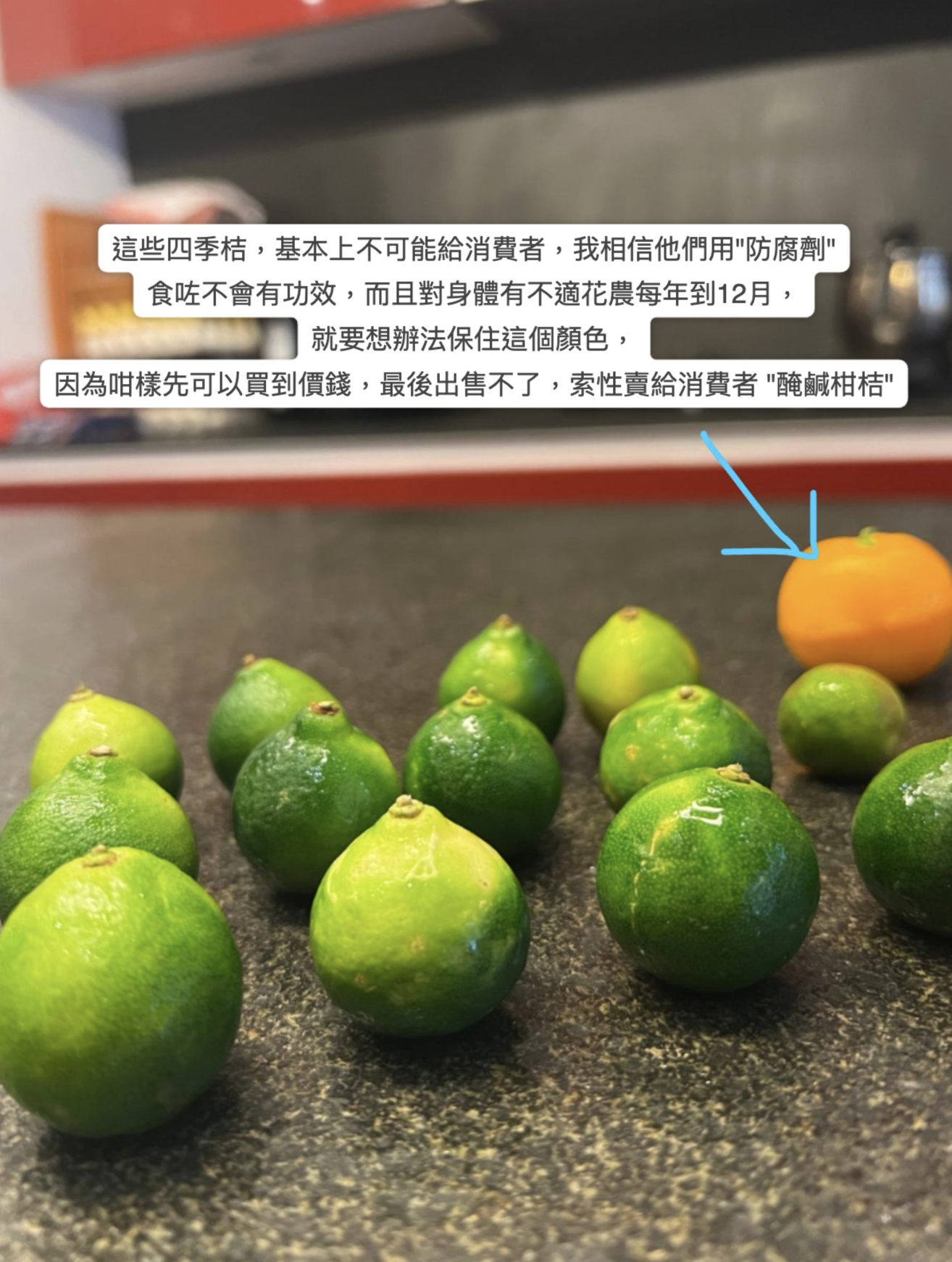
Freshly harvested or marketed kumquats (a type of tangerine) range in color from green to orange, with leaves and stems still attached. They appear fresh but their ripeness is uneven. The second picture shows the flowering status on the tree; many white flowers are still on the branches, even though it's early March (March 1, 2026). This clearly indicates low yield, mostly green fruit (not yet yellow/orange), and the tree is still flowering—a common phenomenon in kumquat production this year, especially in Hong Kong, the Pearl River Delta, and Guangdong.
Based on recent agricultural information, weather records, and feedback from similar varieties (such as Crispy Honey Kumquat and Kumquat) producing areas, the main reasons for this year's (winter to spring 2025/26) kumquat harvest, the greenish fruit, delayed ripening, and even flowering into March are as follows:
Overall higher-than-average winter temperatures, lacking sufficient low-temperature accumulation. Data from the Hong Kong Observatory shows that the average temperature for the winter of 2025/26 (December 2025 to February 2026) is normal to above average, with less rainfall, and the entire winter is warmer than usual (intensifying the long-term trend of global warming). The flower bud differentiation and fruiting of kumquats (and most citrus varieties) require a certain amount of low-temperature stimulation (usually several days below 10-15°C in winter). This winter, while the number of cold days was close to normal, the overall temperature was warm, leading to incomplete or delayed flower bud differentiation. The trees continued vegetative growth (leafing and flowering) instead of concentrated fruiting. As a result, the fruit developed slowly, changed color late, and many remained green, with new flowers still appearing in March.
Unstable weather during the flowering and young fruiting periods caused severe flower and fruit drop. Kumquats can flower multiple times a year, but during the critical fruiting period (usually autumn and winter flowers), temperature fluctuations, drought, or brief cold spells easily lead to flower and fruit drop. This winter was dry with little rain, coupled with occasional alternations between cold and warm weather, poor pollination, or uneven water distribution, all of which caused early flower/young fruit drop, resulting in a low overall yield. The varying sizes and mixed colors of the fruit in the photo also reflect multiple flowering waves but low fruit set.
The overall timing of the solar term and the ripening period have been delayed. For kumquat varieties such as Crispy Honey Kumquat, the solar term has been delayed in production areas (such as Guangdong and Guangxi) this year, and the fruit ripens 1-2 months later than in previous years. In previous years, a large number of the fruit had already turned yellow and entered the market around the Lunar New Year, but this year, as of March, a large number of green fruits were still unripe, and even new flowers continued to bloom, resulting in delayed market supply, low quantity, and inconsistent quality.
Uses
Calamansi is used in its partly ripe stage with soy sauce, vinegar, and/or labuyo chili as part of the most ubiquitous dipping sauce in Filipino cuisine.
The fruits are sour and are often used for preserves or cooking. The calamansi bears a small citrus fruit that is used to flavor foods and drinks. Despite its outer appearance and its aroma, the taste of the fruit itself is quite sour, although the peel is sweet. Calamansi marmalade can be made in the same way as orange marmalade. Like other citrus fruits, the calamansi is high in vitamin C.
The fruit can be frozen whole and used as ice cubes in beverages such as tea, soft drinks, water, and cocktails. The juice can be used in place of that of the common Persian lime (also called Bearss lime). The juice is extracted by crushing the whole fruit, and makes a flavorful drink similar to lemonade. A liqueur can be made from the whole fruits, in combination with vodka and sugar.
🥘 Recipe:
Philippines
Calamansi juice from the Philippines
In Filipino cuisines, the juice is used to marinate and season fish, fowl and pork. It is also used as an ingredient in dishes like sinigang (a sour meat or seafood broth) and kinilaw (raw fish marinated in vinegar and/or citrus juices). It is very commonly used as a condiment in dishes like pancit or lugaw, or in the basic sawsawan (dip) of calamansi juice and soy sauce/fish sauce used for fish, spring rolls, dumplings and various savoury dishes. It is also used in various beverages, notably as calamansi juice, a Filipino drink similar to lemonade.
In other regions
Indonesia
The fruit is used in local recipes in northern Indonesia, especially around the North Sulawesi region. Fish are spritzed and marinated with the juice prior to cooking to eliminate the "fishy" smell. Kuah asam ("sour soup") is a regional clear fish broth made with calamansi juice.
Florida
Frosted calamondin cake from Florida
In Florida, the fruit is used in its fully ripe form with a more mature flavor profile than the unripe version. Tasters note elements of apricot, tangerine, lemon, pineapple, and guava. The peel is so thin that each fruit must be hand snipped from the tree to avoid tearing. The entire fruit minus the stems and seeds can be used. It is hand processed and pureed or juiced and used in various products such as calamondin cake, coulis, marmalade, and jam. The peels can be dehydrated and used as a gourmet flavoring with salt and sugar. The fruit was popular with Florida cooks in cake form from the 1920s to the 1950s.
Floridians who have a calamansi in the yard often use the juice in a summer variation of lemonade or limeade, as mentioned above, and, left a bit sour, it cuts thirst with the distinctive flavor; also it can be used on fish and seafood, or wherever any other sour citrus would be used.
為什麼青色四季桔適合做鹹柑桔?
四季桔(也稱四季金桔)本身就是製作鹹柑桔的首選品種。很多中醫師及傳統做法(如香港中醫胡玘君醫師等)明確指出:用四季桔醃製鹹柑桔最好,功效優於其他柑橘類(如龍膽桔或年桔),因為四季桔皮薄、香氣濃、酸度適中,富含揮發油、有機酸及維生素C,這些成分在鹽漬過程中更容易釋放。
青色(未熟)四季桔的酸味更強、清熱效果更明顯。中醫認為青果性偏涼,清熱解毒、生津止渴的作用較強,適合用來清咽潤喉、化痰止咳,尤其對「熱氣」引起的喉嚨痛、聲沙、乾咳有效。熟果(橙黃色)雖甜度高、溫性較明顯,但青果在鹽漬後的「鹹酸甘」味更均衡,民間常直接用青果或略帶青的果實醃製。
鹽漬過程會讓果實逐漸轉黑(陳年後變烏黑),這是正常發酵,年份越長功效越顯著(半年以上最佳,1-2年更佳),顏色深、味道甘醇,無論起始是青是黃,成品功效相似,主要靠皮中的精油及酸性成分刺激呼吸道黏膜、稀釋痰液、消炎潤喉。
功效比較(青色 vs 熟果)
主要功效(兩者共通):止咳化痰、清熱潤喉、消炎消腫、理氣和胃、生津止渴。對喉嚨痛、咳嗽、聲音沙啞、感冒引起的咽喉不適特別有效,還能促進消化、緩解油膩。
青色四季桔的優勢:清熱力更強(性更涼),適合火氣大、喉乾癢、痰黃黏者。民間很多自家醃製都用當季青果,因為容易取得,且酸度高,沖水飲用時刺激分泌更多唾液,滋潤效果明顯。
熟果的優勢:溫性較溫和,化痰止咳更偏向「溫潤」,適合體質虛寒或久咳者。但青果在香港傳統做法中更常見,功效不輸,甚至被視為「最佳」。
注意事項與建議
製作時:青果水分較多,需徹底風乾(曬3天以上或吹乾),用粗鹽層層壓實,封頂不露面,避免發霉(黴菌會影響健康)。至少醃半年才食用,期間定期檢查瓶子倒置,讓鹽水均勻浸泡。
食用方式:取1-2粒搗爛,沖熱水飲用,可加蜂蜜或青檸(增維生素C)。有痰者別加糖(糖易生痰)。
禁忌:高血壓或鹽敏感者少飲(鹽分高);腸胃弱、胃酸過多者空腹勿飲;孕婦可飲但適量;喉痛若由病毒/細菌感染引起,別只靠偏方,嚴重時看醫生。
你的樹上青果多,正好適合現在開始醃一樽!用你照片中那些青綠帶黃的,洗淨剪梗、風乾後直接鹽漬,半年後就能變成「家傳寶」。
總之,青色四季桔做鹹柑桔功效絕對好,甚至是傳統推薦的做法,不用擔心「不熟就差」。很多老一輩都用青果醃,陳年後一樣潤喉止咳、大吉大利!
なぜ未熟なキンカンは塩漬け柑橘類に適しているのでしょうか?
キンカン(四季キンカンとも呼ばれます)は、塩漬け柑橘類を作るのに最も適した品種です。多くの中医学の医師や専門家(香港の中医学医師、胡其俊医師など)は、キンカンは皮が薄く、香りが強く、酸味が適度で、揮発性油、有機酸、ビタミンCが豊富で、塩漬けの過程でより容易に放出されるため、他の柑橘類(リンドウやキンカンなど)よりも塩漬け柑橘類を作るのに最適であり、より優れた効果を発揮すると明言しています。
未熟(緑色)のキンカンは酸味が強く、より顕著な清涼感があります。中医学では、未熟なキンカンは清熱作用が強く、清熱・解毒作用、体液生成促進、渇きの緩和作用があるとされています。喉を鎮め、痰や咳を鎮める効果があり、特に「熱」による喉の痛み、嗄声、空咳に効果的です。熟した(オレンジがかった黄色の)キンカンは甘みが増し、より顕著な温感作用がありますが、未熟なキンカンは塩漬けにすることで「塩味、酸味、甘味」のバランスがより取れた味になります。民間療法では、未熟なキンカンや少し緑色のキンカンをそのまま塩漬けに用いることがよくあります。
塩漬けの過程で果実は徐々に黒くなり(熟成すると真っ黒になります)、これは正常な発酵過程です。熟成期間が長いほど(理想的には6ヶ月以上、さらに1~2年が理想的)、効果はより顕著になります。果実は濃い色で、まろやかな味わいです。緑色でも黄色でも、完成品には同様の効果があり、主に皮に含まれる精油と酸性成分が呼吸器粘膜を刺激し、痰を薄くし、喉を鎮めます。
効能比較(緑色と熟した果実)
主な効果(共通):咳と痰を鎮め、熱を下げて喉を鎮め、炎症と腫れを抑え、気と胃の調子を整え、喉の渇きを癒します。特に、風邪による喉の痛み、咳、嗄声、喉の不快感に効果的です。また、消化を促進し、脂っぽさを和らげる効果もあります。
緑色のキンカンの利点:清熱作用(清涼性)が強く、体内の熱が過剰で、喉が乾燥してかゆみ、黄色く粘り気のある痰が出る方に適しています。多くの自家製漬物には、旬の青キンカンが使われます。これは、入手しやすく酸味が強いため、水と混ぜると唾液の分泌が促進され、顕著な保湿効果が得られるためです。
熟したキンカンの利点:熟したキンカンは性質が穏やかで、去痰作用と鎮咳作用がより「潤い」を与えるため、虚弱体質や慢性的な咳のある方に適しています。しかし、香港の伝統的な製法では未熟なキンカンが使用されることが多く、その効果は未熟なキンカンと同等であり、「最良の」ものとさえ考えられています。
注意事項と提案
調理中:未熟なキンカンは水分を多く含むため、十分に自然乾燥させる必要があります(少なくとも3日間天日干しするか、ドライヤーで乾燥させます)。粗塩を層状に重ねてしっかりと押さえ、上部を完全に密閉することでカビの発生を防ぎます(カビは健康に影響を与える可能性があります)。食べる前に少なくとも6ヶ月間漬け込み、定期的に瓶を逆さまにして、塩水に均一に浸っていることを確認してください。
召し上がり方:1~2個の実を潰し、熱湯に溶かしてお飲みください。蜂蜜やライムを加えることもできます(ビタミンCを増やすため)。痰の絡む方は砂糖を加えないでください(砂糖は痰を出しやすいため)。
禁忌:高血圧の方や塩分に敏感な方は、塩分が多いため、少量を摂取してください。消化器系が弱い方や胃酸過多の方は、空腹時に飲まないでください。妊娠中の方は、適量にしてください。喉の痛みがウイルスや細菌感染による場合は、民間療法だけに頼らず、症状がひどい場合は医師に相談してください。
あなたの木には熟していない実がたくさん実っていますね。今から瓶詰めの漬物作りを始めるのにぴったりです!写真の緑がかった黄色のキンカンを使って、洗って茎を切り落とし、自然乾燥させ、そのまま塩漬けにしてください。6ヶ月後には、家宝になるでしょう。
つまり、緑のキンカンは柑橘類の塩漬けに最適です。伝統的に推奨されている方法です。熟していないキンカンでも心配ありません。多くの年配の人は、青いキンカンを漬物に使っています。熟成後も喉を潤し、咳を鎮め、幸運を呼ぶ効果があると言われています。
Why are unripe kumquats suitable for making salted citrus?
Calamondin (also known as four-season calamondin) are the preferred variety for making salted citrus. Many traditional Chinese medicine practitioners and practitioners (such as Dr. Hu Qijun, a Chinese medicine practitioner in Hong Kong) clearly point out that kumquats are the best choice for making salted citrus, with better effects than other citrus fruits (such as gentian or kumquats) because kumquats have thin peels, strong aromas, moderate acidity, and are rich in volatile oils, organic acids, and vitamin C, which are more easily released during the salting process.
Unripe (green) calamondin have a stronger sour taste and a more pronounced cooling effect. Traditional Chinese medicine believes that unripe calamondin are cooling in nature, with stronger effects in clearing heat and detoxifying, promoting body fluid production and quenching thirst. They are suitable for soothing the throat, relieving phlegm and cough, especially effective for sore throat, hoarseness, and dry cough caused by "heat." While ripe (orange-yellow) calamondin are sweeter and have a more pronounced warming effect, unripe kumquats have a more balanced "salty, sour, and sweet" flavor after salting. In folk medicine, unripe kumquats or slightly green kumquats are often used directly for salting.
The salting process gradually turns the fruit black (it becomes jet black after aging), which is a normal fermentation process. The longer the aging, the more significant the effects (ideally over six months, 1-2 years is even better). The fruit has a deep color and a mellow taste. Regardless of whether it starts as green or yellow, the finished product has similar effects, mainly relying on the essential oils and acidic components in the peel to stimulate the respiratory mucosa, thin phlegm, and soothe the throat.
Efficacy Comparison (Green vs. Ripe Fruit)
Main Effects (Common to Both): Relieves cough and phlegm, clears heat and soothes the throat, reduces inflammation and swelling, regulates qi and stomach, and quenches thirst. It is particularly effective for sore throat, cough, hoarseness, and throat discomfort caused by colds. It can also promote digestion and relieve greasiness.
Advantages of Green calamondin: Stronger heat-clearing effect (cooler nature), suitable for those with excessive internal heat, dry and itchy throat, and yellow sticky phlegm. Many homemade pickles use seasonal green kumquats because they are readily available and have high acidity, stimulating more saliva production when mixed with water, resulting in a noticeable moisturizing effect.
Advantages of Ripe Fruit: It is milder in nature, and its expectorant and cough-relieving effects are more "moistening," making it suitable for those with a weak constitution or chronic cough. However, unripe fruit is more common in traditional Hong Kong methods, and its effects are comparable, even considered "best."
Precautions and Suggestions
During preparation: Unripe fruit has a high moisture content and needs to be thoroughly air-dried (sun-dried for at least 3 days or blow-dried). Press it firmly with layers of coarse salt, sealing the top completely to prevent mold growth (mold can affect health). It should be pickled for at least six months before consumption, periodically checking the jar by inverting it to ensure even soaking in the brine.
How to consume: Crush 1-2 fruit, mix with hot water, and drink. Honey or lime can be added (to increase vitamin C). Those with phlegm should not add sugar (sugar easily generates phlegm).
Contraindications: Those with high blood pressure or salt sensitivity should drink sparingly (high salt content); those with weak digestive systems or excessive stomach acid should not drink on an empty stomach; pregnant women can drink it but in moderation; if a sore throat is caused by a viral/bacterial infection, do not rely solely on folk remedies, and consult a doctor if the condition is severe.
Your tree has plenty of unripe fruit, perfect for starting a jar pickling now! Using those greenish-yellow kumquats in your photo, wash them, trim the stems, air-dry them, and then salt them directly. After six months, they'll become a family heirloom.
In short, green kumquats are excellent for making salted citrus fruits; it's even a traditionally recommended method. Don't worry about them being underripe. Many older generations use green kumquats for pickling; even after aging, they're still good for soothing the throat, relieving coughs, and bringing good fortune!
This year's abnormal climate has led to a significant crop failure in the mandarine (Four Seasons) citrus or calamondin trees. The average temperature for the winter of 2025/26 (December 2025 to February 2026) is expected to be normal to above average, with less rainfall and a warmer-than-average winter (further exacerbating the long-term trend of global warming). The flower bud differentiation and fruiting of calamondin (and most citrus fruits) require a certain level of low-temperature stimulation (usually several days below 10-15°C in winter). This winter, while the number of cold days was close to normal, the overall temperature was warm, resulting in incomplete or delayed flower bud differentiation. Consequently, some vendors are selling calamondin from other vendors that have been treated with pesticides, flower growth promoters, and preservatives. While these kumquats may look appealing, they are intended as ornamental New Year's flowers. Consumers may think they are good, but these calamondin not only lack health benefits but can also cause discomfort.