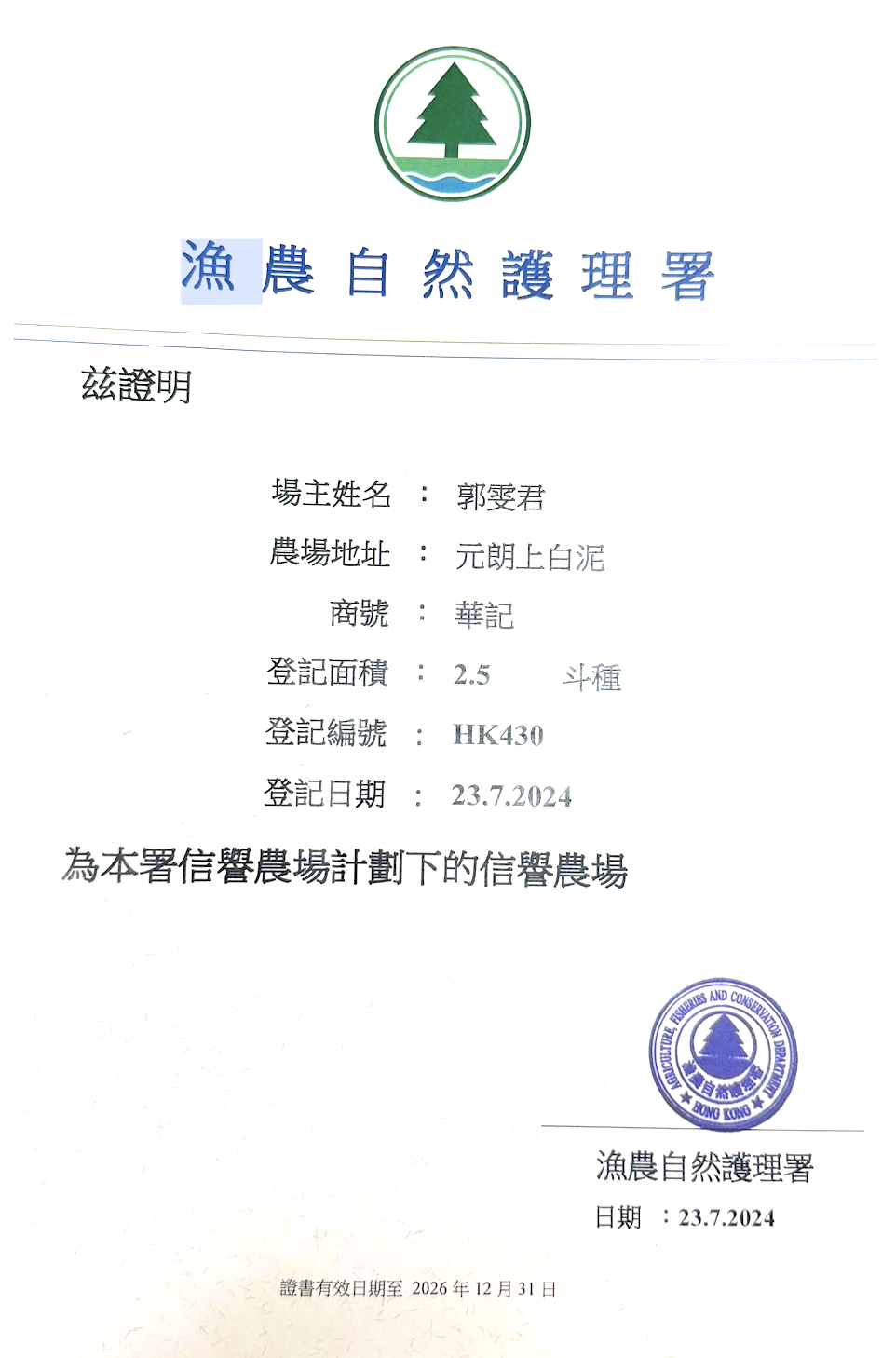
* AFCD will assess the farm management, horticultural practice, use of pesticides and results of pesticide residue tests before granting accreditation.
🌱 Supplier introduction : Healthy Express is a unique local farm online shopping platform. It cooperates with more than 30 local farms and importers to provide more than 1,500 Products.
Pak Nai is located in the western part of Yuen Long District, Hong Kong, facing Deep Bay and Shekou, Shenzhen. The coastline of Pak Nai consists of mudflats, some of which are oyster farms, producing the famous "Lau Fau Shan oysters." The two main villages are Sheung Pak Nai Village and Ha Pak Nai Village.
Cassava leaves (commonly known as 木薯葉 or 樹薯葉 in Hong Kong, Guangdong, and Taiwan), from the plant scientifically named Manihot esculenta, are the young leaves of the cassava (tapioca) shrub in the Euphorbiaceae family. Native to South America (Brazil), cassava is now widely cultivated in tropical and subtropical regions worldwide, including southern China, Hong Kong's New Territories, Taiwan, Southeast Asia, Africa, and Latin America. While the starchy roots are the primary food source, the tender leaves serve as a nutritious leafy vegetable in many cultures, sometimes called a "survival food" during times of hardship.
The plant grows 2–5 meters tall with palmately lobed leaves (usually 5–7 lobes), resembling an open hand. Young leaves are bright green; some varieties have reddish or purplish petioles. All parts of the plant contain cyanogenic glycosides, which can release toxic hydrogen cyanide if eaten raw—thorough cooking is essential to detoxify them.
When properly prepared, cassava leaves have a slightly fibrous but pleasant grassy aroma after cooking. They are exceptionally nutrient-dense: high in plant-based protein (up to 25–38% on dry weight, much higher than most greens), dietary fiber, vitamins A (beta-carotene), C, K, B-complex, iron, calcium, magnesium, potassium, and antioxidants. In traditional uses across Africa, Southeast Asia, and parts of Chinese folk medicine, they are valued for clearing heat and dampness, detoxifying, reducing swelling, supporting digestion and gut health, boosting immunity, aiding blood production, and promoting wound healing. They are often prepared as thick soups, stir-fries, or fermented dishes.
In Hong Kong and southern China, consumption is less common but appears in communities with cassava cultivation. Important precaution: Always blanch or boil the leaves for 10–15 minutes (or longer), discard the cooking water, repeat if needed, then squeeze or knead out bitter juices before further cooking. Red-stemmed varieties may be more bitter; green-stemmed ones tend to be tender. Consume in moderation, especially if you have a cold constitution, are pregnant, or have thyroid issues. Proper processing minimizes cyanide risks.
Cassava leaves are rich in plant protein, vitamin A, iron, and fiber, but the entire plant contains cyanogenic glycosides and must be thoroughly processed before consumption to avoid the risk of poisoning.
Important Safe Processing Steps (Must be done before every recipe):
Use only fresh, tender leaves (older leaves are too fibrous), and wash them thoroughly.
Blanch/boil in plenty of boiling water for 10–15 minutes (or longer), adding a little salt or oil halfway through to help remove bitterness.
After blanching, discard the boiling water (toxins will dissolve into the water), and rinse with cold water or run cold.
Wring or rub the leaves vigorously to remove the bitter juice (blanching 1–2 times is safer).
Chop or mash before further cooking.
Processed cassava leaves have a slightly coarse texture and a subtle herbal aroma, making them suitable for pairing with strong-flavored seasonings.
1. Simplest Home-Style Recipe (Suitable for Hong Kong/Cantonese Flavors)
Stir-fried Cassava Leaves with Garlic/Shrimp Paste (Common Southeast Asian Method)
Ingredients (Serves 2-3): 300-400g prepared cassava leaves, 6-8 cloves garlic (minced), 1-2 teaspoons shrimp paste (or salt + a little oyster sauce), dried or fresh chili peppers as needed, 2-3 tablespoons oil.
Instructions:
Heat oil in a pan and sauté minced garlic and chili peppers until fragrant.
Add shrimp paste and sauté until fragrant (or add salt directly).
Add chopped cassava leaves and stir-fry over high heat for 2-3 minutes until flavorful. If you prefer them softer, add a little water, cover, and simmer briefly.
Taste and season before serving.
This dish is spicy, appetizing, and perfect with rice.
Stir-fried Cassava Leaves with Eggs or Meat Slices
Ingredients: A handful of prepared cassava leaves, 2-3 eggs (or 150g lean meat/pork belly), minced garlic, ginger slices, salt or light soy sauce.
Instructions:
Marinate the sliced meat (optional).
Sauté minced garlic and ginger slices in a hot pan until fragrant, then add the meat slices and stir-fry until they change color.
Add cassava leaves and stir-fry quickly until cooked. Pour in beaten egg and stir-fry until combined, or stir-fry the leaves directly and then season.
Simple and nutritious, suitable for everyday meals.
2. Soups/Stews (Cooling or Rich Flavors)
Cassava Leaf and Lean Meat/Pork Rib Soup
Ingredients: A handful of prepared cassava leaves, 300g lean meat or pork ribs, ginger slices, red dates or winter melon (optional), water.
Instructions:
Blanch the meat and simmer with ginger slices and water for 30–40 minutes.
Add chopped cassava leaves and simmer for another 10–15 minutes. Season to taste.
Refreshing and dehumidifying, suitable for summer.
Coconut Milk Cassava Leaf Soup (Indonesian/Malaysian Flavor, Recommended!)
Ingredients: A handful of prepared cassava leaves, 200–300ml coconut milk, 2 cloves of garlic, onion or shallot, chili, salt, a little sugar. Instructions:
Sauté garlic, onion, and chili until fragrant.
Add coconut milk and bring to a boil.
Add cassava leaves and cook for 5–10 minutes until flavorful and the broth thickens slightly.
Flavorful and smooth, it's great with rice or bread.
3. Other Variations (African/Southeast Asian Flavors)
African Pondu/Saka Saka (Cassava Leaf Soup): Crush or chop prepared cassava leaves and simmer for at least 1 hour with onions, red palm oil (or regular oil), chili, bacon/fish/sardines, eggplant, or peanut butter until thickened. Rich in protein and very filling.
Braised Cassava Leaves with Pork Belly/Braised Pork Belly: Sauté pork belly or braised pork belly until fragrant, then add cassava leaves and simmer together. Flavorful and perfect with rice.
Curry Cassava Leaves: Cook with curry powder, galangal, lemongrass, and coconut milk for a rich aroma.
Crushed and Stir-fried Anchovies/Dried Fish: Blanch cassava leaves, then crush or twist them to remove excess juice. Stir-fry with dried anchovies, chili peppers, and belacan (shrimp paste). A classic Southeast Asian side dish.
Precautions
Safety First: Thoroughly blanch the leaves and discard the boiling water. Improper handling may cause dizziness, nausea, etc. Children, pregnant women, the elderly, and those with thyroid problems should consume in small amounts or avoid altogether.
Cassava leaves are cooling in nature; those with weak spleen and stomach should not consume excessive amounts.
Fresh, tender leaves are best; frozen or dried products are occasionally available, but they must also be thoroughly processed before use.
Start with a small amount and observe your body's reaction.
Cassava leaves are high in fiber and protein, suitable for vegetarians to supplement their nutrition, but they taste even better when paired with meat or fish.
These recipes are designed to be simple and easy to make, suitable for Hong Kong families, and incorporate common Southeast Asian and African flavors. If you prefer a vegan version, want to add specific ingredients (such as dried shrimp or tomatoes), or need more detailed African Pondu steps, let me know, and I can adjust them! Remember to maintain a balanced diet. Cassava leaves are suitable as an occasional health-promoting vegetable, and it is even better to eat them in rotation with other vegetables introduced earlier, such as winter jasmine, amaranth, and cassava.
(The above information is a compilation of common Chinese medicine dietary therapies, folk remedies, nutritional information, and traditional dietary knowledge. Actual effects may vary from person to person. It is recommended to focus on a balanced diet and consult a doctor or Chinese medicine practitioner when necessary.)