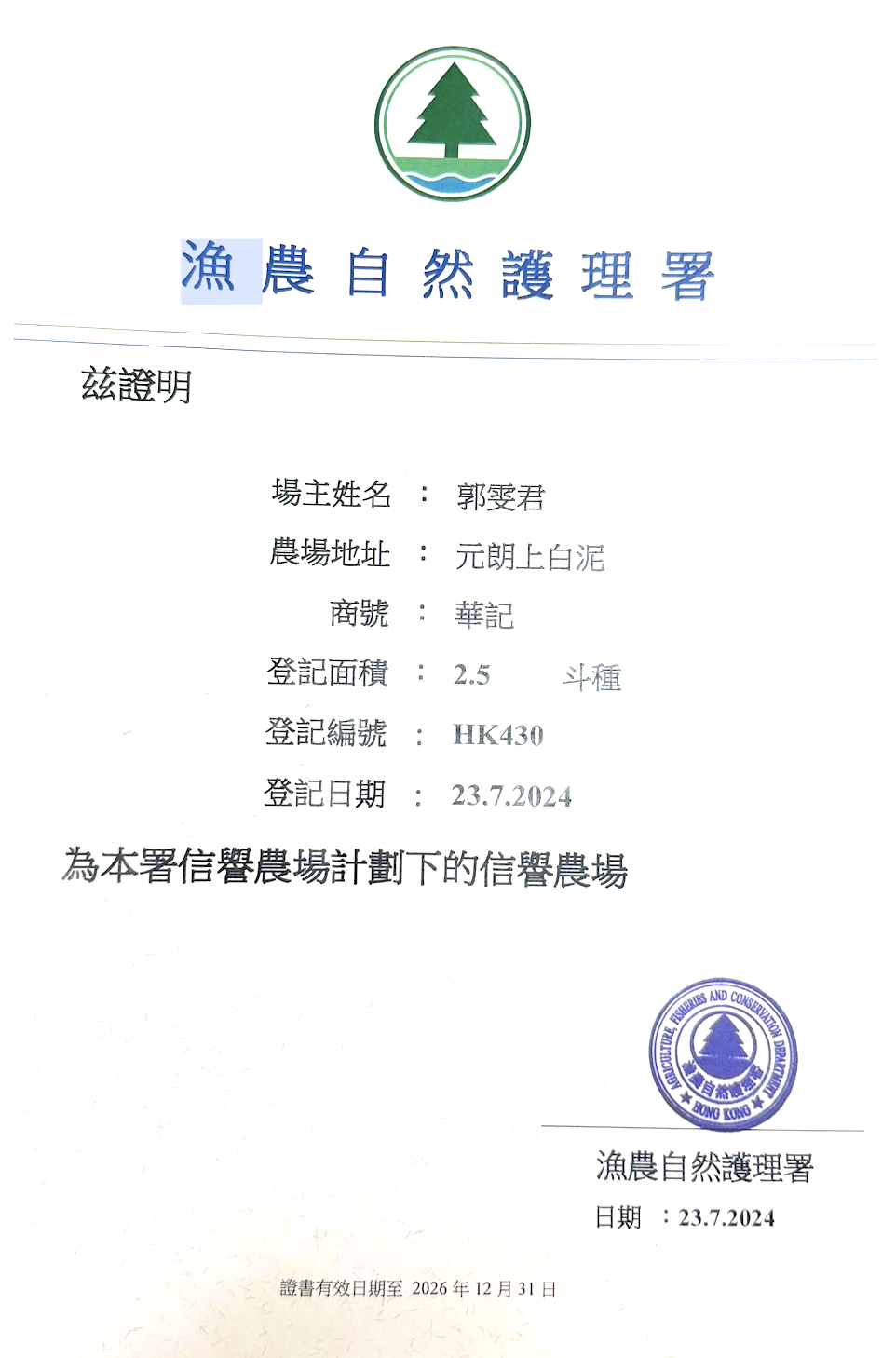
* AFCD will assess the farm management, horticultural practice, use of pesticides and results of pesticide residue tests before granting accreditation.
🌱 Supplier introduction : Healthy Express is a unique local farm online shopping platform. It cooperates with more than 30 local farms and importers to provide more than 1,500 Products.
Pak Nai is located in the western part of Yuen Long District, Hong Kong, facing Deep Bay and Shekou, Shenzhen. The coastline of Pak Nai consists of mudflats, some of which are oyster farms, producing the famous "Lau Fau Shan oysters." The two main villages are Sheung Pak Nai Village and Ha Pak Nai Village.
Arrowroot (commonly known as 竹芋 or 竹薯 in Hong Kong and Guangdong, also called Bermuda Arrowroot, Powder Yam, or Golden Bamboo Shoot), scientifically named Maranta arundinacea, is a perennial evergreen herbaceous plant in the Marantaceae (arrowroot) family. Native to tropical South America (e.g., Brazil), it is now widely cultivated in southern China (Guangdong, Guangxi, Hainan, Yunnan), Hong Kong, and other tropical/subtropical regions. The plant features fleshy underground rhizomes (tubers) resembling short bamboo shoots or small yams, with thin skin and white or slightly yellowish, starchy flesh. Above ground, it has weak branched stems and ovate to lanceolate leaves.
The tubers are rich in easily digestible starch with low protein and vitamin content, offering a mild sweet flavor and crisp or powdery texture depending on age. Young arrowroot can be peeled and steamed or stir-fried; older ones are ideal for soups or sweet desserts. In Cantonese cuisine, it is a popular ingredient in slow-cooked soups (old fire soup), imparting a clear, sweet, and soothing broth. In traditional Chinese medicine, it is considered sweet and bland in taste and cooling in nature, valued for clearing lung heat to stop cough, promoting diuresis, clearing heat, and detoxifying. It is popularly used for conditions like heat-related cough, painful urination, edema, and summer heat discomfort, and is regarded as a gentle detoxifying, metabolism-boosting, and beauty-supporting everyday tonic. Arrowroot powder is widely used as a thickener for sauces, puddings, or gluten-free baking due to its smooth texture and digestibility.
Precaution: Its cooling nature makes it unsuitable in large or long-term amounts for those with weak digestion, yang deficiency, or prone to diarrhea. People with diabetes should consume in moderation due to its carbohydrate content. Select firm, smooth-skinned, preferably younger tubers. Peel and wash thoroughly before cooking.
Arrowroot has a sweet, crisp, or powdery texture. When used in soups, it produces a particularly sweet and smooth broth, making it suitable for autumn, winter, or seasonal transitions. It has traditional benefits such as clearing the lungs and relieving coughs, clearing heat and promoting urination, and moisturizing the lungs.
Important Processing Steps (Required Before Every Recipe)
After purchasing arrowroot, first peel off the outer skin (a thin layer, similar to bamboo shoot skin) with a knife or by hand, and wash it thoroughly.
Cut it into chunks or thick slices (about 2–3 cm). Young, short arrowroots have less residue and a better texture; thicker, longer ones have a stronger heat-clearing effect but may contain more residue.
When making soup, it can be used directly after peeling, without blanching.
1. Classic Hong Kong/Cantonese Slow-Cooked Soup
Arrowhead and Pork Rib Soup / Lean Pork Soup (Most Commonly Made Soup)
Ingredients (Serves 3-4): 300-400g arrowhead, 400-500g pork ribs or lean pork, 2-3 slices of ginger, 2 dried dates, approximately 3-4 liters of water, salt to taste (optional: 1 carrot or 1 corn for sweetness).
Instructions:
Blanch the pork ribs/lean pork to remove blood.
Peel and dice the arrowhead, dice the carrot/corn.
Add all ingredients to water and bring to a boil over high heat, then simmer over low heat for 1.5-2 hours (or 2 hours in a slow cooker).
Add salt to taste.
The soup is clear, sweet, and smooth, suitable for the whole family, and has a good effect on clearing the lungs and relieving coughs.
Five-Finger Peach and Arrowroot Soup (A top choice for moisturizing the lungs, relieving coughs, and allergic trachea)
Ingredients: 250-300g arrowroot, 25g five-finger peach, 25g fox nut, 500g lean pork or pork ribs, 1 carrot, 2 jujubes, 3 liters water.
Instructions:
Slightly soak and wash the five-finger peach and fox nut; blanch the pork.
Peel and dice the arrowroot and carrot.
Add all ingredients to water and bring to a boil, then simmer for about 2 hours. Season with salt.
This soup has the effects of strengthening the spleen and replenishing qi, moisturizing the lungs and relieving coughs, and is especially suitable for the autumn and winter transition.
Arrowroot and Fresh Yam Soup (A nourishing and blood-tonifying version)
Ingredients: 300g arrowroot, 200-300g fresh yam, 400g pork ribs or lean pork, ginger slices, water.
Instructions:
Wash and dice the ingredients; blanch the pork.
1. Place all ingredients in a pot, add water, bring to a boil, then simmer for 1.5–2 hours.
The soup is clear and sweet, suitable for dry skin or as a nourishing tonic in autumn and winter.
2. Refreshing Sweet Soup / Dessert
Marshmallow and Pear Sweet Soup (Clears heat, moistens the lungs, relieves cough and phlegm)
Ingredients: 200–300g marshmallow, 1–2 pears (peeled, cored, and diced), appropriate amount of dried longan pulp or figs, appropriate amount of rock sugar or brown sugar, water.
Instructions:
Peel and slice or dice the marshmallow.
Place all ingredients in a pot, add water, bring to a boil, then simmer for 30–45 minutes (or use a health pot).
Add rock sugar to taste.
The soup is clear and sweet without being cloying, suitable for dry throat, dry cough, or autumn dryness. Adding apricot kernels or fritillaria cirrhosa can enhance the cough-relieving effect.
3. Other Variations on How to Eat It
**Camellia and Lotus Root Vegetarian Soup (Vegan Version):** Sliced arrowroot and lotus root with red dates or candied dates. Simmer for 1-1.5 hours. This soup clears the lungs, relieves coughs, and nourishes qi and blood, suitable for vegetarians.
**Camellia, Corn, and Carrot Soup:** Simmer with corn and carrots for a sweeter soup, suitable for children.
**Simple Stir-Fried Arrowroot Slices (Less Common, but Worth Trying):** Thinly slice tender arrowroot, stir-fry with minced garlic, and add a little salt or oyster sauce. The texture is crisp and tender, like sugarcane.
**Applications of Arrowroot Powder:** Commercially available arrowroot powder can be used for thickening sauces, making puddings, or gluten-free pastries. It is easily digestible.
**Precautions:**
Arrowroot is slightly cooling in nature. Those with weak spleen and stomach, prone to diarrhea, or with a yang deficiency constitution should not consume excessive amounts.
Diabetics should control their intake due to the high starch content.
When purchasing, choose arrowroot with smooth, undamaged skin and tender leaves. It is most abundant in autumn and winter and is commonly found in markets or sugarcane stalls. The longer the soup is simmered, the clearer and smoother it will be.
It's best to alternate between this soup and other ingredients previously mentioned, such as sweet potato leaves (sweet green leafy vegetables), field privet (diuretic), and centella asiatica, for a more balanced effect.
These recipes are primarily based on Hong Kong and Cantonese family-style cooking, simple to make, and the ingredients are readily available. If you prefer a vegan version, want to add specific ingredients (such as figs, dried tangerine peel, or red beans), or need a stronger cough-relieving version/diabetic-friendly adjustment, let us know, and we can provide more targeted suggestions! A balanced diet is most important, and arrowroot is best suited as a complementary ingredient for nourishing soups in autumn and winter.
(The above information is a compilation of common Chinese medicine dietary therapies, folk remedies, nutritional information, and traditional dietary knowledge. Actual effects may vary from person to person. It is recommended to focus on a balanced diet and consult a doctor or Chinese medicine practitioner when necessary.)