Lychee (scientific name: Litchi chinensis), also known as Lizhi, is a fruit tree native to southern China. It is widely cultivated in subtropical regions from Southeast Asia to New Guinea. Lychees are available in May every year, and July to August is the most in season. This article will briefly share the differences between different lychee varieties, origins, and flavors, as well as lychee dietary taboos and storage!
Medicinal Use
According to the Compendium of Materia Medica, lychees have the effects of nourishing the spleen and liver, promoting fluid production and stopping hiccups, reducing swelling and pain, and relieving cough and nourishing the heart. However, Li Shizhen said: "The smell of lychees is pure yang, and its nature is slightly hot. If you eat too much fresh lychees, you will get swollen gums and painful mouths."
- Root: slightly bitter, astringent, warm. Reduce swelling and relieve pain. Used for stomach distension and pain.
- Leaf: Pulp: Aril, sweet, sour, warm. Replenishes qi and blood. Used for weakness after illness, long-term diarrhea due to spleen deficiency, and hemorrhage.
- Fruit core: sweet, slightly bitter, astringent, warm. Regulates qi, disperses knots, and relieves pain. Used for hernia pain, hydrocele, testicular swelling and pain, stomachache, and dysmenorrhea.
Lychee varieties
There are many varieties of lychees, among which Guiwei and Niumici are the best varieties and are also the choice for fresh food; Gualv is a rare and hard-to-find variety. "Luogang Guiwei", "Bicun Niumici" and "Zengcheng Gualv" are known as the "Three Heroes of Lychees". Huiyang Zhenlong Guiwei and Niumici are more delicious and sweet.
March Red (三月紅)
Lychee maturity period: end of March
Lychees are available as early as the end of March! March Red is the first to hit the market. March Red, produced in Guangdong and Guangxi, is the earliest ripening lychee variety with thick skin and large core, sour and sweet.
Yanli (艷麗)
Maturation period of lychee: early April to mid-May
Yanli, produced in Taiwan, is a new star of lychee varieties in recent years, with very low production. As its name suggests, lychee has bright red and bright skin and a round shape. The crisp and juicy flesh is sweet and sour. Yanli is not too sweet, and there is a lingering fragrance after eating.
Yuanzhi (圓枝)
Maturation period of lychee: late May to early June
Yuanzhi is also known as "Yuanzhi" and "Shuidong". The lychee skin is dark red, and the fruit is like a heart-shaped fruit, juicy and tender, sweet and sour.
Black Leaf (黑葉)
Lychee Ripening Period: Early June to Mid-June
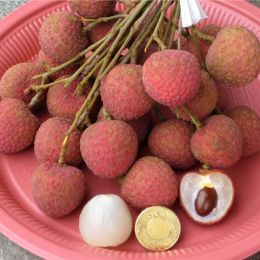
It is named after the color of the leaves of this lychee variety is close to black. Lychee fruits are oval or heart-shaped, with a slightly purple-red peel, and have large pits. They are sweet and have a honey aroma. Because they can be stored for a long time, they are suitable for making desserts or processed products.
Feizixiao (妃子笑)
Maturation period of lychee: late May
The most familiar lychee variety. It was named "Feizixiao" because the ancient emperor Tang Xuanzong, in order to win the favor of Yang Guifei, spared no effort and spent a lot of manpower and material resources to send the best lychees from Lingnan thousands of miles away, so it was named "Feizixiao". It is mainly produced in Guangdong, Guangxi and Hainan. The lychee is round in shape, with a green-red skin full of fine thorns, the flesh is like white wax, crisp and sweet, slightly sour, and the core is thin.
Baila (白臘)
Lychee ripening period: late May to early June
Also known as Bailazi, formerly known as Dianbai Baila, it is mainly produced in Dianbai, Gaozhou and other places in Maoming City, Guangdong Province. It is named because the fruit flesh is white like wax, juicy and sweet. Early-maturing and high-yielding, it matures in late May to early June, generally about a week later than Baitangpeng. Baila varieties also have different strains, including Baila from Xiadong, Dianbai, Xinxing in Gaozhou, and large-fruited Baila in Maonan area.
Yuhebao (玉荷包)
Lychee ripening period: late May to early June
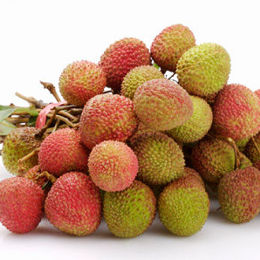
The lychee variety comes from Feizixiao, which was introduced from Taiwan and evolved into Yuhebao, all because the lychee flesh is like Yuhebao. The oval fruit has a bright red peel, and is famous for its crisp, sweet and juicy flesh and fine core.
White Sugar Poppy (白糖罌)
Lychee Ripening Period: Late May to Mid-June
White Sugar Poppy, also known as "Chinese Red" and "Honey Sugar Poppy", is the oldest lychee variety, and is said to have a history of cultivation of more than a thousand years. It also comes from Guangdong, Guangxi and Hainan, and has a sweet taste, particularly crisp flesh, and a large round pit.
Zhuangyuanhong (狀元紅)
Lychee Ripening Period: Early June to Mid-June
Zhuangyuanhong has round or oval fruits, with a slightly dark red peel, and the white waxy flesh is very juicy and sweet.
Goose Egg Lychee (鵝蛋荔)
Maturation period of Lychee: mid-June
It is named because the lychee looks like a goose egg. The fruit is heart-shaped, with a red and green peel and a white flesh with a little yellow. It is not very sweet.
Crystal Ball (水晶球)
Maturation period of Lychee: mid-June
It is named Crystal Ball because the flesh of Lychee is milky white, like crystal. The light red and yellow peel is prickly, and the core is relatively thin. The sweet flesh tastes crisp.
Glutinous Rice Ci (糯米糍)
Maturation period of Lychee: late June to early July
Glutinous Rice Ci is another popular lychee variety. The lychee looks like a heart-shaped fruit. The skin changes from waxy yellow to bright red, slightly cracked, thin skin, and the cracks on the skin have no peaks. The milky white flesh is juicy and thick, sweet as honey, sweet and delicious, and the core is thin or even without a core.
Guiwei (桂味)
Lychee ripening period: late June to early July
Guiwei is famous for its refreshing sweet-scented osmanthus fragrance, also known as "Guizhi" (桂枝). The round-shaped Guiwei is divided into two different lychee varieties: duck-head green and full red. The skin is light red, and the cracks on the skin are sharp and prickly. The skin is thin and crisp; the milky white flesh is sweet, juicy, crisp and firm. The core has a normal large core and a degenerate burnt core.
Xianjinfeng (仙進奉)
Lychee ripening period: mid-June to early July

Xianjinfeng, produced in Guangdong, is said to have been a tribute to the emperor of the Qing Dynasty in the past. The biggest feature is that the lychee flesh has a honey fragrance. The large heart-shaped flesh is waxy yellow, thick and tastes sweet and delicious.
Gualv (Zengcheng Gualv) (掛綠, 增城掛綠)
Lychee ripening period: late June to early July
A popular lychee variety from Guangdong, it was praised as a superior tribute in ancient times. The outer shell of lychee is 40% slightly green and 60% red. The waxy white flesh is relatively flat, crisp, tender, sweet and juicy, and the core is relatively thin.
Huaizhi (懷枝)
Lychee ripening period: early July
It is said that in ancient times, a minister passed by Lingnan and took the lychees given by his fellow villagers into his arms. Huaizhi is also known as "Huaizhi", "Midiye" and "Fenghua". The fruit is round and spherical, with dark red skin and sharp thorns near the pedicle. The core is large, and the milky white flesh is very juicy, sweet and slightly sour.
Lanzhu (蘭竹)
Lychee ripening period: mid-July
Lanzhu has two different varieties, red and green. The fruit is heart-shaped, with a large core, and the milky white flesh is sweet and slightly sour.
Yuanhong (元紅)
Lychee ripening period: mid-July
Yuanhong is also known as "wrinkled core". The fruit is like a heart, with purple-red skin, large and small cores, and milky white flesh, sweet and sour.
Zi Niang Xi (紫娘喜)
Lychee ripening period: mid-July to the end of July
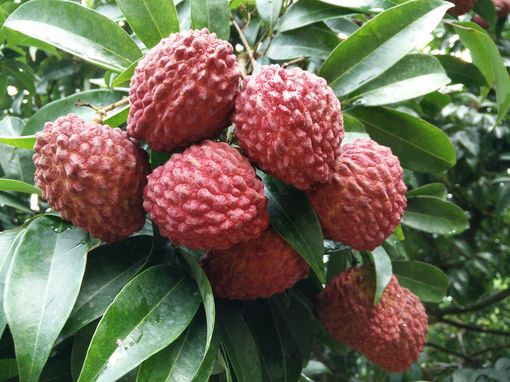
The fruit is the largest, like a crooked heart-shaped fruit, with a purple-red skin, a large core, and extremely juicy and tender white flesh. The taste is not too sweet, with a little sourness.
Chen Zi (陳紫)
Lychee ripening period: the end of July
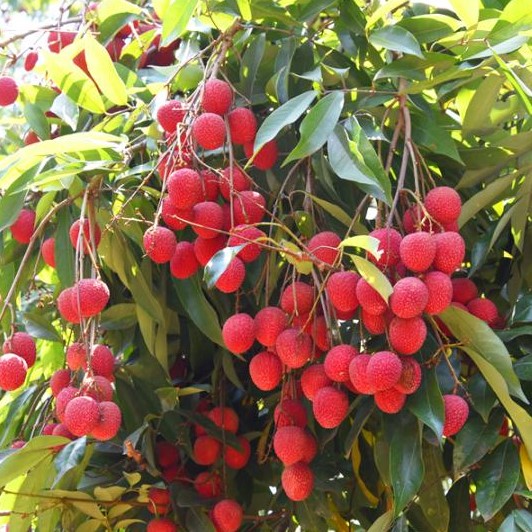
Chen Zi is also known as "Zhuang Yuan Xiang". The round fruit is matched with a bright red skin, a large core, and the waxy white flesh is juicy, sweet and sour.
Ji Li (吉荔)

The new variety of Tai Nong No. 4 "Ji Li" is a new variety developed by the Fengshan Branch of the Agricultural Research Institute. It was introduced for trial planting by the Taiping District Farmers Association. Generally, each lychee weighs 25 grams, while Ji Li weighs 45 grams and is 1 times larger than the average. The fruit is thick and the juice is sweet. It is currently the largest lychee.
Notes
- Do not eat too much
A lychee can easily cause inflammation, gum swelling, sore throat and other problems. It is recommended that adults can only eat 10 lychees per day, and children can only eat 5 lychees at a time.
- Do not eat lychees on an empty stomach
Dawn teaches that breakfast should not be eaten on an empty stomach, and lychees are not allowed! This is because they are rich in sugar, which can easily cause stomach pain and bloating. It is recommended to eat them 30 minutes after a meal.
- Soak in salt water before eating
Before eating lychees, it is recommended to wash the lychees and soak them in salt water. After eating, the lychee shells can also be saved. Just add water and boil them into tea, which has the effect of clearing heat and reducing fire.
- Do not eat with conflicting foods at the same time
When eating lychees, do not eat them at the same time as cucumbers, carrots and internal organs.
- Pregnant women/diabetics should avoid eating lychees
Lychees have the effect of promoting blood circulation. If you are pregnant, it is best to avoid eating them, which will easily cause stomach pain and bleeding and other miscarriage problems. In addition, lychees can lower blood sugar and affect the blood sugar index control of diabetic patients, so it is better to eat less.
How to store lychees
- Refrigeration: can be kept fresh for 3 to 5 days
Spray lychees with water, wrap them with newspapers, put them in plastic bags, tie them tightly and put them in the refrigerator. They can be kept fresh for 3 to 5 days.
- Freezing: can be kept fresh for 1 month
After peeling and removing the seeds of lychees, put them in a fresh-keeping box and store them in the freezer. They can be kept fresh for up to 1 month.


