In a side street in old Wan Chai, there was a noodle factory called Kang Kee.
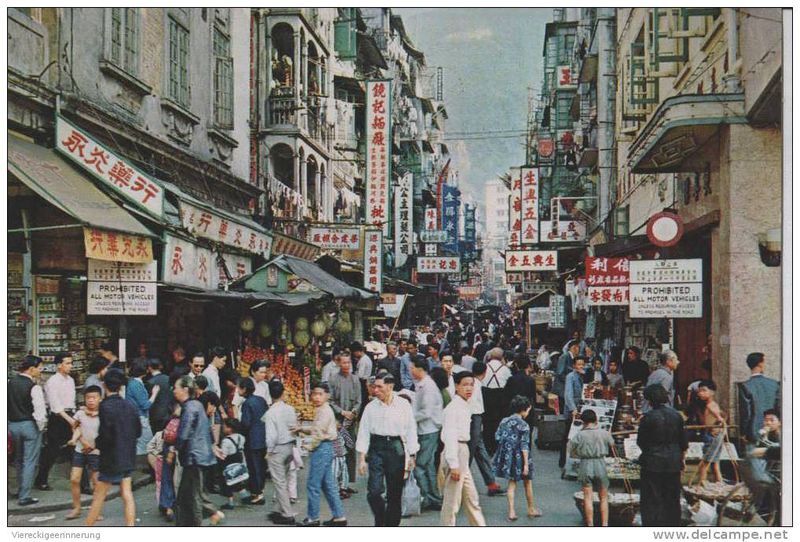
Kang Kee, Tai Yuen Street, Wan Chai
For sixty years, despite the ever-changing noodle-making methods, he has insisted on producing traditional shrimp roe noodles and whole egg noodles using traditional methods.
While everyone else looked north to China, rushing to set up factories and increase production several times over, he remained calm and collected. With a few craftsmen and a few machines, he focused on slow, meticulous production, refusing to seek opportunities even with ample funds—seemingly foolish.
However, behind this apparent foolishness lay a hidden ideal.
"Why is it that the moonlight is always brighter abroad? Why can't Hong Kong manufacture good products? Many products made in mainland China haven't been verified; if they spoil people's food, how can their conscience be at peace?"
The second-generation boss, Mr. Ng Shu Tak, raised a series of questions.
This young man in his forties was originally an aircraft engineer at Boeing in Canada. Eight years ago, he gave up his profession and returned to take over Kang Kee, this old noodle factory. He didn't do it for any particular reason, but simply because he believed that high-quality noodles could be produced locally.
This ideal was also inherited from his father's teachings and the shared passion for noodles between father and son.
Mr. Ng Shu Tak jokingly said that he rarely makes noodles himself anymore, except during the Lunar New Year when all the other chefs are on holiday.
Born into a family of noodle makers, he has run a 60-year-old shop
Tai Wo Street in Wan Chai is a typical old district in Wan Chai. There are no skyscrapers, only old buildings on both sides. Among these old buildings is a noodle factory called Kang Kee. The sloping shop is filled with all kinds of noodles and rice noodles of various sizes. A man in his forties is diligently introducing the different kinds of noodles to customers.
He is the owner, Ng Shu Tak. Every day at 5:30 AM, he appears at Kang Kee to supervise the production and shipping of the noodles.
After 10:00 AM, he even gets down to serving customers. His shop, besides the usual egg noodles, wonton noodles, and rice noodles, also offers some newer flavors such as buckwheat noodles, spinach noodles, and sesame noodles, which is a bit more innovative compared to traditional old-fashioned noodle shops. However, despite the new flavors, the noodles are still made using methods from decades ago.
The flour grinder, the dough press, the noodle cutter—each machine operates slowly and methodically, completing one process after another. The precise measurement of ingredients, the technique of dividing the dough—all rely on the master chef's experience. Whether it tastes good or not depends entirely on the chef.
"These traditional methods are actually known to everyone who makes noodles; there are no real tricks."
Everyone knows them, but not everyone does them. This method is vastly different from today's popular integrated production line. There, a single large machine handles all the processes; the raw materials are poured in, and the noodles come out, requiring almost no skilled cook. "Some things aren't just about being fast," Mr. Ng Shu Tak said. "Haven't you heard of 'slow and steady wins the race'? Our Kang Kee is about slow and steady wins the race."
The production of the noodles is mainly handled by Master Yu Hongyun, who has over thirty years of experience and even knows how to maintain the production machines.
His noodle-handling technique is incredibly skillful, like a master grappling technique.
The machines are adjustable, allowing the noodles to be cut into different thicknesses.
To cater to the market, new flavors such as spinach noodles have been added in recent years.
Ng Shu Tak is proud of Kang Kee, but Kang Kee was not originally owned by Mr. Ng Shu Tak.
Originally owned by Chan King, the business was founded in Wan Chai in 1945 and managed by Mr. Chan until 2000. Due to his advanced age and the lack of a successor, Chan King decided to sell King Kee, hoping someone would continue its legacy. Mr. Ng Shu Tak took over King Kee at this time, becoming the new owner.
Although not a direct descendant of the Kang Kee's family, Mr. Ng Shu Tak was not a latecomer to the craft. Born into a family of four major Chinese-owned instant noodle manufacturers, he was exposed to noodle making from a young age. His father, Ng Fan Lau, owned Yulong Noodle Factory, specializing in Cantonese noodles, in Kowloon Walled City in the 1950s.
Their wonton noodles and Shahe noodles were supplied not only in urban areas but also as far away as Yuen Long restaurants and eateries.
Until the early 1970s, due to the influx of Japanese instant noodle culture into Hong Kong, Ng Fan Lau closed Yu Lung Noodle Factory and founded Tai Tat Company, specializing in the production of instant noodles.
At that time, there were only four local companies producing instant noodles: besides Tai Tat, there were Huan Shan Foods, Wing Nam Foods (instant noodles), and Ya Tat Trading Company (super-strong noodles and rice vermicelli). Despite facing threats from large conglomerates, Tai Tat Company's Three Delicacies Noodle Soup, Seven Treasures Noodle Soup, and Eight Treasures Noodle Soup attracted many tea restaurants, convenience stores, and grocery stores with their affordable prices and decent quality.
As they gradually gained recognition in Hong Kong, many mainland noodle factories invited them to exchange instant noodle production techniques in the 1980s.
"My father was a patriot. We provided them with technology and helped them set up production lines—all voluntary work.
Later, some companies tried to persuade him to partner with them in China to build factories, moving their Hong Kong operations northward, but he firmly refused.
He said the business environment in China was too complex, product quality was difficult to monitor, and conscience was paramount; he wouldn't mind earning less."
New Life in Canada: Taking the 747 Machine
His father's sturdiness influenced Ng Shu Tak from a young age. After graduating from secondary school, he assisted his father at Dai Tat Company, learning the tricks of business and noodle manufacturing. In 1986, at the age of 26, feeling that Hong Kong's development was limited, he wanted to see the world while he was young. His older brother, who had already emigrated to Canada, also encouraged him to live abroad. A man's ambition lies in the world. Packing a few light pieces of luggage, Ng Shu Tak said goodbye to Dai Tat Company and flew alone to Winnipeg, Canada, to start a new life. Although his father was extremely reluctant to let him go, he respected his son's decision and ran the company independently from then on.
After immigrating, Ng Shu Tak first found a job at Mid-West Detroit, a fuel injector manufacturer, and later volunteered to join Boeing in Canada.
"Actually, I knew absolutely nothing about aircraft engineering; I was just trying my luck. They hired me to assemble the 747's wings and fuselage."
He had carved out a niche for himself in the field, and with the better living conditions abroad, he never considered returning to Hong Kong. One day in 1995, he received a call from his mother saying that his father's diabetes was very serious and he didn't want to die without any children by his side or taking over the Dai Tat Company. So he resigned from his job at Boeing, left the tranquility of Canada, and returned to Hong Kong with his family to start a new life.
In the morning, 80% of his customers are Filipino domestic helpers. Ng Shu Tak speaks fluent English and answers questions readily.
Most of the utensils used at Kang Kee are twenty or thirty years old, making them semi-antique.
They use high-quality Canadian flour, which has high gluten content, resulting in noodles that are chewy and refreshing.
He personally buried the family business, accompanying his father on his final journey.
He returned to Hong Kong, but the business of Tai Tat Company was vastly different from what it used to be.
While others successively set up factories in mainland China, enjoying the cheaper land and labor, Tai Tat Company remained in Hong Kong for production.
High local production costs made it difficult to compete with others, and business declined day by day.
Furthermore, the mainland had also mastered the production technology for instant noodles, and the continuous influx of low-priced domestic competitors further exacerbated Dai Tat Company's difficulties.
"There was absolutely no money being made, but my father said that if I didn't take over, more than a dozen employees would immediately lose their jobs.
He often taught me that everything we have today was earned by our employees, and we must always think of them first. Dai Tat Company absolutely cannot end like this!"
However, over the years, the company had suffered numerous losses, and even with Ng Shu Tak's efforts to turn the tide, it ultimately couldn't escape the reality of collapse.
In 1997, Mr. Ng Shu Tak decided to close Dai Tat Company
"Whether successful or not, she single-handedly raised our company, and it was incredibly painful for me to close it down. On closing day, I didn't return to the company; my second brother, who worked in interior design, took over. Of the four major Chinese-owned instant noodle production companies, Dai Tat was the only one that remained solely Chinese-owned without moving its production lines domestically. Its closure perfectly represents the end of an era."
He closed Dai Tat. He sold the house, paid over $20000 in severance pay to each of his dozen or so employees, and compensated them in accordance with labor laws, fulfilling his responsibility as a good boss.
After the company closed, Ng's father's condition worsened, progressing from diabetes to kidney disease. Ng Shu Tak didn't look for work or return to Canada; he devoted all his time to caring for his father, accompanying him through the final stage of his life for three whole years.
"My father was in a wheelchair at the time, and he had a wish: to return to his hometown of Shantou before he passed away.
To fulfill this wish, my mother, sister, a cousin, and I took him back to the countryside.
Seeing my once incredibly strong father, now unable even to go to the bathroom by himself, was heartbreaking."
These past few months, he has fulfilled his father's wish, but one thing has always weighed on his mind: his father's long-standing insistence on local customs... The ideal of creating high-quality noodles vanished with the end of Dai Tat's business. After much reflection, he realized that some values in life cannot be measured by money. In 1999, Ng's father passed away.
Firmly grieving, Ng Shu Tak did not sell his Hong Kong property to return to Canada. He decided to stay and resume his old trade, hoping to continue his father's unfinished dream with a noodle factory. "At that time, an uncle who supplied flour happened to act as a go-between, saying that Kang Kee was planning to sell. I felt that Kang Kee's noodle-making method was very similar to my father's, and I thought it was the perfect opportunity."
Reviving Kang Kee, Continuing My Father's Spirit
When I took over Kang Kee, this 60-year-old brand was almost exactly the same as it had been 60 years ago.
The shop sells traditional noodle dishes such as shrimp noodles, egg noodles, and Shu Tak noodles, prepared with utmost sincerity and using the old methods, almost exactly the same as the business Ng Shu Tak's father used to run.
He took over the business and kept everything exactly the same. His customers included ordinary people, as well as patrons of large restaurants and hotels like Luk Yu, Sai Yuen, and Marriott (陸羽、西苑、萬豪酒店). Celebrities like The Honourable Mrs Anson Chan (陳方安生) and Cheng Yu-tung (鄭裕彤) were also among his customers, making the business quite successful. "Don't even mention how good our business is. Less than 1% of restaurants and eateries in Hong Kong are our customers. In terms of business, we're still small-scale!" Ng Shu Tak said.


One reason for our small scale is his unscrupulous treatment of customers. He refuses to serve customers who are late in paying, and he also politely declines service from some restaurants he deems lacking sincerity. In today's economic environment, this practice is simply considered greedy. Furthermore, low production volume is another reason why Kang Kee cannot expand its scale. While other companies already use automated production lines producing nearly a ton of noodles daily, Kang Kee still uses equipment from decades ago, limiting its daily production to no more than 1,000 catties (approximately 500 kg).
All raw materials are recorded, allowing for easy tracing of any problems to their source.
Kang Kee's organic noodles are all officially certified.
The More Traditional, the Healthier
Just look at that noodle-making machine in the factory, and you'll understand why the output is so low.
From flour mixing, pressing into strips, to cutting into noodles, everything is done separately by machine and by hand. Each batch is made individually, yet few realize that this oldest method is what produces the highest quality noodles.
Take wonton noodles as an example. If manufactured using large-scale, advanced machinery, the dough is typically folded only once before being cut into noodles.
However, the masters at Kang Kee fold the dough multiple times, depending on the properties of the flour. To achieve the desired springy and chewy texture, they fold the dough five or six times.
Therefore, while others can produce tons daily, they can only produce a maximum of 1000 catties of noodles per day.
Furthermore, they are very careful in selecting raw materials. Most of their dough starters are made only with flour, water, and eggs, using the purest method to restore the original taste and texture of the noodles.
"For flour and eggs, we only source from reputable suppliers like Nan Shun. Their raw materials are certified, proving they are free of impurities and bacteria. Otherwise, how could we live with ourselves if someone got sick?"
He also uses high-gluten flour, often costing $150 per 25kg bag, twice the cost of regular flour sold in stores. But for the sake of quality, he insists on using it.
All noodle dishes are clearly priced, with fair and honest pricing for all customers.
Rice noodles are made with over 90% rice, and the rice is ground into a paste using a low-productivity stone mill, not a steel mill.
"Stone mills, unlike stainless steel mills, release a lot of heat when grinding rice, ultimately affecting the aroma of the rice. Furthermore, we only use five-year-old or older glutinous rice to make rice noodles.
Rice noodles made from older rice are more springy and don't clump together after cooking."
Wu Shude has always adhered to traditional methods of making rice noodles, but he also understands that certain changes are necessary for an old shop to thrive. Yes, that's exactly what sets him apart from other long-established noodle shops.
To transform, he constantly innovates. Every month, he holds meetings with his mentors to discuss feasible new ideas.
Even if an idea seems impossible, he'll try everything he can before giving up.
“People at City’Super can sell their noodles, branded as Japanese, for twice the price a pack, but the quality is good, and many people buy them too. What about Hong Kong brands? They don't trust you, so you can't sell them at that price. Actually, I can achieve the same quality. I want to prove to people that Hong Kong can also create excellent noodle brands.”
With the same ideal, Wu Shude and Jiang Chengqiang of Tim Fook hit it off immediately, launching a new flavor of premium noodles. Mirror Bakery has stood for over 60 years on Tai Wo Street in Wan Chai. Modernized Management Model Adds Flavor to Welcome the Market
To save on brand costs, Kang Kee has partnered with Tianfu Catering and Food Development Company in recent years to produce a series of organic noodles under the brand name "Da Xi Qing" (大喜慶). In 2007, they launched their first premium abalone noodles, successfully entering the city's super supermarket. Selling for HK$60 for 6 pieces, it rivaled Japanese noodles and achieved great success, proving their keen market insight.
His subsequent launches of Supreme Shrimp Roe Noodles (至尊蝦子麵), Nourishing Fish Maw Noodles (養顏花膠麵), and Five Elements Health Noodles (五行健康麵) also successfully entered the market. Recognizing the growing trend of healthy eating, he launched a series of organic noodles with spinach, tomato, and carrots last January, finally achieving some success in the organic noodle market.
"The cost of producing organic food in Hong Kong is very high. A bag of American organic flour can easily cost over HK$900, which is 6 times the price of regular flour! After each product is manufactured, it must be certified by the Hong Kong Organic Resource Centre. Each certification costs nearly HK$20,000, which is undoubtedly a burden for our small noodle factory."
The high costs mean that even selling at a higher price doesn't generate much profit. This production line, even considering... It received critical acclaim but didn't sell well, but he firmly believed that quality would always find a market. His greatest asset was the honest and trustworthy spirit that his father had upheld.
"I don't know why, but I felt happy making noodles. Although this business wouldn't make me a lot of money, my father always taught me not to be greedy. As long as I didn't steal, cheat, or cheat, even if I earned less, I was happy. Honestly, even in the worst economic times, what's cheaper than eating noodles?
By making noodles, my father could support our family of seven. Even if we weren't rich, as long as we knew how to be content, we lived a good life." "Happiness!"
Contentment brings happiness, but unfortunately, in today's world, there are more greedy people than content ones.
The wonton noodles are incredibly refreshing and chewy. They've been de-alkaline, so there's no strong alkaline taste; upon closer inspection, you can even taste the original flavor of the eggs.
The noodles are made with dried flounder broth, giving them a rich dried flounder flavor. Just add a little water when cooking, and the broth is flavorful enough; no separate soup base is needed.
Wild porcini mushroom noodles have a springy, chewy texture, infused with Yunnan porcini mushrooms, resulting in a rich yet not overpowering flavor.
Organic spinach noodles are made with fresh organic spinach, giving the noodles a delicate spinach aroma.
King Kee Noodles: A Look Back
King Kee's noodles are patronized by many discerning foodies, including Jiang Xianzhu, Anson Chan, and Cheng Yu-tung…
This speaks volumes about their reliable quality. What's the secret? Master chef, old methods, traditional prescriptions, and honest practice—that's all!


