Bahasa Indonesia:Mi Tionghoa
日本語:中国の麺類
Vietnamese: Biểu quyết cộng đồng Chọn bảo quản viên: Hide on Rosé
Hong Kong is located in southern China. Rice is the staple food, but noodles are also popular in Hong Kong. There are many varieties of noodles on the market. Noodles are made from unleavened dough. The dough can be rolled out, cut, pulled or squeezed into long strips or thin threads. Noodles are a staple food in many cultures and come in many different shapes. The most common noodles come from Chinese or Italian cuisine. Chinese noodles have various names, while Italian noodles are called pasta. There are many types of noodles, some are folded, and some are cut into other shapes. Noodles can also be steamed, pan-fried, deep-fried or baked. Noodles are usually eaten with sauce or soup, the latter of which is called soup noodles.
香港は中国南部に位置しています。米が主食ですが、香港では麺類も人気です。市場には様々な種類の麺類が販売されています。麺は発酵させない生地から作られます。生地は、伸ばしたり、切ったり、引っ張ったり、絞ったりして、細長い帯や細い糸状にすることができます。麺類は多くの文化で主食となっており、様々な形状があります。最も一般的な麺類は、中国料理またはイタリア料理に由来します。中国の麺は様々な名前で呼ばれ、イタリアの麺はパスタと呼ばれています。麺には多くの種類があり、折りたたまれたものや他の形に切られたものもあります。麺類は蒸したり、フライパンで焼いたり、揚げたり、焼いたりすることもできます。麺は通常、ソースまたはスープと一緒に食べられ、後者はスープ麺と呼ばれます。

麺は中華料理に欠かせない食材、主食である。中国の麺類(ちゅうごくのめんるい)は、産地、材料、形や麺の幅、調理の仕方によって大きく異なり、中国・台湾のほとんどの郷土料理、華僑の多く住む国にとって重要な食材である。
呼び方
中国の言語の多様さのために、中国での麺の呼び方は複雑である。標準中国語では、miàn (簡体字:面、繁体字:麵)は小麦粉に限らず穀物を粉末にして練った生地を指す。miànはもとは小麦粉そのものの名称でもあった。その後、小麦粉製品全般を指すようになり華北では麺を特に「麺条」(ピンイン:miàntiáo、簡体字:面条、繁体字:麵条)と呼ぶようになったが、広東などの華南では古称のmiànで通されている。
中国語以外の言語においては標準中国語のピンインの音を引用するが(小麦粉から作られた麺は"mien" あるいは "mein"、ほかの麺は"fun"など)、香港と広東省における広東語の発音では小麦粉の麺は"meen" あるいは"mien" 、ほかの麺は"fun"となる。台湾、マレーシア、シンガポール、および東南アジアの華僑のコミュニティでは、小麦粉から作られた麺を"mee"と発音するなど、閩南語・泉漳語(福建話、閩南話、台湾話)の発音が使われる場合がある。
Noodles (麵條)

Noodles sold in the market are basically divided into 3 categories according to the production process: raw noodles, cooked noodles and alkaline noodles.
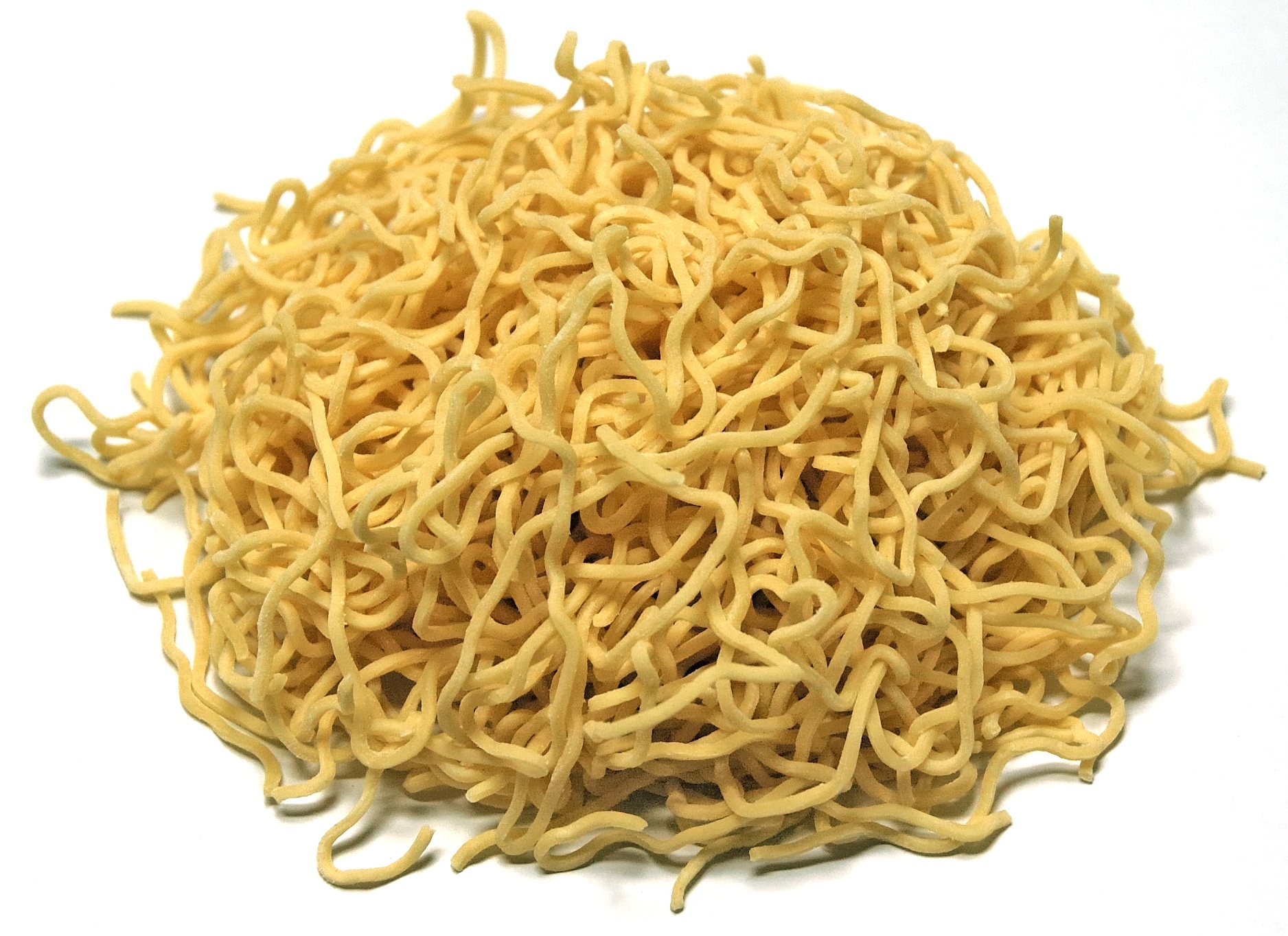
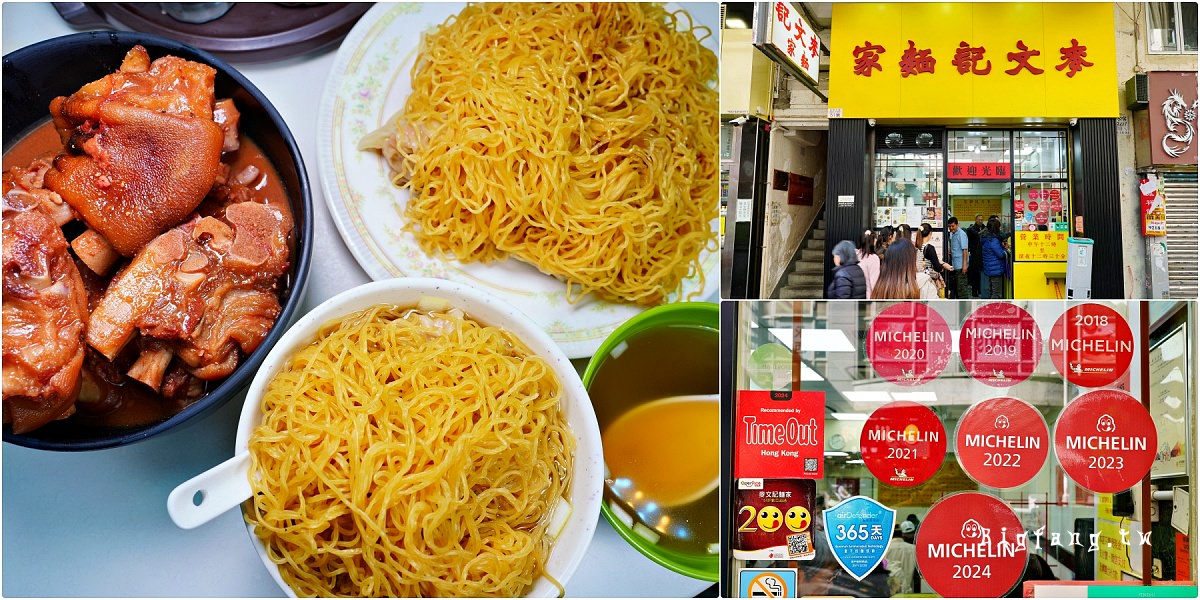
Raw Noodles
Raw noodles refer to noodles sold directly after production. Since they are not cooked, it takes more time to cook the noodles until they are soft. Since the noodles are not cooked, they are not suitable for long-term storage, but they can better maintain the original fragrance of the flour, so they are usually purchased on the day of consumption.
Cooked Noodles And Alkaline Noodles
In addition, some raw noodles are added with alkaline water to become alkaline noodles to increase the taste and toughness of the noodles.

Cooked noodles are noodles that have been dried, fried or steamed
Cooked noodles are noodles that have been dried, fried or steamed. Since they are already cooked, they take less time to cook and can be stored for a long time. They are very convenient to buy and keep at home when you want to eat. Shrimp noodles and Yi noodles are good examples of cooked noodles.
Rice vermicelli, Rice Noodle (米粉, ライスヌードル)


rice vermicelli, Mixian, and Lai fun are all long and thin noodles made with rice as the main material. They can be distinguished by thickness (or diameter): from thin to thick, they are rice vermicelli, Mixian, and Lai fun. Rice vermicelli always refers to thin rice noodles.

Rice noodles are flexible and elastic. They are very popular in southern China, Taiwan and Southeast Asia. The "Phnom Penh noodles" used in the famous Pad Thai in Thailand are rice noodles introduced from China. Depending on the different tastes of people in different places, the toughness and thickness of rice noodles produced are obviously different. It is also advisable to use local products to make local delicacies. For example, the rice noodles in Hsinchu, Taiwan are relatively thin but very tough, and they are especially delicious when eaten with soup. The rice noodles used in making laksa in Singapore and Malaysia are relatively coarse, because they have a stronger ability to absorb soup.

Rice noodles also called Guilin mífěn (桂林米粉).
Mixian or Mai sin (米線)


Mixian are similar to rice noodles but are coarser. They originated in Yunnan. The local unique way of eating them is very famous. It is said that more than a hundred years ago, a scholar left home to study hard in his study in order to seek fame. His wife prepared a bowl of rice noodles every day as lunch. Because the study was quite far from home, in order to prevent the rice noodles from getting cold, his wife used pork bone soup with a higher oil content as the soup base, and added the rice noodles and ingredients when they were served to prevent them from cooling before delivery. Since the rice noodles were delivered over a bridge, the name "Crossing-the-bridge noodles" came from this. In recent years, rice noodles have become very popular in Hong Kong. Stores have localized the cooking method of cross-bridge rice noodles, subtracted the oil from the surface and added a lot of local ingredients, which are very popular among Hong Kong diners.
Hefen, Ho fun, Chow fun (河粉)
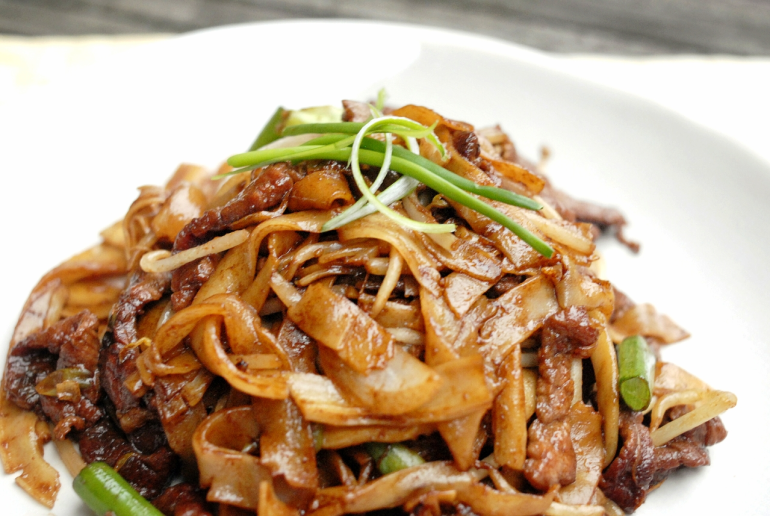
乾炒牛河

湯河 (Hefen)
Shahe fen (Chinese: 沙河粉; pinyin: shāhé fěn, also simply hor fun / he fen Chinese: 河粉) or guotiao (Chinese: 粿條; pinyin: guǒtiáo, also kway teow) is a type of wide Chinese noodle made from rice. It is often stir-fried with meat and/or vegetables in a dish called chao fen (炒粉; pinyin: chǎo fěn); it is also a main ingredient in char kway teow.
Hefen is originated in Shahe Town, Guangzhou. Hefen is made by grinding rice into powder, adding water to make rice paste, and then steaming it into thin noodles and cutting it into strips. Good Hefen requires distinct strips, thin and smooth to be the best. After the invention of Hefen, it spread to various places. In Hakka, it is called "Bian Tiao", in southern Fujian, it is called "Kuei Tiao", in Vietnam, etc. The thickness and main cooking methods are different, but the raw materials and preparation methods are roughly the same.
広州や香港でよく食べられている点心のひとつで、布の上に広げる(布拉)か、型枠に入れて蒸して作る平たい腸粉(中国語:チャンフェン、広東語:チョンファン)もライスヌードルの一種とみることもできる。
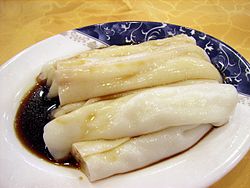
広東の布拉腸粉
Lai fun, laai fan (瀨粉)

Roast pork laai fan from Hong Kong roast meat shop
Thick round semi-transparent noodle made from sticky rice. Rice noodles are a traditional noodle in Zhongshan. It uses glutinous rice as the main ingredient. Water is added to glutinous rice and mixed into a paste of moderate consistency. It is then steamed and made into round strips of rice noodles. Rice noodles can also be eaten with soup or fried. Soup rice noodles and Guangdong barbecued meat are good partners. Barbecued pork rice noodles, roast goose rice noodles, etc. are the lunch or afternoon tea choices of many people.
Fried rice noodles are most common in tea restaurants. Three-shred fried rice noodles (there are actually many versions of three-shredded rice noodles, barbecued pork, celery, carrots, mushrooms, chives, cabbage, onions, sprouts, etc., you can say that you can fry whatever you have in the kitchen) can be found in every tea restaurant.
Silver needle noodles (銀針粉)
Silver needle noodle (simplified Chinese: 银针粉; traditional Chinese: 銀針粉; pinyin: yín zhēn fěn), rat noodle (老鼠粉; lǎo shǔ fěn), bee tai bak (simplified Chinese: 米筛目; traditional Chinese: 米篩目; Pe̍h-ōe-jī: bí-thai-ba̍k), runny nose vermicelli (Chinese: 鼻涕嘜; Jyutping: bei6 tai3 mak1) or lot (Khmer: លត), giam ee (เกี้ยมอี๋) is a variety of Chinese noodle. The noodles are short, about 5 cm long and 5 mm in diameter, and white semi-transparent in colour. The noodles are available in many Chinese markets in Chinese populated areas such as Hong Kong, Taiwan, Cambodia, Indonesia, Malaysia, Thailand, Vietnam and Singapore. A variety of Chinese noodles. It is short, about 5 cm long and 5 mm in diameter. Similar to Lai Fun but has a tapering end resembling a rat's tail. More commonly known as silver needle noodle in Hong Kong and Taiwan, and rat noodle or "mouse tail noodles" in Malaysia and Singapore and Locupan in Indonesia. They are also known as pin noodles. In Thailand they are known as Giam Ee noodles.
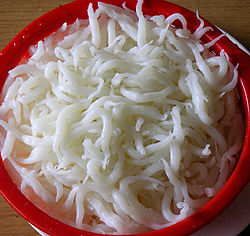
Silver needle noodles are traditional Hakka rice noodles. They are also called mouse cakes or mouse noodles locally, and rice moss in Taiwan. Silver needle noodles are short and have spikes at both ends, hence the name. Silver needle noodles are chewy and have a special shape. Old-style restaurants often use fried silver needle noodles as snacks, or eat them with mushrooms and minced meat in soup.

The noodles may be stir-fried, scalded and flavored with a mixture of sauces, cooked in soup or cooked dry in a clay-pot. As with most Chinese noodles, it can be served for breakfast, lunch or dinner as a main course or supplementing a rice meal. Many Chinese restaurants, hawkers and roadside stalls serve the noodle in various forms. One of the famous dishes that can be found widely in Southeast Asia is Clay-Pot Lao Shu Fen. The purpose of using clay-pot is to keep warmth of the dish.
Chencun noodles, can4 cyun1 fan2 (陳村粉 中国語:チェンツンフェン、広東語:チャンチュンファン)
Named after 陳村/陈村 (Chencun), a town in Shunde, Guangdong province of China.

Chencun noodles are smoother and flaky than rice noodles and a kind of Cantonese wide rice noodles. However, Chencun noodles and rice noodles do have a connection. It is said that in 1927, Huang Dan, a native of Chencun, Shunde, borrowed the experience of Xiqiao people in Nanhai in making rice noodles and created a rice noodle with the characteristics of thinness, refreshingness, smoothness and softness. There is no unified name for this rice noodle. Locals call it Shahe Noodle, Huang Dan Noodle, Danji Noodle, etc.
It was not until 1993 that a buyer of a Foshan hotel went to "Huang Junji" founded by Huang Dan's second son to extract ingredients for the hotel and asked for the name. Because this noodle came from Chencun, it was named Chencun Noodle. Because Chencun Noodle has a unique flaky shape and a high ability to absorb the flavor of ingredients and drip juice, it is often used in steamed dishes, such as the classic Chencun Noodle with Spare Ribs, Chencun Noodle with Beef Brisket Steamed in Zhuhou, and the signature dish of the Michelin Guide recommended restaurant Dabanlou, "Chicken Oil Huadiao Steamed Large Flower Crab with Chencun Noodle". The Chencun Noodle placed under the ingredients absorbs the essence and deliciousness of the ingredients, and is often more attractive than the protagonist.
The production process of Chencun rice noodles is more complicated than other rice noodles. It was difficult to buy in the past, and shopkeepers would usually respond: "It's the same as buying rice noodles!" In recent years, famous chefs have often used it, and Chencun rice noodles have become more well-known. The chance of buying it at noodle stalls has increased a lot.
直径1mぐらいにのした丸い生地を蒸した後、幅広に切ったライスヌードルの一種。腰があるのが特徴で、黄但という人が1927年ごろ考案したとされ、「黄但粉」とも呼ばれる。陳村には「黄均記」という子孫の店がある。地元では上に牛バラ肉の煮込み、豚肉、もやしなど、いずれかの具を乗せて、食べるのが基本だが、近年は広東省各地に広がり、炒め物や汁に入れたりというアレンジも行われているほか、皿に盛って蒸し、点心のひとつとして出されることもある。
Knife-cut noodles, Daoxiao noodles (刀削麵)

Knife-cut noodles (traditional Chinese: 刀削麵; simplified Chinese: 刀削面; pinyin: dāoxiāomiàn), also known as knife-sliced noodles or knife-shaved noodles in English, are a type of noodle in Chinese cuisine often associated with Shanxi province. As the name implies, unlike pulled noodles, they are prepared by thinly cutting a block of dough directly into boiling water. The resulting noodles are ribbon-shaped, fairly thick, and chewy when cooked. Among the knife-cut noodle variations in Shanxi, the style from Datong became the most famous.
The noodles are made by mixing water and flour, and other ingredients to create dough. Cooking oil is added to increase elasticity and chewiness. After resting, the dough chunk is then sliced in a quick motion with strips of dough going directly into the boiling water. Learning the technique to do this can take years, but a skilled chef can slice up to 200 strands per minute. This makes the noodles very fresh.
The noodles are usually served inside a broth, but they are sometimes fried.
刀削麺(とうしょうめん[1]/とうさくめん/ダオシャオミェン、拼音: dāoxiāomiàn)とは、中華人民共和国の山西省発祥の麺の一種。山西省の名物であり、担々麺や炸醤麺、伊府麺などとともに中国を代表する麺の一つに挙げられる。日本国内では刀削麺は日本人向けにアレンジされ、ラーメンのような汁麺として食べる場合が多い。
「刀削麺」は通例「とうしょうめん」と読まれることが多い。中国語の発音「ダオシャオミエン」に由来する。「とうさくめん」と読まれることもある。
Glass noodles, or fensi (粉絲)
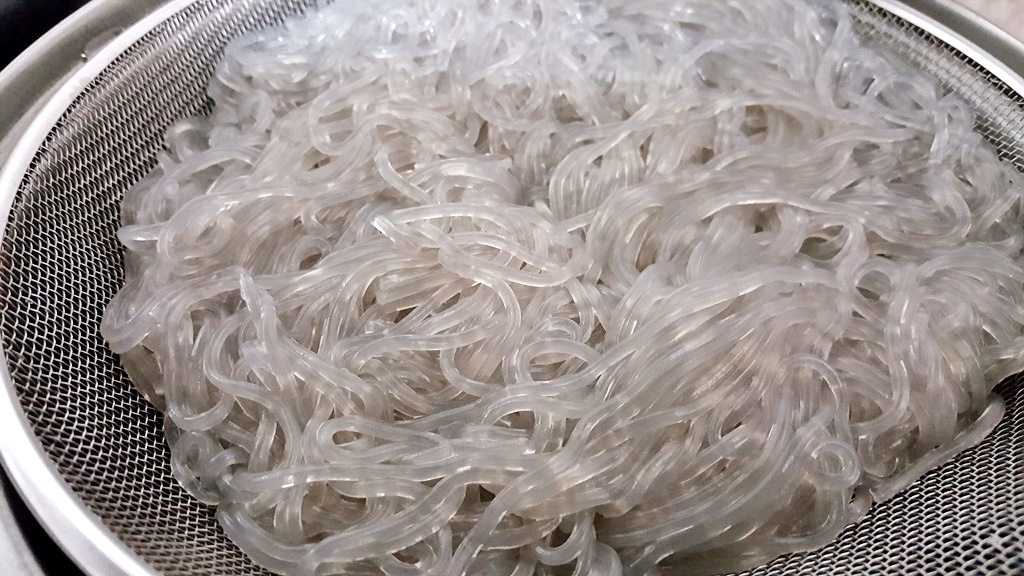
They originated in China. Vermicelli is one of the common foods in East Asia. Pinyin: fěnsī; Literally means "flour thread", often called vermicelli, vermicelli silk, Shandong vermicelli, Longkou winter vermicelli, winter vermicelli (mainly in Taiwan), 春雨 in Japan, Tang noodles in the Korean Peninsula, and noodles in Vietnam. , sometimes also called cellophane noodles, is a transparent noodle made of starch (such as mung bean starch, potato starch, sweet potato starch, cassava starch or canna starch) and water.
Glass noodle is usually made from mung beans, but can also be made from corn starch or sweet potato starch. Mung beans have the most amylose, have a good taste, and are easy to break after long cooking; winter vermicelli made from sweet potato starch is more suitable for stewing. Winter vermicelli has a smooth texture, similar to thin noodles, and is sold after drying. It is best to soak it in water before eating to make it soft. The diameter of winter vermicelli is generally about 0.5 mm, which is also the origin of its name "silk".
Chinese vermicelli made from mung bean starch is called Chinese vermicelli, bean thread or bean thread. Chinese vermicelli made from sweet potato starch is called vermicelli or sweet potato noodles. The thicker Korean vermicelli made from sweet potato starch is called sweet potato noodles or dangmian.
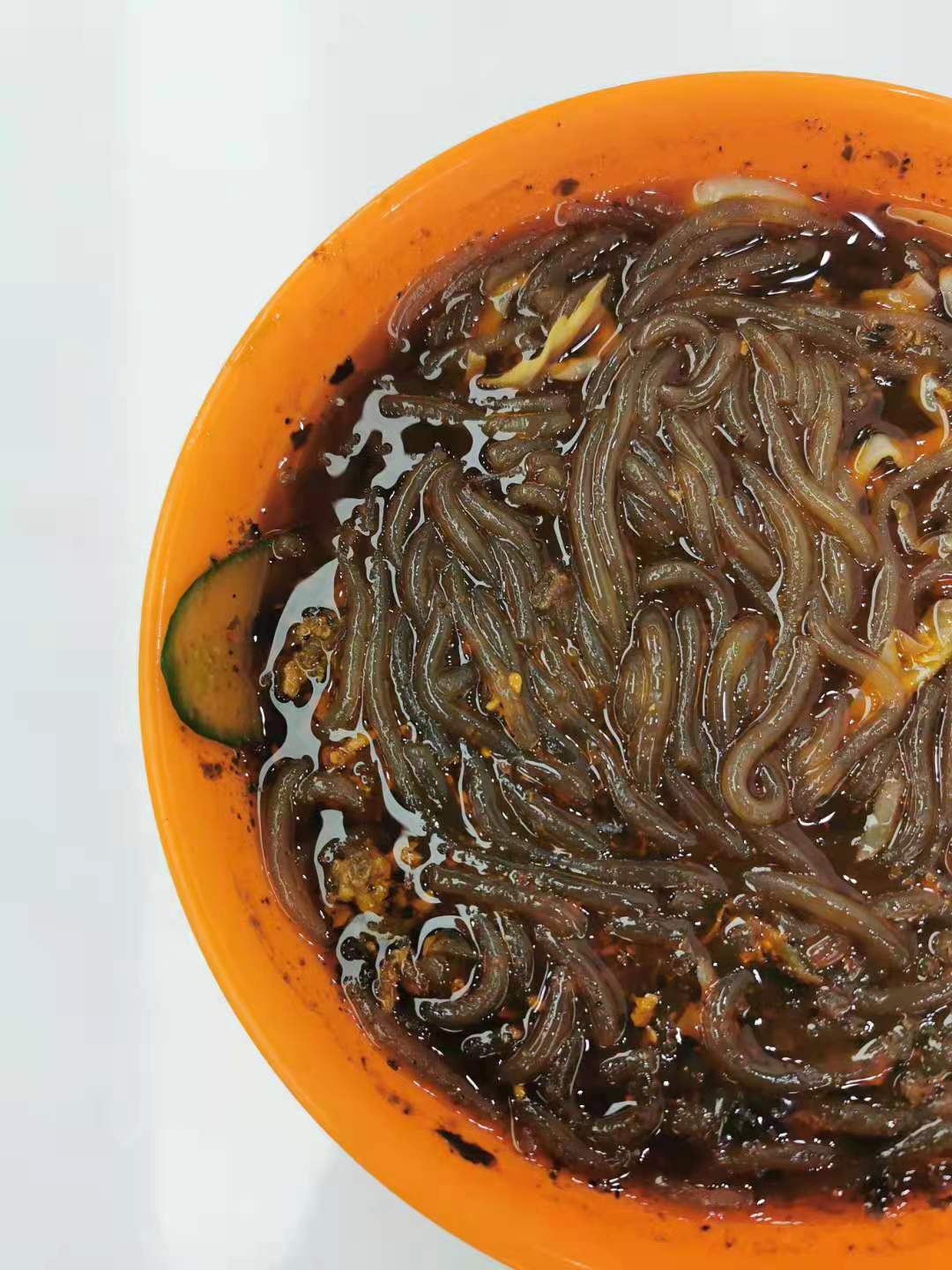
Sì chuān suān là fěn (hot and sour noodles) made with fensi or hongshufen

Napjak-dangmyeon in jjimdak
They are usually sold in dried form and soaked before being used in soups, stir-fries or spring rolls. They are called "glass noodles" because they are transparent like cellophane when cooked.
In Taiwan, the most famous vermicelli are Zhongnong winter vermicelli (中農冬粉) and Longkou winter vermicelli (龍口冬粉).
Vermicelli should not be confused with rice noodles, which are made from rice and are white in color, not transparent (after being cooked in water).
Vermicelli may use stabilizers such as chitosan or alum (illegal in some jurisdictions). Vermicelli is a food that consumers often eat, often appearing in hot pot or summer salad dishes. However, if leavening agents containing alum are added during the production process, if consumed frequently, there is a risk of excessive aluminum intake over a long period of time. Consumers are advised to pay attention and understand the product information.
In Japanese cuisine, they are called harusame (春雨), literally "spring rain". Unlike Chinese glass noodles, they are usually made from potato starch.
Oil Noodles (日語:油そば)

Oil noodles are a type of noodle made from eggs, with a smooth texture and an eggy aroma.
Oil noodles are suitable for different soup bases and ingredients, such as pork, beef, wontons, etc. Common oil noodle dishes include wonton noodles, beef brisket noodles, pork chop noodles, etc. Most oil noodles require boiling or cooking; The noodles can be served hot or cold; additionally, sauce, meat, broth or vegetables can be added.
Yi mein (伊麵)
Yi noodles are a type of noodle made from eggs, fried, crispy, and with a unique aroma. Yi mein or yimian is a variety of flat Cantonese egg noodles made from wheat flour. They are known for their golden brown color and chewy characteristics. The slightly chewy and slightly spongy texture of the noodles is due to the lye water used in making the dough, which is then fried and dried into flat patty-like dried bricks.
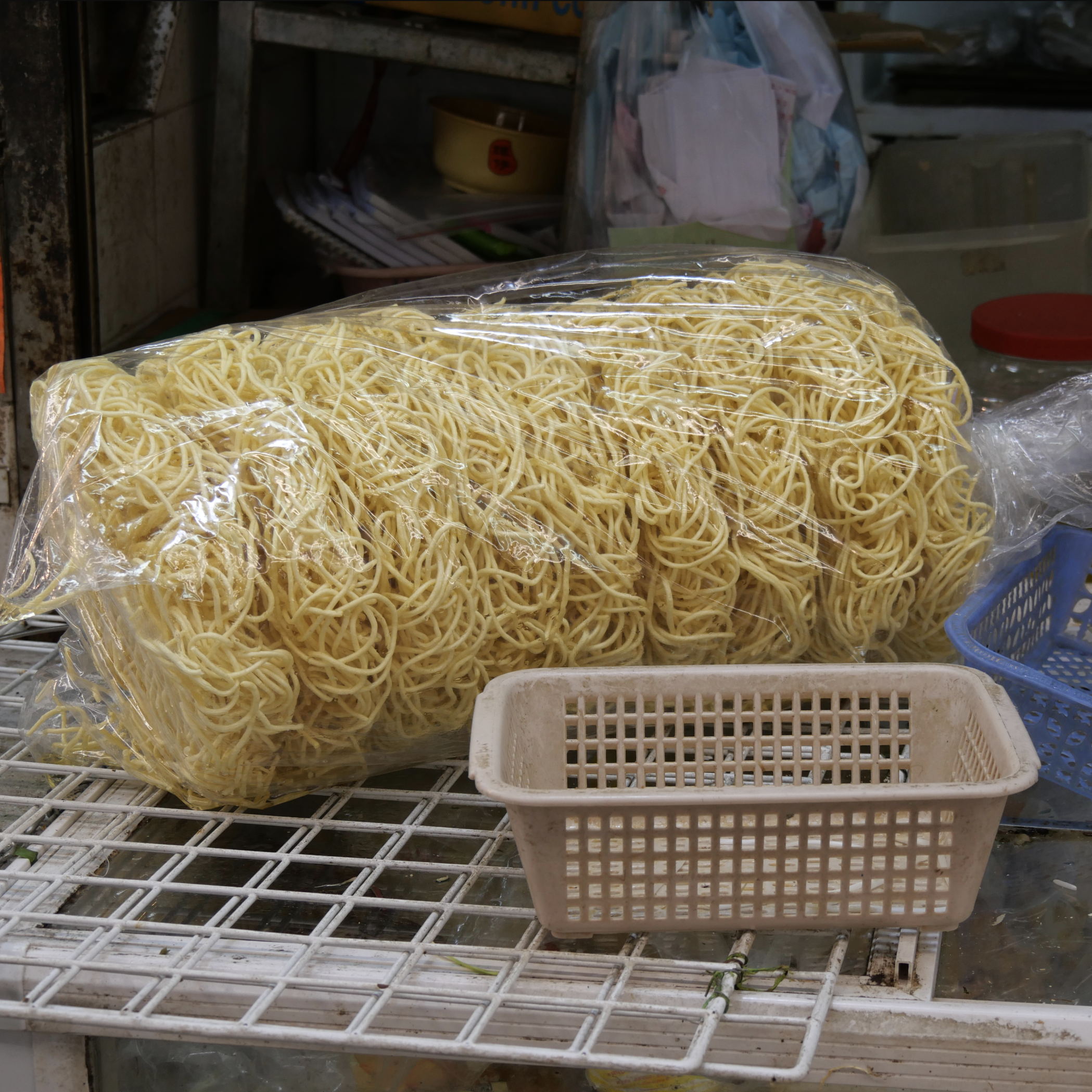

Lobster with e-fu noodles in Hong Kong
E-noodles are suitable for different soup bases and ingredients, such as abalone, seafood, meat, etc. Common E-noodle dishes include stir-fried E-noodles and abalone E-noodles. Guangzhou people prefer to make E-noodles with three fresh flavors, including shredded chicken, shredded mushrooms, and shredded chives. The more particular ones will also add their own dried belly fish powder to increase the aroma. Cheese Lobster E-noodles: Cheese stewed lobster balls, plus E-noodles base, is a Hong Kong delicacy.
Japanese noodles

According to the research of Japanese scholar Tanaka Shizukazu, noodles may have been introduced to Japan during the Tang Dynasty. The Japanese Wami Ruijusho called them sobi. Another method of making noodles by cutting thin wonton dough may have been introduced from China to Nara, Japan in the 15th century. At that time, it was written as "wen ton" and pronounced as udon. As for steamed bread, it was introduced to Japan by Lin Jingyin during the Yuan Dynasty. Lin Jingyin is known as the father of steamed bread in Japan. There is a Lin Jingyin Memorial Shrine in Nara.
The famous noodles include ramen, udon, soba and somen. Among them, ramen has the most varieties. According to the type of noodle soup, it is mainly divided into soy sauce noodles, miso noodles and salty noodles.
In the middle of the 20th century, Wu Baifu, a Taiwanese of Japanese descent, invented instant noodles, which quickly became popular in Asia.
Japanese noodles are a staple part of Japanese cuisine. They are often served chilled with dipping sauces, or in soups or hot dishes.
Japanese Noodle Varieties:

Harusame (春雨)
Glass noodles, or fensi (traditional Chinese: 粉絲; simplified Chinese: 粉丝; pinyin: fěnsī; lit. 'flour thread'), sometimes called cellophane noodles. Hiyamugi are very thin dried Japanese noodles made of wheat. They are similar to but slightly thicker than the thinnest Japanese noodle type called sōmen. The Western style noodle that most closely resembles hiyamugi is probably vermicelli. They are the second thinnest type of Japanese noodle after sōmen, while the well-known udon is a thicker style of wheat noodle.

Hiyamugi
Ramen is a Chinese noodle dish popularized in Japan. It includes Chinese-style wheat noodles served in several flavors of broth. Common flavors are soy sauce and miso, with typical toppings including sliced pork , nori, menma, and scallions.

Ramen
Shirataki are translucent, gelatinous Japanese noodles made from the corm of the konjac plant. In traditional Japanese cuisine, they are eaten in soups or stir-fried. The texture is chewy, similar to a tough jelly, and has little flavor before seasoning.

Shirataki
Soba are Japanese noodles made primarily from buckwheat flour, with a small amount of wheat flour mixed in. It has an ashen brown color, and a slightly grainy texture. The noodles are served either chilled with a dipping sauce, or hot in a noodle soup. They are used in a wide variety of dishes.

Soba
Sōmen , somyeon, or sùmiàn is a very thin noodle made of wheat flour, less than 1.3 mm in diameter. The noodles are used extensively in East Asian cuisines. Japanese sōmen is made by stretching the dough with vegetable oil, forming thin strands that are then air dried for later use.
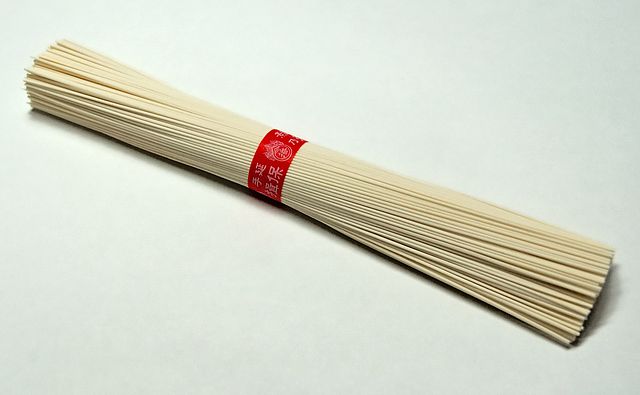
Sōmen
Tokoroten is a gelatinous dish in Japanese cuisine, made from agarophyte seaweed. It was traditionally made by boiling tengusa and allowing the mixture to congeal into a jelly.

Tokoroten
Udon is a thick noodle made from wheat flour, used in Japanese cuisine. There are a variety of ways it is prepared and served. Its simplest form is in a soup as kake udon with a mild broth called kakejiru made from dashi, soy sauce, and mirin. It is usually topped with thinly chopped scallions.

Udon
Other varieties
Noodles have a good taste and are easy to make. Due to the different ways of making noodles and seasoning, thousands of noodle varieties have appeared in various parts of China and the Chinese world, which is dazzling. Noodle types include white noodles, ramen, Qinghai noodles, vermicelli, fried noodles, and sliced noodles.


Phnom Penh rice noodles (泰國金邊粉)

Phnom Penh rice noodles are a type of vermicelli food made by steaming rice slurry. They are common noodles in Southeast Asia, especially in Thailand. Rumor has it that it was introduced from Phnom Penh, Cambodia, but it was actually introduced to Thailand by Chinese merchants during the Ayutthaya Dynasty.
Phnom Penh rice noodles are thinner than rice noodles, and the powder is similar to rice noodles, but the taste is tougher than rice noodles. They are usually sold after drying, and need to be soaked in water before eating to make them soft.
There are many ways to cook Phnom Penh rice noodles, the most common ones are stir-frying and boiling, such as the famous Thai fried Phnom Penh rice noodles, Vietnamese noodles, boat noodles, etc.
Conclusion
The more you eat, see and ask, the more you will appreciate the warmth and culture behind the food. Try to eat and cook with your heart, and understand the human feelings and efforts behind the food.
Which one do you like best?
Some article excerpts and author Chan Chi-Hung, the original source of this article.

作者 陳志雄



