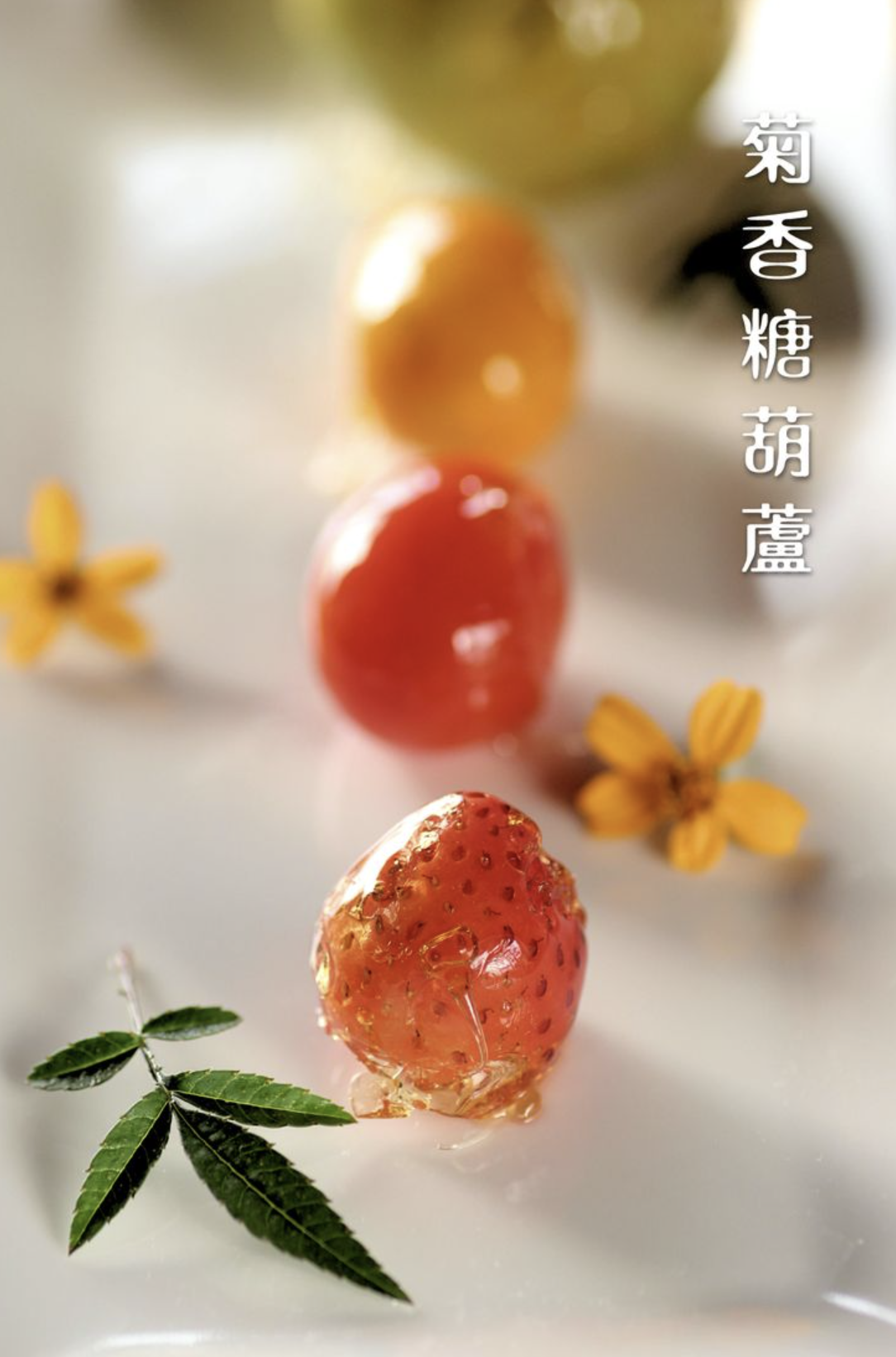
Marigolds, with their sweet passion fruit flavor, are perfect for making various desserts and dishes.
Marigolds have become quite popular herbs in recent years. They are versatile, used for ornamental purposes, tea making, cooking, and as an insect repellent. They are also easy to cultivate, so they can often be found in flowerbeds, farms, and home gardens.
While they may initially resemble the common roadside wildflower, marigold, their unique, sweet fragrance easily distinguishes them. You don't even need to smell them closely; simply rubbing them with your hand will leave a pleasant, lavender-like aroma.

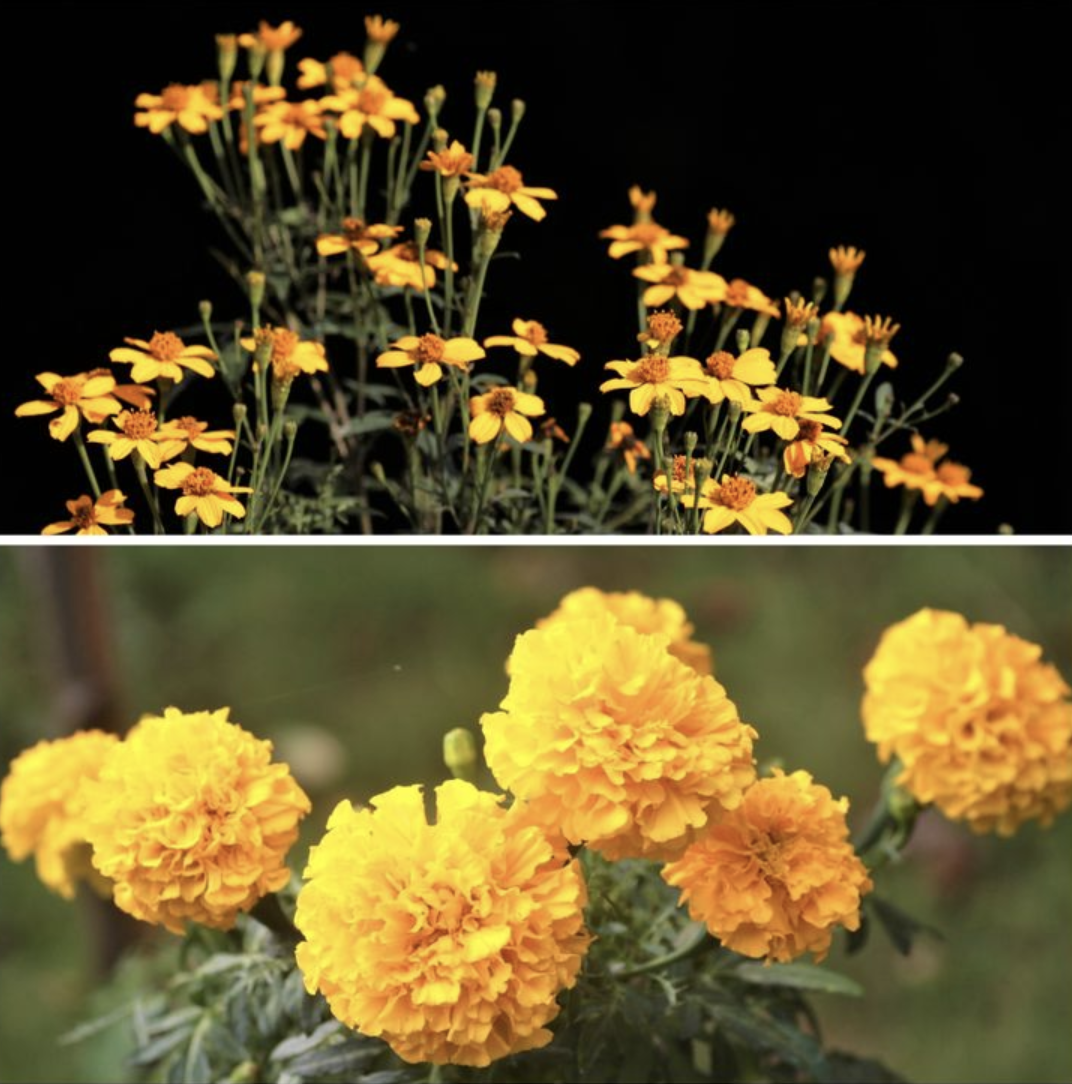
Aromatic marigolds and regular marigolds are closely related. The top image shows an aromatic marigold, and the bottom image shows a regular marigold.
Aromatic marigolds and regular marigolds, which are closely related and sometimes called "stinky marigolds," belong to the same genus, *Mallotus*, and both originate from Mexico, yet they evoke vastly different impressions of fragrance and stench. In ancient times, people would have certainly analyzed and debated this, considering aromatic marigolds as fragrant herbs and virtuous people, while regular marigolds were seen as vile weeds and villains, warning people to be cautious!
However, this scent, which modern people call "fragrant," is not the typical pleasant fragrance of flowers. It carries a rich passion fruit aroma and a sweet candy scent, giving the impression of smelling candy through the nose. This aroma inevitably brings to mind childhood memories of standing around a stall selling candied hawthorns, eagerly watching the bubbling syrup and salivating. I think no flower can capture the longing for warmth and sweetness in autumn and winter as perfectly as the fragrant marigold. Using it to make honey-colored syrup will surely bring a sense of happiness and nourishment to people on a listless winter day!
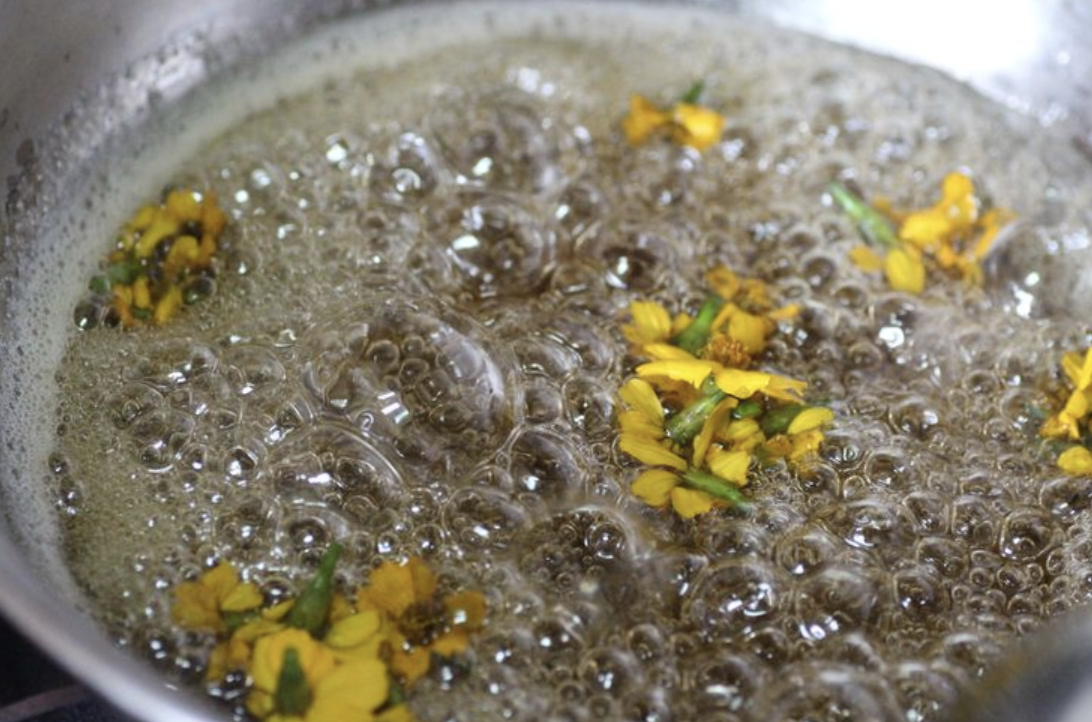
Simmering fragrant marigold syrup, its sweet, honey-like aroma irresistibly evokes the warm and cozy moods one craves in autumn and winter.
Scent truly is the fastest way to retrieve memories! A beautiful memory is often imbued with a unique aroma, so I wanted to use this sweet, fragrant marigold to make syrup and candied hawthorn skewers, to help children create cherished childhood memories.
Chrysanthemum-Scented Candied Hawthorn Recipe
Ingredients: 50g water, 100g sugar, 1 tbsp maltose, 20 fragrant marigold flowers, various small fruits.
Instructions:
1. Simmer water, maltose, and sugar over low heat (do not stir) until bubbling (about 10 minutes), at approximately 150-155 degrees Celsius. Gently shake the pot to prevent burning.
2. Test the syrup by dipping a spoonful into ice water (it's ready if it hardens and becomes brittle). Then add the fragrant marigold flowers and stir well.
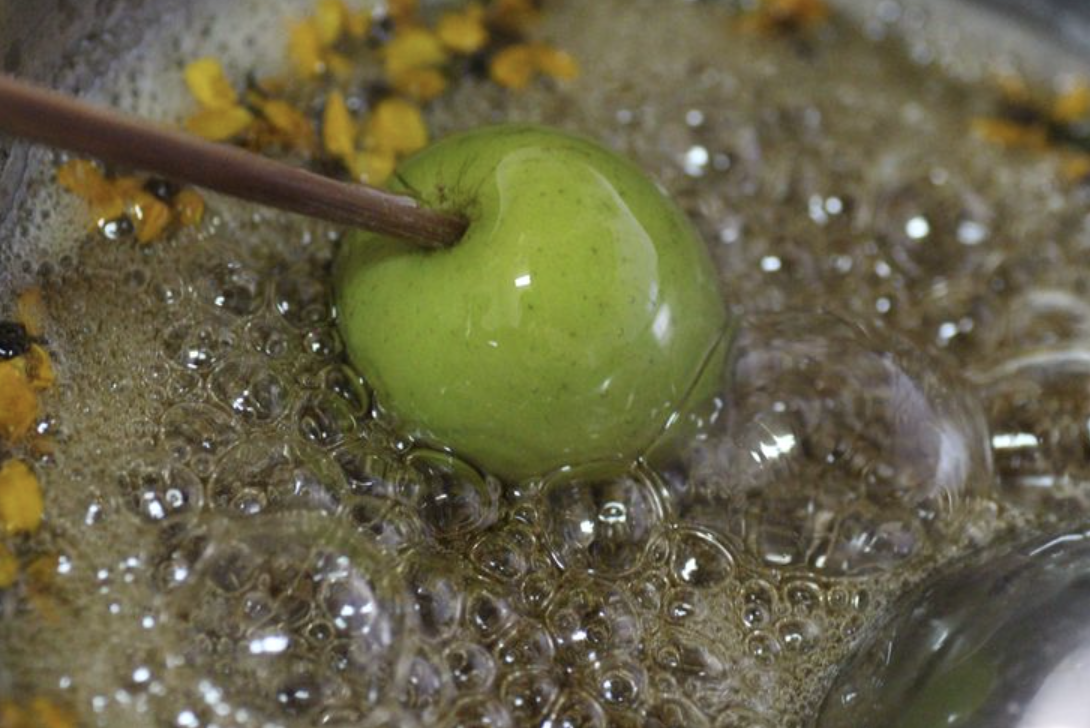
3. Quickly roll the fruit in the syrup foam to coat it evenly with a thin layer of sugar. Let it cool.
4. Pour the remaining syrup onto an oiled plate and let it cool to make delicious floral candy.
Candied hawthorn berries coated with fragrant marigold sugar
After making candied hawthorn skewers, the remaining floral syrup, once cooled, becomes delicious "Aromatic Marigold Flavored Candy."
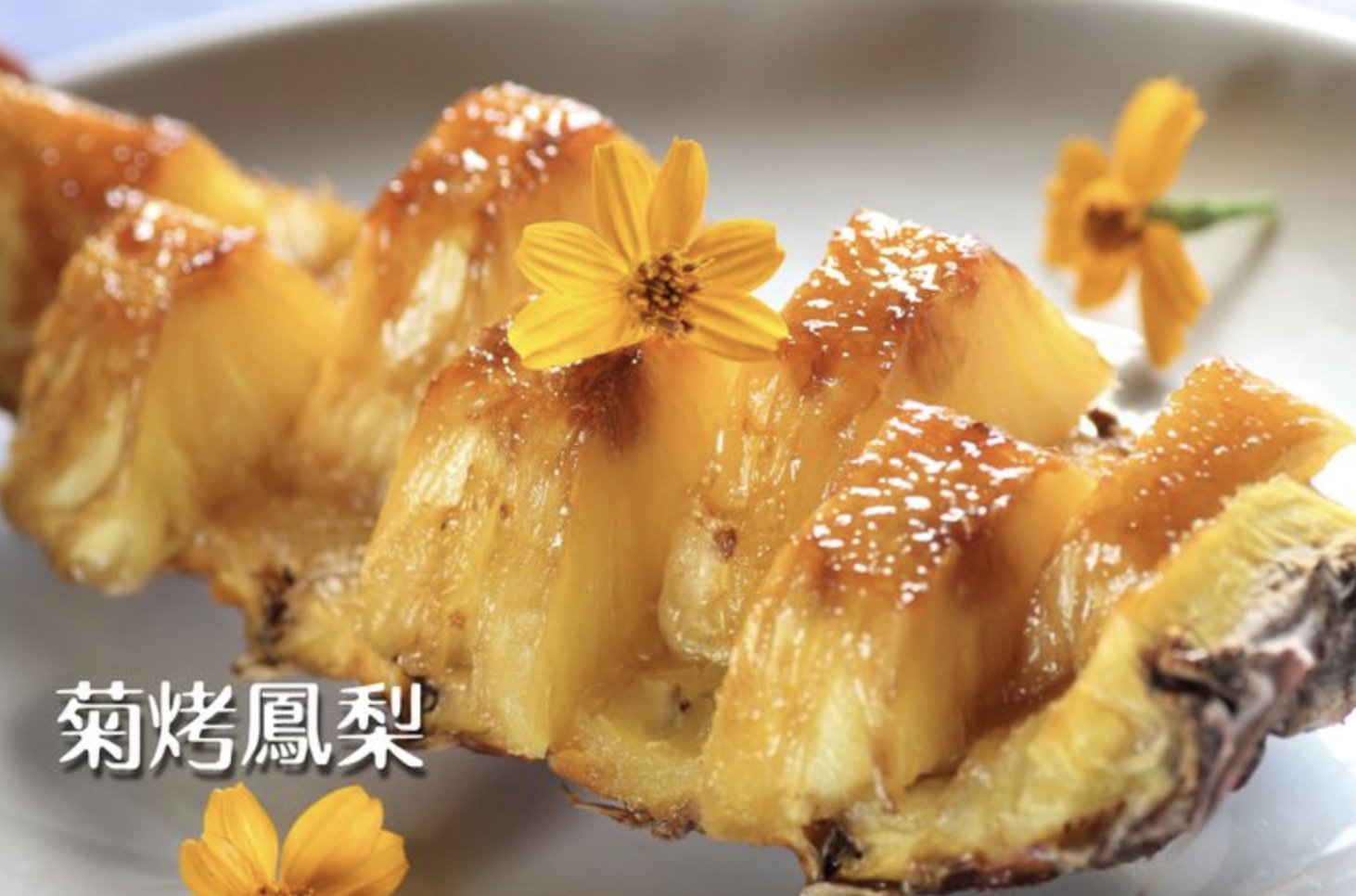
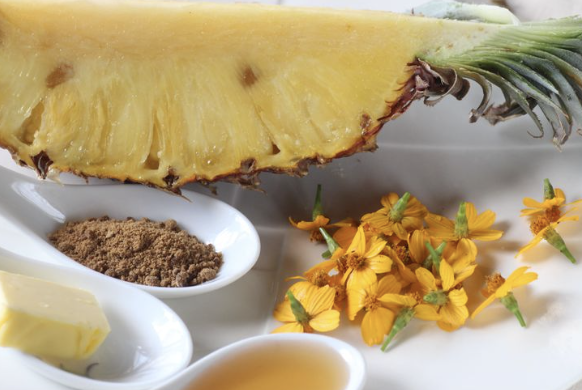
Additionally, the sweet and fruity aroma of aromatic marigolds reminds me of sweet and sour pineapple. Let's use this golden syrup to flavor the pineapple and make "Chrysanthemum-Roasted Pineapple"!
Chrysanthemum-Roasted Pineapple Recipe
Ingredients: 40g whiskey, 20g brown sugar, 30g unsalted butter, 20 aromatic marigold flowers.
Instructions:
1. Melt 40g of whiskey, 20g of brown sugar, and 30g of unsalted butter in a heat. Add 20 marigold flowers and simmer briefly to release their flavor, then turn off the heat.
2. Preheat the oven. Spread the sauce over the pineapple and place it in the oven. Repeat five or six times to allow the flavors to penetrate.
3. Bake until caramelized.
Add the aroma of marigold to your sweet and tangy pineapple.
Aroma philosopher Wen Youjun once mentioned, "The greatest ability of marigolds lies in scavenging free radicals." He cited a 2020 study published in Italy showing that, compared to many edible flowers, "fresh marigolds contain the highest levels of ascorbic acid and flavonoids."
In the cool winter months, brewing marigold tea or using its exquisite aroma in various desserts can warm and brighten your mind and body.