All living things are made up of cells, and stem cells are the original and undifferentiated primitive cells in our body. They have two major functions: regeneration and differentiation. Through continuous regeneration and differentiation, stem cells provide the cells we need for daily metabolism and accidental damage. Simply put, stem cells are like the body's cell supply factory, providing the various cells we need every day.
Stem cells have multiple abilities such as self-renewal, proliferation, and differentiation. They are called "universal cells" and can differentiate into required cells under appropriate induction for therapeutic purposes.
In the past, when people were injured or sick, traditional treatments mainly involved taking medicine or injections. In the past, if there was no improvement after taking medication, one could only hope for self-healing, but now there is an additional option: stem cell regenerative therapy.
Some countries have begun to adopt regenerative medicine, including South Korea, Japan, Taiwan and the United States. The era of stem cell therapy has arrived! In fact, many diseases are rooted in the fact that tissue cells in the body are damaged and cannot be repaired in time, resulting in permanent loss of some functions and fibrosis. When we are young, our bodies will activate stem cells to fully repair themselves. Now, we have broken through the limitations of aging and activated the body's cell function repair through oral or injection stem cells. The current cases are applied in animal treatment and rehabilitation, and even in humans:
- Osteoarthritis
- Chronic kidney disease
- Chronic stomatitis
- Intervertebral disc degeneration
- Chronic wounds
- Corneal ulcer
- Fractures and nerve damage
What are Stem Cells?
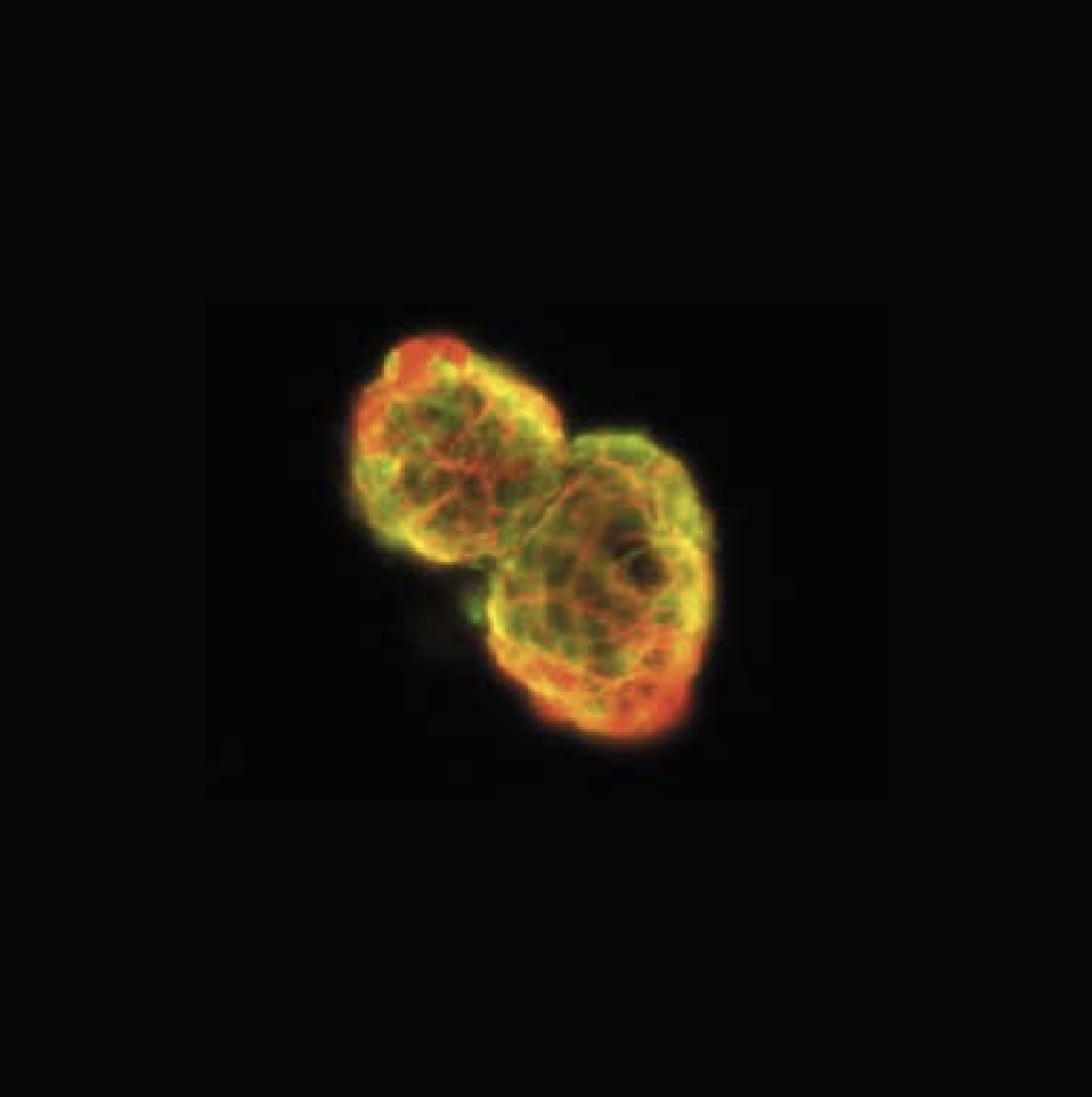
Stem cell morphology under a microscope
What types of stem cells are there?
Generally, cells in an adult's body can only regenerate and divide to a limited extent, but stem cells can regenerate themselves for a long time and divide into new stem cells. In addition, stem cells are non-specialized. Their morphology and growth pattern have no specific pattern, and they can produce a variety of specialized cells through differentiation.
Stem cells can be divided into two categories: pluripotent and multiplastic. The former includes embryonic cells, embryonic primordial germ cells and induced pluripotent stem cells; the latter includes epithelial stem cells, hematopoietic stem cells and neural stem cells. Pluripotent stem cells are reproductive cells that can develop into new independent individuals. Pluripotent stem cells can develop into a variety of specific somatic cells such as skin, corneal, blood cells, etc., and can produce substitutes to repair damaged tissues and organs.
Stem cells can be divided into two categories according to their functionality: The first category is hematopoietic stem cells (HSC): Hematopoietic stem cells are the main source of the hematopoietic system and the immune system. They can produce red blood cells, white blood cells, platelets (PRF) and immune cells (such as lymphocytes). They can be obtained from bone marrow, peripheral blood and umbilical cord blood. It is inherently repulsive, so autologous or successfully paired cells are required for use. The most common bone marrow transplant refers to hematopoietic stem cells. Used in cancer, blood diseases and immune-related diseases, etc. The second category is mesenchymal stem cells (MSC): Mesenchymal stem cells can be obtained from different tissue sources such as human bone marrow, umbilical cord, animal placenta, fat, etc., and can differentiate into osteoblasts, chondrocytes, tendons, cardiomyocytes, neurons and other tissue cells. They have great potential for application in cell therapy, tissue engineering and regenerative medicine. Mesenchymal stem cells can be obtained from the umbilical cord and fat of animals. In addition to the ability to self-renew and differentiate into different tissue cells, they can also drive themselves to damaged tissues for repair (homing). Mesenchymal stem cells are not repellent, so allogeneic stem cells can be used to treat patients. They are an important source of cells for regenerative therapy.
Since autologous cells are difficult to obtain and their quality is usually poor, the use of allogeneic stem cells will become a future application trend. Allogeneic mesenchymal stem cells can be prepared and stored in advance and can be used at any time for research applications. In addition, by using specific young donors without infection and specific pathogens (super donors), better quality cells can be obtained. In addition, by using non-destructive and non-invasive animal placentas, the effect of use will also be better. Currently, clinical trials of stem cell therapy in the United States and Japan cover a wide range of diseases. Allogeneic cell therapy has grown year by year in just ten years and is expected to become the mainstream application in the future.
In recent years, scientists have also tried to find stem cells that are suitable for treating a variety of diseases. "Mesenchymal stem cells" are one of them. This type of cell can be isolated from different tissue sources such as human bone marrow, umbilical cord, animal placenta, fat, etc. It is a pluripotent stem cell that can develop into most cells in the human body.
New stem cell drugs are being developed all over the world, including in Asia
Stem cells are seen as having potential for drug development, and in 2012 the US company Osiris Therapeutics developed a therapy for acute graft-versus-host disease (GvHD). Prochymal is a stem cell therapy produced by Osiris Therapeutics. This is the first stem cell therapy approved in Canada. The drug is a treatment for the immune system rejecting a bone marrow transplant for blood cancer. Prochymal, also known as remestemcel-L, was sold to Australia's Mesoblast in 2013, when its brand name was changed to Ryoncil. It is an allogeneic stem cell therapy based on mesenchymal stem cells (also known as drug-signaling cells, mesenchymal stromal cells, and MSCs) derived from the bone marrow of an adult donor. MSCs are purified from bone marrow, cultured and packaged to yield up to 10,000 doses from a single donor. These doses will be kept frozen until needed.
Stem cell drugs for atopic dermatitis and rheumatoid arthritis
Kangstem biotech, a South Korean company mainly engaged in the development of pharmaceutical products, was founded in 2010 by Kyung-Sun Kang, a professor at Seoul University. It is a company with umbilical cord blood stem cell culture and cell culture medium purification as its main technologies. Its research team is the National Stem Cell and Regenerative Medicine Center of Korea. Utilizes umbilical cord blood stem cells to develop stem cell therapy products for patients with rare and incurable diseases. Atopic dermatitis, rheumatoid arthritis, Crohn's disease, psoriasis, osteoarthritis and other diseases were studied respectively, and Furestem-AD for the treatment of atopic dermatitis and Furestem-RA for the treatment of rheumatoid arthritis were proposed respectively. According to the latest information, Kangstem biotech's atopic dermatitis treatment drug Furestem-AD® failed to meet the EASI-50 standard (dermatitis patient severity index, with a minimum of 0 and a maximum of 72) in the Phase III clinical trial in October 2019 and ended in failure. EASI-50 was achieved in 21 of 66 treated patients (31.82%) and in 22 of 81 placebo patients (27.16%). It can be found that the time spent from drug preparation to administration may also significantly affect the drug's effectiveness. From 2013 to the second phase of the trial, the drug was administered within 8 hours after preparation, but the third phase of the trial took an average of 26 hours. In animal experiments, it has been found that the time required for drug production to use will significantly affect the efficacy.
Kangstem Biotech started the third phase of clinical human trials in February 2010. It is hoped that the drug development progress can keep up with the overseas technology transfer planned last year, as well as the European clinical trial application. The approval and marketing of Furestem-AD® will be a great blessing for patients. Since stem cell therapy is different from previous drugs, it is not a chemically synthesized molecule but is similar to cell therapy, in which purified cells are frozen and administered as drugs. Therefore, there are many variables in the details of production, purification, and preservation. The quality requirements and control of drugs require good cell purification technology and testing capabilities. This is why stem cell drugs are difficult to obtain approval for marketing in many countries.
The approval and launch of Furestem-AD® is also a test of South Korea’s stem cell drug manufacturing process and quality control. There are more than 10 stem cell drugs approved for marketing in South Korea, ranking first in Asia and second only to Japan. Even though it is difficult to prepare and expensive, regenerative medicine therapy is still a project that the government pays attention to. In recent years, the Kobe Medical Industrial City in Japan has made regenerative medicine a research focus, and South Korea also established a stem cell and regenerative medicine center in 2012. Breakthroughs in the production technology of cell therapy and regenerative medicine will be new options for future disease treatment.
Developing beauty products using stem cells
On the other hand, scientists are using umbilical cord blood obtained from clinical practice to separate stem cells of different phenotypes, which are then cultured and proliferated. Not only can stem cells be used as drugs to treat chronic diseases, but stem cell conditioned culture media, which is rich in growth hormones secreted by various cell differentiations, is also being developed in cooperation with cosmetics companies as a raw material for beauty products.


