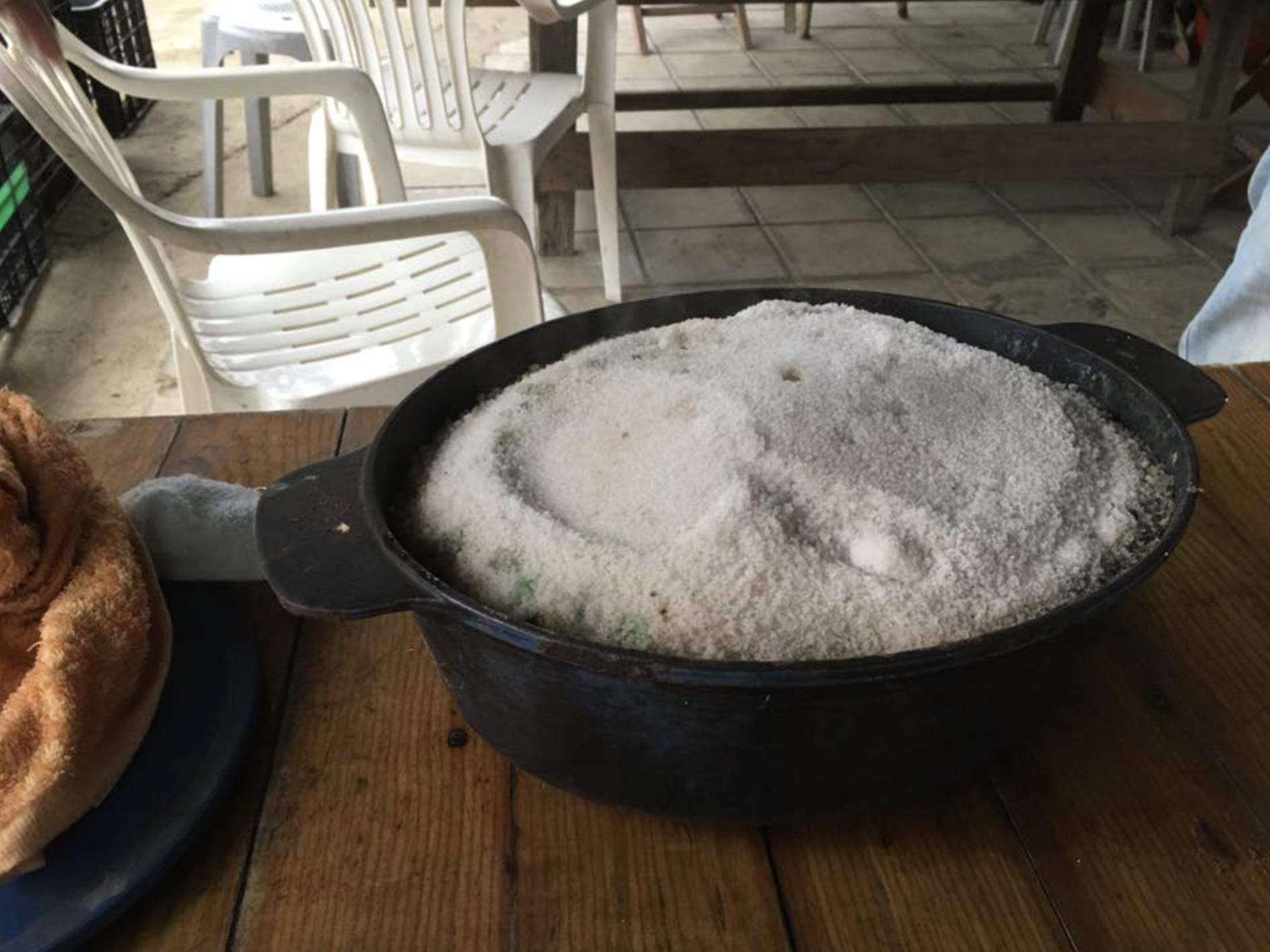
Doing volunteer work, unpaid, but bringing joy... Farm-roasted salt-baked chicken.
Which type of salt is healthier?
Modern people are afraid to eat salt. The WHO recommends a daily intake of no more than 5g, but Japan's salt intake far exceeds the standard, yet it is one of the world's longest-living countries. The key is not blindly reducing salt intake, but rather finding the body's "balance" with salt.
In Japan and other countries like France, people choose different types of salt based on taste and intended use. Regardless of whether mineral content is labeled or whether it's good or bad for health, they believe that the characteristics and usage of each type of salt are the most important.
In Japan, where refined salt is mainly used rather than natural salt, terms like "mineral," "natural," and "pure" are not used when introducing salt, as these can confuse consumers.
Myth: Low-sodium salt is healthier?
It has been said that "the human body cannot function without salt. Even if you are currently healthy, you need to consume salt regularly to maintain that health." It was also mentioned that wealthy people's sons and daughters, despite eating countless delicacies, were always weak due to insufficient salt intake.
Low-sodium salt reduces sodium chloride (NaCl) and adds potassium chloride (KCl). While excessive sodium can raise blood pressure, excessive potassium is even more dangerous, potentially causing muscle paralysis, arrhythmia, and even cardiac arrest (potassium chloride was once used in the death penalty). The United States and Australia, among others, label the health risks of low-sodium salt, and its bitter taste affects food flavor. Looking at sodium or potassium alone is one-sided; both are harmful in excess.
Salt cannot be replaced
The human body needs sodium chloride (NaCl) to maintain digestive fluids, electrolyte balance, and cell function. Replacing sodium with other substances may seem healthy, but the body will try to replenish the necessary salt, potentially leading to overeating.
What makes good salt?
The key is "clean, pure saltiness," not additional minerals. For healthy individuals, the impact is minimal. However, for those with poor absorption or weak constitutions, salt with higher impurity levels can increase the burden on the body (requiring increased water intake for filtration).
Common Salt Types Introduction
Sea Salt / Sun-dried Salt: Also known as thousand-day salt, it is made by sun-drying seawater. It contains minerals such as calcium, potassium, and magnesium, and has a bitter taste (from residual brine). Quality varies greatly; high-quality sea salt requires complete removal of brine and aging for several years, resulting in a white color, good luster, and non-sticky texture. This method requires large tracts of land and a dry climate and soil. Mexico and Australia are the main producing countries.
Refined Salt: Refined salt is not an artificial compound produced in a laboratory. It is made by filtering seawater, purifying it through an ion-exchange membrane, and evaporating it at high temperatures, leaving only sodium chloride. It is clean and has a uniform salinity. Often mistakenly called "chemical salt," it is actually made from natural seawater, requiring refining to remove impurities due to marine pollution. It is mostly used in food processing and sauce making. However, because it is highly processed and refined, removing almost all impurities and trace minerals, it often contains anti-caking agents and is supplemented with iodine (iodized salt) to prevent thyroid diseases. Pure salt has a clean, direct salty taste without bitterness, making it suitable for everyday cooking, baking, and processed foods. Its advantages include cleanliness, safety, and low price, but it is criticized for "lacking natural minerals."
Reprocessed salt (flower salt): Sun-dried salt is dissolved, filtered, and crystallized to remove some impurities; commonly found in restaurants.
Rock salt: Mined after evaporation from the ancient seabed, accounting for more than two-thirds of global production. It comes in various colors (white, red, blue), and its quality varies depending on its origin.
Lake salt: Naturally evaporated from salt lakes, such as Andean lake salt.
Pure salt: Refined salt is melted at temperatures above 1000°C to remove heavy metals and impurities, resulting in extremely high purity and rapid absorption.
Bamboo salt: Sun-dried salt is packaged in bamboo tubes, sealed with loess, and repeatedly baked at high temperatures (800–1300°C), melting into a liquid state on the ninth charge. Impurities vaporize and infuse with the bamboo and loess components, giving it a unique aroma; it can be used for seasoning or health purposes.
Natural Ash Salt vs. Refined Salt: A Debate
Some argue that natural ash salt, "naturally containing minerals," is healthier, while refined salt, "containing only sodium chloride," is harmful. However, even high-quality natural ash salt requires a long time to remove the bitter brine; the minerals it contains are trace amounts, easily obtained from fruits, vegetables, and grains. The human body truly needs sodium chloride; other minerals are not obtained through salt alone.
The world-renowned French Guerande salt is not famous for its rich mineral content and perceived health benefits, but rather because it was once on the verge of extinction. After recognizing the ecological and cultural value of salt pans, it was restored and its brand value enhanced, leading to its current global fame.
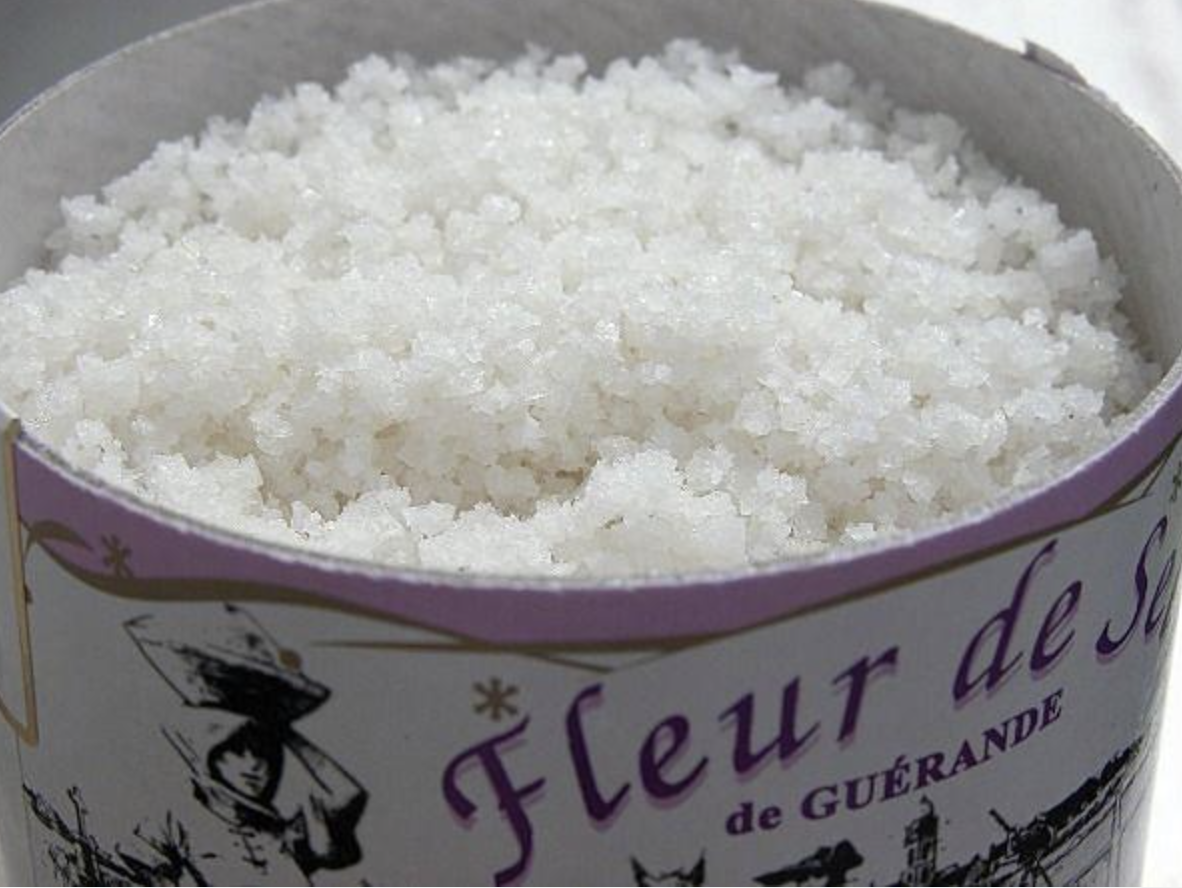
Guerande Salt (French Natural Ash Salt)
Besides sodium chloride, natural ash salt contains other components, so it takes several years to remove the brine to become clean table salt. Salt without brine loses its characteristic bitterness and develops a clean salty taste. Since the minerals in natural ash salt are considered important, is it really necessary to spend such a long time removing the brine?
Ako Tenshio (Akako Salt)
Located in Ako City, Banshu Prefecture, a city renowned for its salt, Japan's salt fields, with a history spanning approximately 1200 years, were completely abandoned, and the salt-making process in Japan has been largely replaced by the "ion-exchange membrane salt production method." Under these circumstances, "Ako Tenshio" replicates the composition ratio of salt produced from Japanese salt fields around 1935. It is produced using the "salt-making method," which involves adding "bitterness" to the salt. A portion of the dried salt is dissolved and recrystallized, while the remaining salt crystals are mixed in to adjust the particle size. Finally, the salt-making process employs the "bitter salt method," which involves adding bitter brine. This process has strict requirements. Since traditional solar and wind power methods for salt production are no longer feasible in the coastal waters of Japan, we began searching globally for high-quality seawater long ago. Ultimately, we found clean and fertile seawater in Shark Bay, Australia—a UNESCO World Heritage Site. "Ako Tenshio" is a dried salt (Tenpei salt) made from the seawater of Shark Bay.
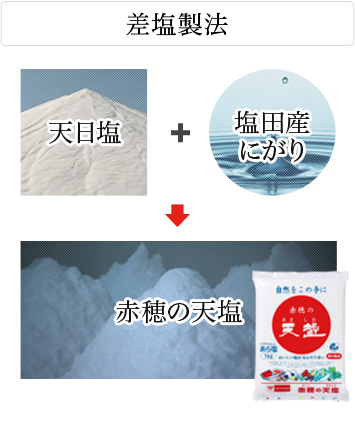
Salt Production Methods
Furthermore, deep-sea sea salt is made from deep-sea water flowing from Cape Muroto in Kochi Prefecture, incorporating the gift of the sea—flounder. Using the traditional Banshu Akaho (tattooing method) technique, it is produced as a moist, coarse-grained, and bitter salt that easily mixes with other ingredients. Most sea salt in the world is produced using the "sun-dried salt" method. This method requires large tracts of land and a dry climate and soil, which is not suitable for Japan due to its high rainfall, humidity, and lack of large-scale sun-dried salt fields. Therefore, Japan has long used seawater evaporation to extract salt.
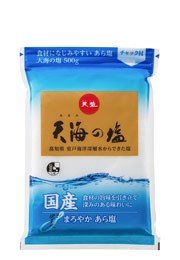
Amami Salt 500g Zippered Plastic Bag
Sun-dried sea salt, including tamari salt, contains sodium chloride, magnesium sulfate, potassium, and trace amounts of various elements. Magnesium is a major component of brine and can coagulate proteins, used in tofu production. The longer the removal time, the higher the price; therefore, Japanese-produced tamari salt is of high quality and is a renowned brand among table salts.
Sun-dried sea salt is the crystallized product left after seawater evaporates under sunlight. It contains trace elements and minerals from seawater and has a slightly salty aroma. The purer and less polluted the sea area, the better the quality of the sea salt produced. Using sun-dried sea salt in cooking can enhance the flavor of ingredients.
Electrolyzed salt, on the other hand, uses electricity to extract sodium chloride from seawater through an ion exchange process to produce salt in large quantities. Electrolyzed salt is refined into high-purity sodium chloride. Compared to sea salt, it contains almost no trace elements or minerals. Therefore, although both originate from seawater, the resulting salts have different flavors and uses.
Metal Contaminants
The raw materials for table salt may be contaminated by heavy metals and other pollutants from the natural environment or during food production, affecting the safety and quality of table salt products. Therefore, during salt production, efforts are usually made to remove contaminants and impurities and increase purity to ensure the quality and safety of the finished salt.
In 2020, the Hong Kong Consumer Council conducted a random inspection of table salt on the market (April 2020, Issue 522), concluding that mercury was not detected in any of the samples. Fourteen samples tested negative for metallic contaminants, including all table salt and cooking salt samples. Of the remaining samples, 25 tested positive for at least one metallic contaminant, with 23 samples showing levels below the limits set by current Hong Kong regulations and any proposed amendments, as well as the limits set by the Codex Alimentarius Commission in mainland China. Overall, our chances of ingesting heavy metals and contaminants from table salt are negligible compared to the pollution we receive from other food sources, the air we breathe, and our drinking water.
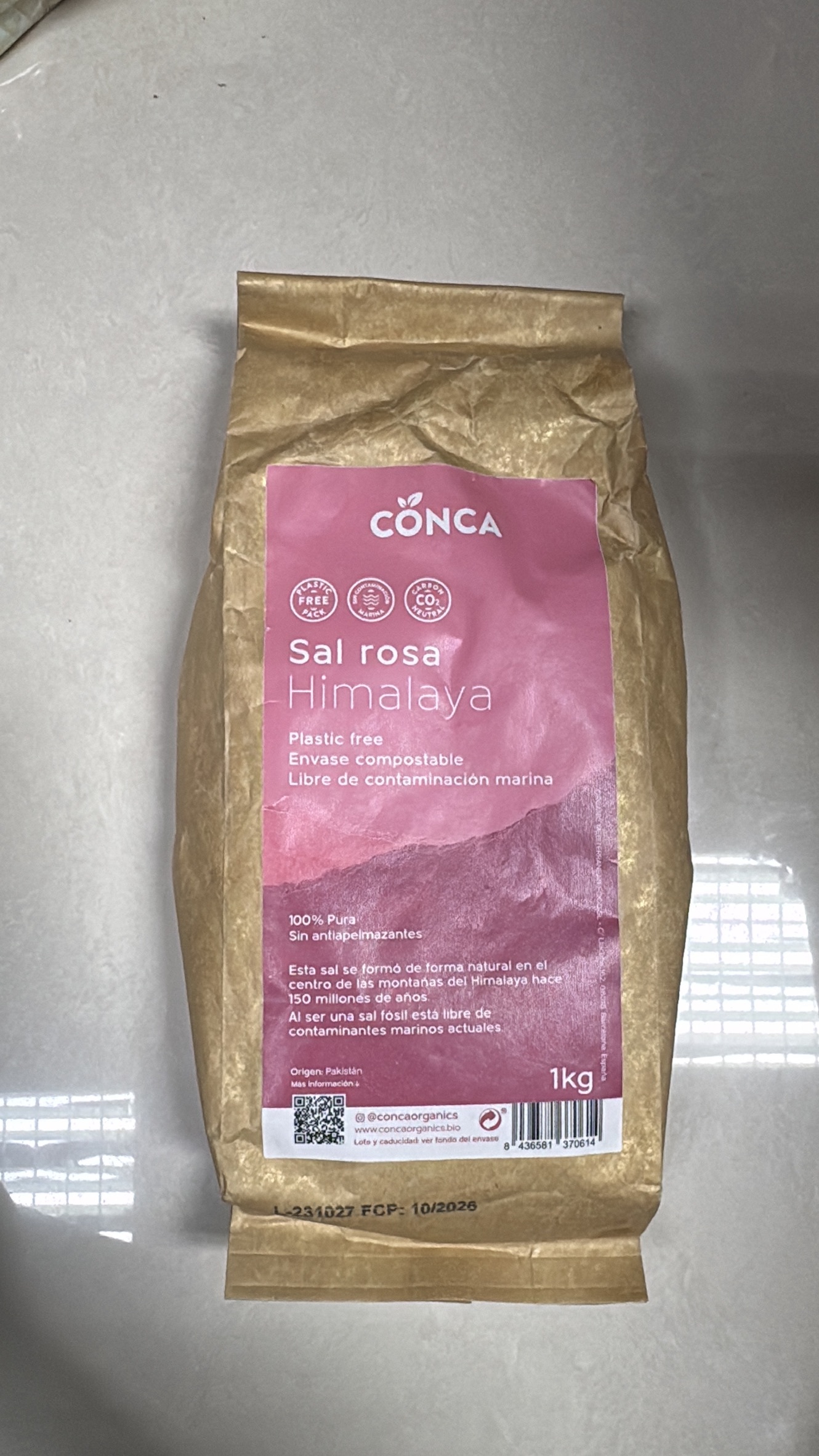
Conca Himalayan Salt
It is true that some Himalayan rock salt has a higher content of heavy metals than ordinary salt, and the soil in certain areas has a high concentration of heavy metals (such as some mining areas in Pakistan with high cadmium content), which affects the extracted rock salt. This is a natural source of environmental pollution.
However, all natural salts, including sea salt, will contain trace amounts of pollutants. But the adverse effects of salt on the human body are very minor because the amount of salt we consume is a very small proportion of other foods—less than five grams per day. Compared to the pollution we encounter from the air we breathe, our food, and our drinking water, the risk is relatively small.
Conclusion
The primary role of salt is to provide a pure salty taste and to aid the body in transporting and breaking down nutrients, not as a source of nutrients themselves. Countries like Japan and France emphasize the flavor and uses of salt, rather than its mineral content. When choosing salt, prioritize "pure, impurity-free" and suitable for your intended use; there's no need to believe that any particular type is the healthiest.


